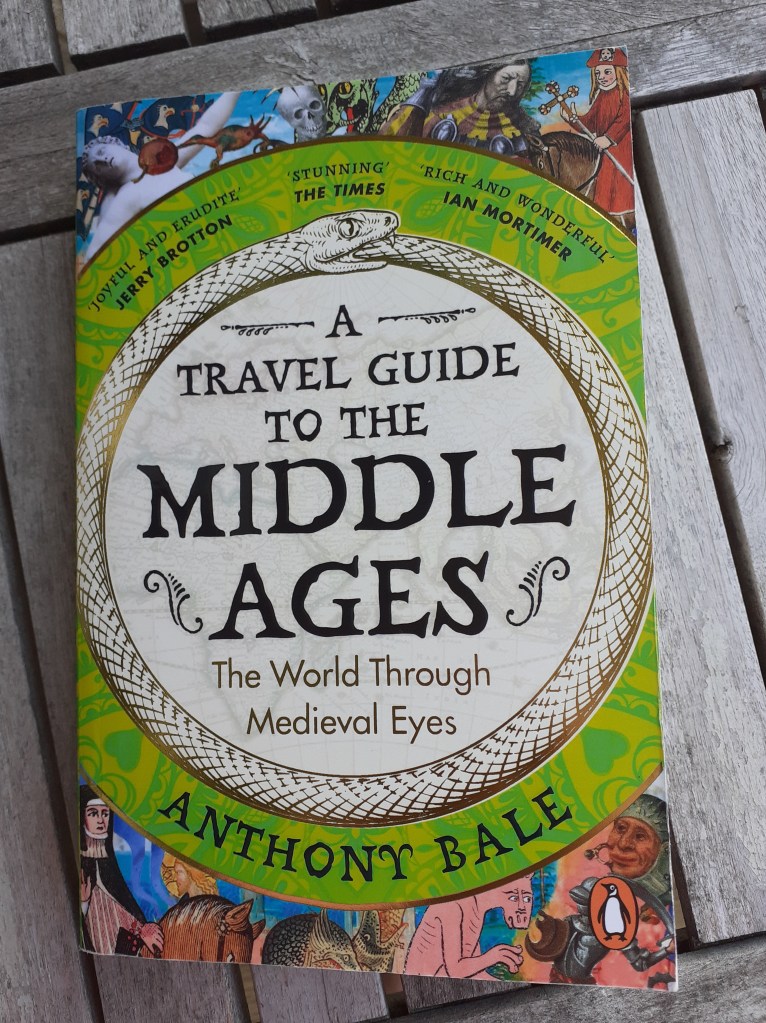
No. 7 – A non-fiction book A Travel Guide to the Middle Ages : the World Through Medieval Eyes / Anothony Bale
I admit that before picking up this book, my knowledge of the Middle Ages was pretty limited: knights. Plagues. No Netflix. Thankfully, this book contains a lot of information so I now know much more. It’s dry in the sense that it contains a lot of names, dates and places. But it isn’t written like a lecture; it isn’t boring. It’s written for any knit-wit that wants to learn more, and I was happy to sign up. And sheesh, did I learn stuff.
First of all: there’s not that much difference between preparing for travel back in the Middle Ages and the present day. Bags are packed, money and travel papers set aside, guidebooks purchased. Of course, last-minute trips to a sunny destination were not what it was about back then, and travel was mostly pilgrimage related. However, travellers back then bought souvenirs, kept track of their adventures, and tried to make sense of new / other cultures, like we still do today. We have stickers or emblems with flags that get sewn onto backpacks, they had patches they wore on their lapels. They bought walking sticks and hats, we buy keychains and t-shirts. They wrote their names on walls and doors of sites they visited, we…well, that one hasn’t changed a bit. They kept diaries and wrote books on their findings (or made them up completely), we blog, tweet, and post (heavily edited or not) on Instagram. And mass tourism is nothing new: back then, people travelled in caravans of up to thousands of pilgrims through the Holy Land.
The book is set up like a trip: it starts with a chapter on preparations, then there are the actual travel chapters, and it ends with a chapter on homecoming. Great care has gone into making the reader understand the time and place. For example, referring to the Holy Land nowadays for Christians means Israel. But, back then, it meant any land mentioned in the bible, leading to a geographical area that included what are now Cyprus, Syria, and Egypt. And while this book isn’t about pilgrimages but travel in general, pilgrimage was the biggest reason for regular people (non-soldiers, non-crusaders) to travel. Therefore, there are a lot of biblical references, especially in the first half of the book. But, the book also touches on the other travel patterns: south into northern Africa, and the Silk Roads east. Of course, this is because the second biggest reason to travel, was trade. Almost everything in this book is based on western European perspectives, with one chapter offering a glimpse into the view from “the other side”. (Spoiler alert: aside from the travel direction there wasn’t much of a difference.)
The author cites from travel books, diaries and (auto)biographies of the time and I like to imagine that this means he got to visit libraries and archives and spent copious amounts of time in them, with these manuscripts in front of him. Which is as close as we can get to time travelling. I’m only slightly jealous.
Non-fiction reads different from fiction and even though the book in pocket only comes down to 360 or something pages, it was slower goings than “normal” with so much information to digest. But I liked this book a lot and I learned so much on this pretty random topic.
This book is for anyone who is open-minded and eager to learn something. If you’re into history, travel, and/or the Middle Ages, that’s an added bonus.
A Travel Guide to the Middle Ages: the World Through Medieval Eyes / Anthony Bale
I’ve loved previous books by this author, and made a happy squee sound when I spotted this latest title in the shop. I immediately forgot about the reading challenge again, rushed home, and read.
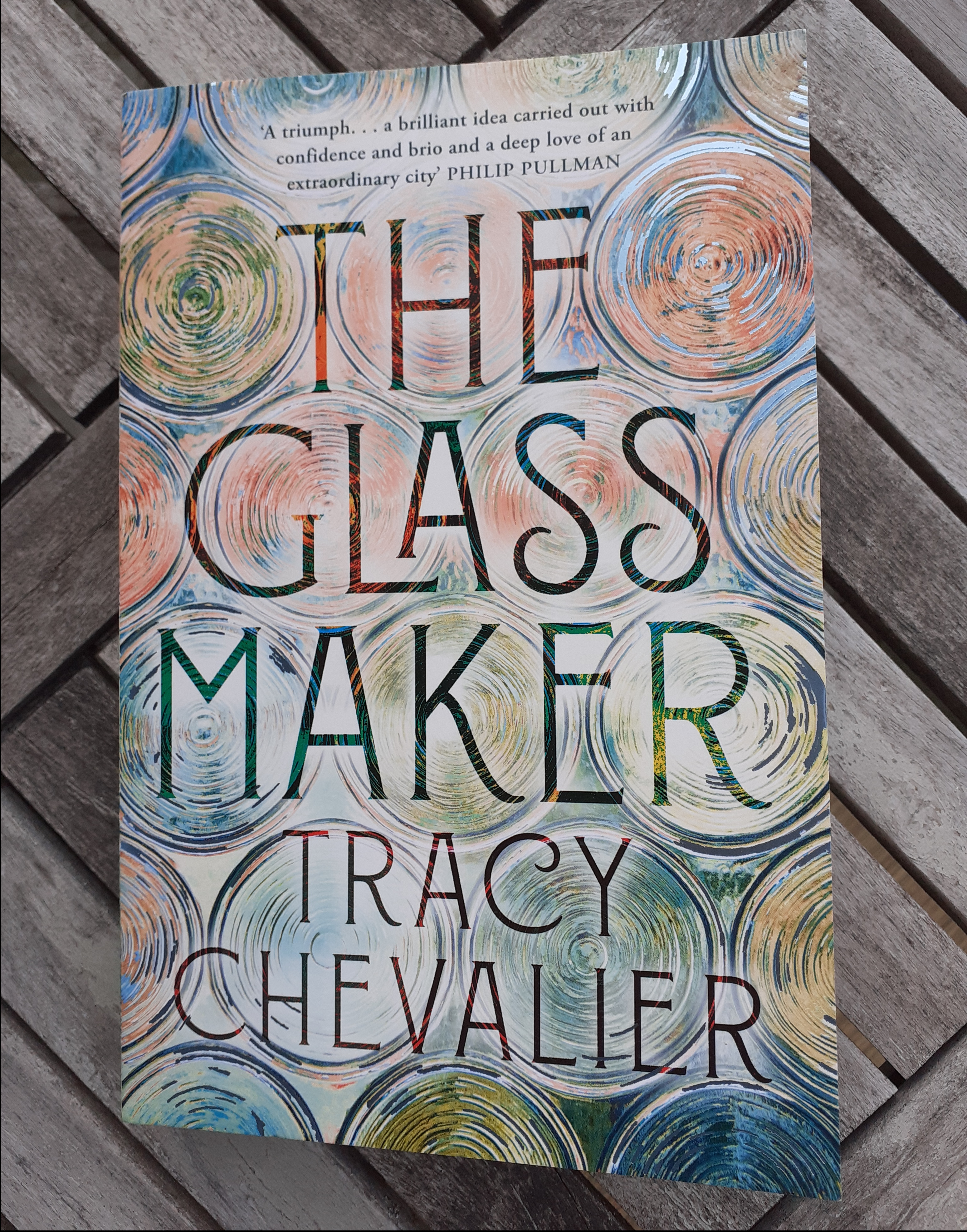
Orsola Rosso lives on Murano, the glassmaker island on the other side of the lagoon from Venice. Time runs differently there for glassmakers, completely absorbed as they are by their creations; the liquid glass, turning the rods this way or that to create the perfect shape.
The Rosso’s are a family of glassmakers and their story starts in 1486 when Orsola’s father dies after an accident in the workshop. While the family needs to settle into a new order, Orsola learns to blow glass. She learns to create glass beads, which she can do on a table with only few tools. Her eldest brother eventually takes over the family business and looks down on her hobby, referring to the beads as rabbit droppings. For Orsola though, it’s much more than a hobby; it’s a purpose, a calling, and she’s so driven that she ends up with beads that are good enough to be sold. Which she does in secret from the rest of the family, knowing her brother will forbid her to sell her beads or claim the money she makes. Then the plague arrives, and when the family has to quarantine and can no longer use their workshop and generate an income, it’s Orsola’s beads that keep them afloat because she doesn’t need a big furnice to create them and they can be traded for provisions. She saves the family this way, but still, her brother won’t acknowledge her success. This annoys Orsola but she stubbornly keeps at it, continuously developing new techniques, imagining new trends, adapting to keep up with the changing times. The Rosso’s end up creating necklaces for the highest members of society, and their mirrors and wine glasses don’t just grace Venetian palaces but are sent all over Europe. There are ups and downs in their personal lives, and in their businesses. The story follows them through it all and I couldn’t get enough of it.
The teeniest complaint I can think of, is the glossery. There’s a lot of Italian/Venetian used and it wasn’t until I had finished the story and the acknowledgements, that I found a glossery at the very last pages. I hadn’t needed it, you can imagine the meanings largely from context, but had I known a glossery was provided, I would have used it as I was reading, instead of leafing back later.
But, this is a beautifully written story, with a fresh and original take. It’s on a subject and a place I knew almost nothing about, and came out thinking I’m now an expert on both. Love it when books do that.
No. 21 – A book with a verb in the title River Sing Me Home / Eleanor Shearer
This book starts in Barbados, 1843, where Rachel lives on the Providence plantation. Rachel is a woman, a slave, and above all a mother. When she is told that slavery has been abolished, the sudden thought of freedom and what to do with it, fills her determination: she’s going to find her children. Then, the joy is struck down immediately because the overseer informs them that they might be free, but they still have to serve a six-year contract of apprenticeship. It means still no money, no rights, no way to start their lives. It breaks Rachel and she realizes she can’t be stuck on the plantation for another six years of misery. At night, she lies awake and thinks about the children she’d lost. The ones that died, the ones that weren’t alive when born, and the ones that were taken away and sold. Before she’s aware of what she’s doing she finds herself slipping away in the night, running as fast and as far away as she can, terrified the entire way because she doesn’t know where to go, or if the overseer has already picked up her trail. She only knows one thing: she needs to find her children and she would rather die trying, than not have tried at all. An island offers only so far you can run, and after a night of running, Rachel reaches its natural border of the sea. Here, she meets Mama B, who runs an abandoned tabaco plantation and offers refuge for runaways. Mama B has helped other women finding their children, and she sets out on helping Rachel as well. Together they walk to Bridgetown, on the other side of the island, because one of the women on the tabaco plantation remembers seeing Mary Grace, one of Rachel’s daughters, there. With the help of Mama B’s network, they narrow down the search for Mary Grace until they locate her as the servant in a dress shop. The reunion fills Rachel’s heart with renewed love, and energy to continue the search for the other children. It’s painful as well, because Mary Grace no longer speaks, muted by the horrors she went through. Mother and daughter need to reacquaint, and learn that they don’t need words to communicate, and they quickly become inseparable. When someone checks the slave registers for them, they learn that the other four children were sold to plantation owners in British Guyana and Trinidad. And so, they travel to British Guyana first, to continue their search for Micah and Thomas Augustus. On the ship they travel with they connect with Nobody, who has been on the run for a long time, and who decides to give up his life at sea to travel with them. He knows the area a little bit, having sailed there several times before, and the three of them quickly become a team. They walk from one plantation to the next, before ending up going deep inland, with the help of a native boy, who teaches them to row a canoe, and read the landscape. Although they have been told that the stories of runaways living in the forest along with native tribes are just stories, Rachel knows first hand from her time with Mama B that these places do exist and they continue on their way. When do they find a village of runaways deep in the forest, they stay with them for a while, learning to live in and read the forest, a landscape they are not used to, and come to appreciate the knowledge that the villagers are willing to share with them. Eventually they continue their way to Trinidad, where it’s more difficult to find their way than before. They don’t know this island, or anybody living there, and it’s more difficult to get their search going. But, Rachel is driven, and Mary Grace and Nobody support her and are ready to follow wherever she needs to go. Everyone they meet has a story to tell. Everyone is a survivor. Although not every story has a happy ending, Rachel concludes that it is still better knowing bad things, than not knowing at all.
The book is beautifully written and Rachel is an amazingly strong character. Her own tough life is only touched upon and you’re left to fill in the blanks. Her own story isn’t worth telling, all she can talk about are her children. Every child lost left a hole in her heart and until she knows what became of them, she can’t love anything else. During the search Rachel learns that there are different kinds of freedom, and that people take different paths to get there. The story is about intergenerational trauma, how deeply it settles in our dna. It’s about survival and the fight for freedom. Above all, it’s about love.
The story stayed with me for a long time after reading, especially because it is based on true events. The author’s note is an important part of the book so please don’t close the book too soon. But first, I encourage you to open it. If you’re into historical fiction you won’t regret this.
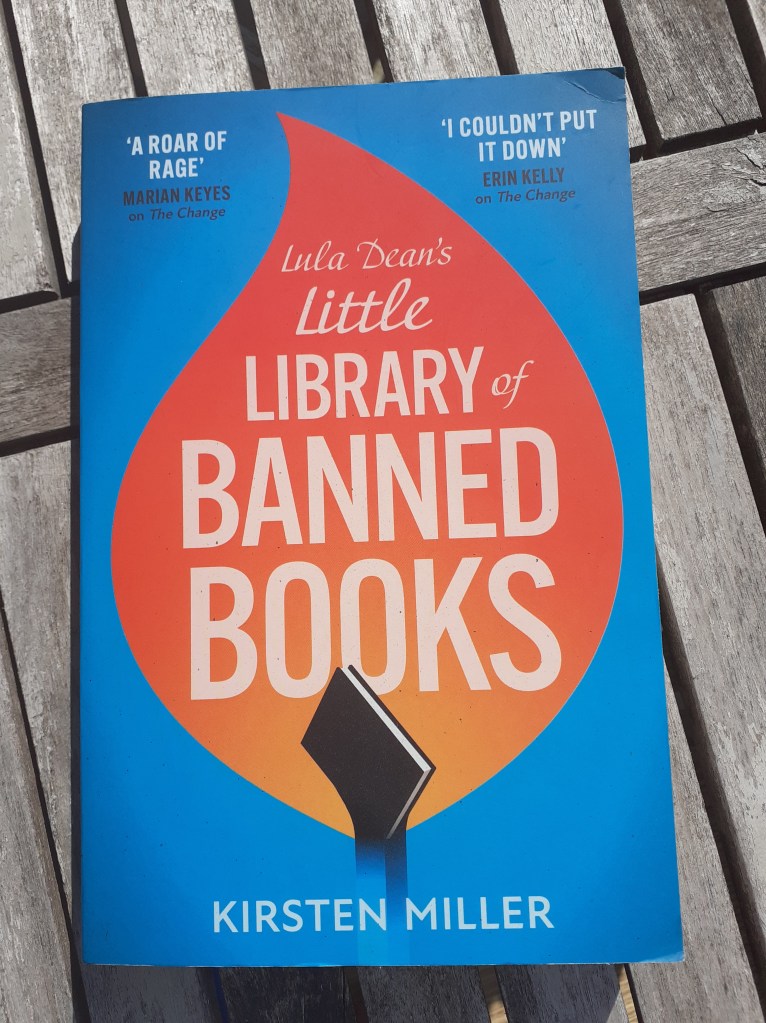
No. 10 : A book published this year Lula Dean’s Little Library of Banned Books / Kirsten Miller
If you like a book that is funny, smart, and on point. If you have a problem with the idea of banning books. Then you should read: Lula Dean’s Little Library of Banned Books.
This book is about all things ugly: racism. Slavery. Sexism. Homophobia. Misogynism. Entitlement. Nazis. Book banning. Bullying. Fake news. None of that sounds like this would be a fun read, but thanks to some clever writing it truly is.
Troy, Georgia, is a place that unfortunately is easy to “see” through the book. It’s pretty at first glance, but the longer you look, the more you realize that it’s just a filter covering up a bad picture. It’s the kind of place where local busy-body Lula Dean makes sure that half the library collection gets banned. What to do with all the banned books? Wasteful to let them take up space, so maybe best to just burn them. This idea is only just stopped by Beverly, the head of the school board (and Lula’s archenemy) and the books instead are stored in her office under lock and key. Lula might not have read any of the books, but she just knows that they corrupt youngsters, getting them hooked on drugs, turning them gay, and giving them un-American thoughts. In protest against the liberal books that the library has in its collection, she puts a Little Free Library in her front yard and fills it with solid, decent, reading materials such as Chicken Soup for the Soul, The Southern Belle’s Guide to Etiquette, and Nancy Drew. Books that will better the world and will help turn things back to the way they were: good and proper American.
Luckily, for every local bully there is a local rebel. And in a wonderful coup they switch out the books in Lula’s library for titles she has deemed inappropriate, but, they place them inside the dust jackets of the original books. So, when someone picks up Buffy Halliday Goes to Europe!, she actually reads the banned Anne Frank: Diary of a Young Girl. One of the first chapters (which, by the way, are named after these book titles so all bonus points for that) had me laughing out loud on the train (an older lady bakes a cake). The chapter after that had me gasping and shaking my head in disbelief. This is the kind of book that does that to you. The book is smartly written with almost every chapter having someone different in the limelight, providing different points of view on the same issues, while adding nuance and inside glances to some of them. Little by little the town starts to stand up against everything that is wrong with it, bringing all that has been simmering and festering under the surface for years to light, and it made me cheer for them.
Censorship is awful. Book banning is awful. This book covers the ugly practice and a lot of other uncomfortable, painful, and serious, topics. And it does it with humor and alacrity. At times there are characters that veered a bit towards caricatures or stereotypes, but it didn’t bother me because they did serve the story and got the message across. The message: book banning makes no sense. And: libraries, big or small, are amazing.
Lula Dean’s Little Library of Banned Books / Kirsten Miller
I don’t know what it is, but this is another book I’ve had lying in my book stack for little over a year and never truly felt like picking it up. Until now. I was actually looking for an item that fit any of the remaining items of the reading challenge list, but go figure, this one spoke to me. I sat down, opened the book and before I knew it I was halfway through. This book is everything main character Sally wants romantic comedies to be: smart, sharp, and funny, with imperfect main characters. It’s a bit meta but it works. Obviously, The Night Owls sketch comedy show that Sally is a writer for, is based on Saturday Night Live. The workplace descriptions were a lot, but because the work is intense and the only thing in Sally’s life, along with her best friends being on the show as well, it makes sense. And this isn’t a normal job; it requires less pages to describe a generic Human Resources department or law firm than it is the behind-the-scenes of a sketch show. Sally’s sketches and her sense of humor are really good, and the fact that she of all people, falls head over heals in love with the host-of-the-week hottie singer, Noah Webster, is ironic and funny. (There was still the expected cliché of the handsome singer being alone and sad in his cage of gold and admiration, but, to stick with the story, Noah plays it off well.) Noah is instantly attracted to Sally, and vice versa, but because Sally is a “normal” woman and not a twenty-two-year old model, she considers Noah out of her reach and focuses on a professional relationship instead. Noah decides to talk to her about her prejudice after the show has wrapped, and shocked to be confronted this way with her own behavior, Sally lashes out at him and they don’t see each other anymore after that. Then the pandemic hits and Sally receives an email from Noah. Being stuck home alone in his mansion he’s had time to reflect and wonders if they should talk things out. Sally, who has moved home to Kansas City after feeling claustrophobic in her New York City apartment, welcomes the email with surprise and is happy with the distraction from lockdown life. (Living with her senior citizen stepfather Jerry, life has been focused on chair yoga, walking the dog, and early dinners.) They talk things out over email, and the email correspondence is fun to read. It’s an easy way to have Sally and Noah explain their behavior and their past, without having them to go into long, winding speeches. Then Noah asks her if she wants to visit him in California and because she doesn’t dare to ask what his intensions are, she drives to California without knowing if it’s going to be a platonic stay or something more. It quickly becomes clear that a platonic relationship is not what Noah has in mind, and their “pod” becomes a love bubble. One day during a hike they are pulled out of the bubble by paparazzi waiting for them in the car park. Noah’s reaction is to let go of Sally’s hand and encouraging her to hurry to the safety of his car. Sally misreading the reaction nearly blows up the relationship but they manage to talk it out and even prepare a statement for their agents to publish. The reactions to the pictures on social media play on Sally’s insecurities, and confirm to her that the relationship makes no sense. So, she takes a break and moves into a hotel for some distance, and to clear her head. A few days into her pout-and-run she gets a call that Jerry hasn’t been seen in two days, and her aunt fears he’s been struck down by Covid. Because the aunt’s husband is in a high-risk category and they’ve basically been in strict quarantine since the outbreak of the pandemic, Sally gets over herself and calls Noah to let him know she needs to travel home. They put aside their differences and Noah not only arranges a private jet for her, but travels along with her and they become full-time carers for Jerry and dog Sugar, and stay until Jerry is fully recovered.
The book is divided in to two parts (2018 and 2020), with an epilogue (2023). For anyone eager never to think back to pandemic times, better ignore this book, because it plays at the height of the lockdowns, that first summer when nobody was going anywhere and if you had to, it seemed like the apocalypse had happened with the empty streets and the masks and gloves, and not allowed to stay anywhere inside. This is, of course, as the title says, a romantic comedy. It’s an easy breezy read and if you like anything based on Pride & Prejudice, you’ll like this. There is a meet-cute in a meeting room (ha), conflict, and a misunderstanding. There is an invite to stay at a mansion (it’s not Pemberley but still), and there is even a big romantic gesture at the end. Also, a feisty but insecure heroine, and a romantic non-player hero, that you’ll be rooting for by the end of the first chapter.
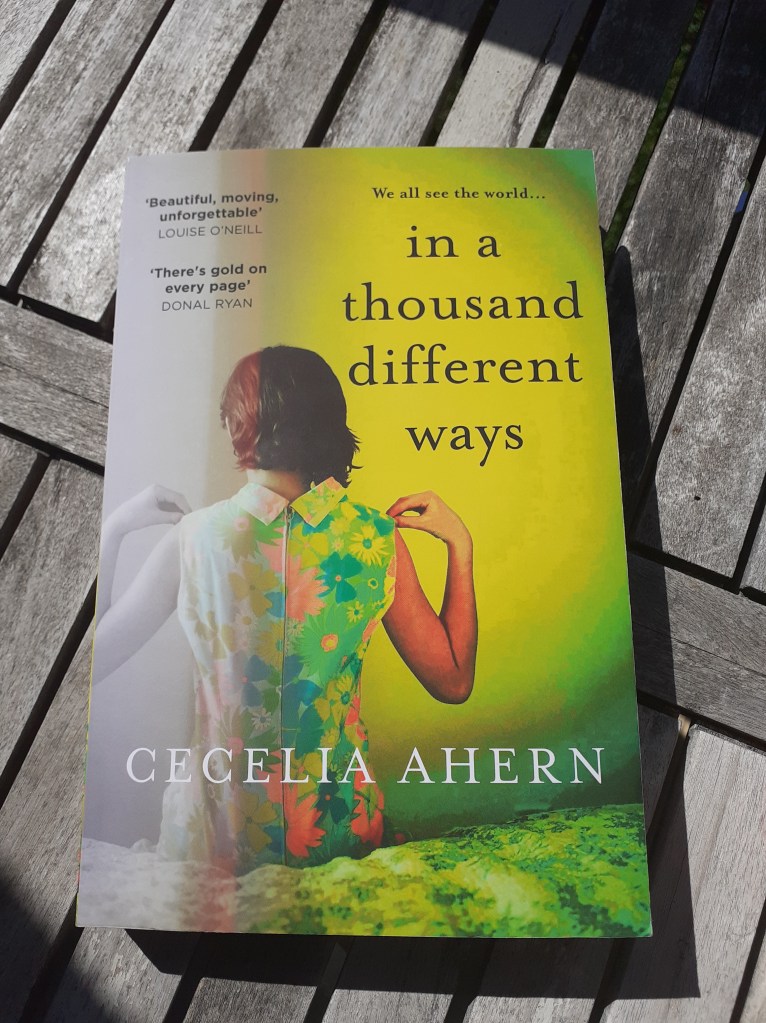
Alice Kelly is eight years old when she comes home from school and finds her mother at home, completely blue. In a panic, she calls in the emergency services, who find that her mother is merely asleep. Confused, Alice checks again: her mother is still blue. But the color isn’t just on her, it’s around her, like a veil trailing behind her. This is the first time Alice sees colors but from that moment on, it doesn’t go away; it only ever grows. She starts seeing the colors of other people, first her brothers, then the children and teachers in school as well. It scares her because she can see the effect of colors on the people around them and is afraid to get other people’s colors on her. She starts wearing sunglasses because the intensity of the colors gives her headaches. Alice grows up in a dysfunctional home: her father has walked out and her mother can’t handle herself, much less her three children. When Alice speaks out about seeing colors and thinks she should see a doctor, Lily (Alice refuses to call her mom because she never acts like one), and younger brother Ollie don’t believe her and make fun of her. Older brother Hugh does believe her, and tries to help her to find out what is causing it. Hugh’s colors are pink and when Lily’s dark and angry colors try to get to him, they are deflected off him. It mesmerizes Alice. Lily’s colors do find an eager recipient in Ollie, who soaks them up and takes them on. This terrifies Alice. The story follows Alice as she navigates through life, seeing colors but not always understanding what they mean: there are new colors, or unique colors. She sees colors of plants and trees as well and goes to parks to breathe in the calm colors of nature to escape the chaotic people colors. Her brother Hugh calls her skill a talent, but Alice calls it a curse. When Alice starts to abuse her skills in a career in sales, it comes at a price and she crashes hard. After this, she needs to re-learn, find a healthier way to deal with the skill, and slowly readjusts. It’s the beginning of something different and although Alice is still being pulled back to her old life by her mother, she is able to distance herself from that as well, moving forward and focusing on her own development. And then one day she is startled to find a man who has no colors. This man becomes an obsession because she doesn’t know what it means. She is hopeful it’s only a good sign, but whatever it means, she won’t know for sure until she sees the man again. So she travels the train over and over, until she meets him there again, still without color. This time, she decides to follow him, to find out what it means.
This book had been lying in my tbr cabinet for a year. It was part of the big “spending spree of the summer of twenty-three” and I was disappointed in myself every time I picked it up and moved it aside to take out another book; I’ve loved books by this author without a fail (which was why I hadn’t hesitated buying this title) yet I couldn’t bring myself to start this one. I guess it’s down to the sixth sense of a bookworm, that tells us when it’s the right moment for a read. And thankfully I never force myself into reading anything, because the right moment was simply not until now, and I got to enjoy it oh so much. The book is divided into sections named after colors and halfway through they start to mean more so you sense what is going to happen and I braced myself when I read “white”. (I went back to check on the earlier section colors because at the time they hadn’t meant as much.) Alice is a great character and interesting to follow through life: she’s flawed, confused, and scared. She learns and grows and wants to be loved. The story goes back and forth between past and present, but it’s easy to keep track. The book is so nicely written, and pulled me in from the first page. It has the same feel as the other books I’ve read by this author: it’s warm, it’s slightly magical, and it’s real at the same time. If that’s something you like to read, please add this to your tbr. And read it whenever you feel the time is right.
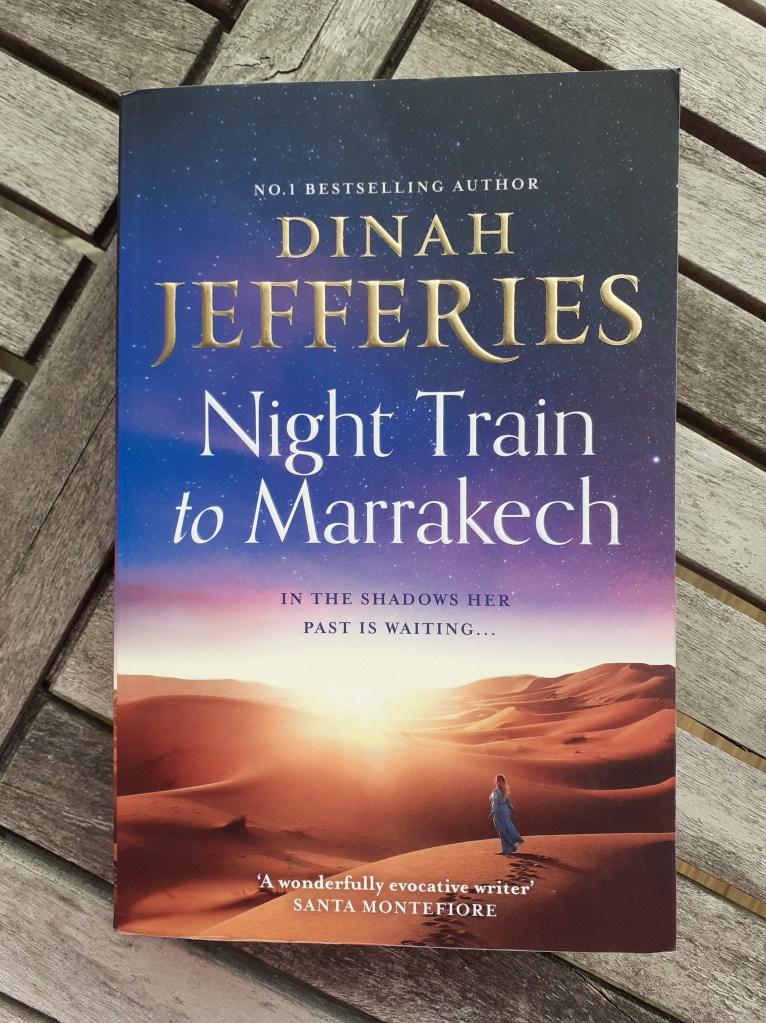
Together with friend M I recently took a spontaneous trip to Marrakech, and we enjoyed the heck out of this wonderful city: the colours, the sounds, the smells. The wonderful people, rich history, and beautiful buildings. We had an amazing time. So, when I spotted this book by an author I’d read before and liked, it was clear that I was destined to read it.
Night Train to Marrakech is set in 1966, when Vicky Baudin discovers she has a grandmother who lives in Marrakech. Having finished her degree in fashion with a dissertation on Yves Saint Laurent, Vicky is eager to travel to the Moroccan city during her summer break: she plans to meet her grandmother and the French designer in one swoop. Arriving by train from Tangier, she quickly realizes that she’s arrived in a world unlike anything she has experienced before. Her grandmother Clemence lives outside the city in the Atlas Mountains where she has completely renovated a medieval estate and turned it into an impressive home. And a great place to hide secrets. Clemence’s cool reception is not the welcome Vicky had expected and it rattles her. So when Clemence offers to set Vicky up in a friend’s riad (traditional home) in the city instead, she eagerly jumps on the opportunity. Within in a day in the old city Vicky has made connections because it’s a place where everybody knows someone who knows someone, but she is surprised to learn that they are all warning her to keep a low profile and not express political views. Tension is simmering but Vicky is not politically aware or involved, and keeps focused on following her own dreams. A few days later her British cousin Beatrice arrives in the city as well and the two women enjoy being tourists in a new place. They get invited to a groovy party (it’s the sixties after all) where Vicky is left disappointed in her run-in with YSL. Things go from bad to worse after that, and witnessing a crime sobers them up quickly. Not sure who to trust anymore, they flee the city for the safety of Clemence’s mountain home but never reach the place: half-way there they get into an accident. Beatrice walks off to find help, and Vicky stays with their injured driver. Beatrice is in another incident and unable to make it back to the accident spot, and the story then turns into a dramatic mystery: what happened to Bea? Bea’s parents travel to the city to help with the search, then an aunt and uncle follow as well. Vicky is being questioned by the police since this is the second incident she has been involved with in as many days, and her mother eventually travels to Marrakech as well.
In the meantime, Clemence is dealing with her elderly mother who is suffering from Alzheimer’s, and she’s afraid that the old lady will blurt out the secrets they have been keeping for a long time. She’s also receiving notes that indicate someone knows about a big secret from her past. Then there is a man from that past reappearing who clearly is the bad guy, as well as another man, she was once in love with. This Theo is an American and it’s hinted at that he is a “spook”. The political situation in the country plays a big part for the story, as it catapults the first incidents and it originally sets the scene with the simmering tensions. But this part of the story is abandoned when the family drama becomes the leading storyline. And yes, those horrible situations exist that people get picked up and disappear never to be heard of again, their disappearance never explained, but it felt a bit easy to use them like that in this story; it felt like the political murders were only used to propel the story forward and that seemed a bit harsh. These were people that Vicky had befriended, and along with Theo’s presence, it could have easily been explored more what the background of all the tension was, what the stakes were, and why it was so dangerous. (It’s explained in a very quick and flimsy way.) But with Clemence’s past catching up with her, Vicky’s mom’s background, and Bea’s mom’s background, there was just a lot of old drama that overshadowed the present. There is also a lot of movement: people going back and forth between the mountain residence and the city, then to a hotel, back to the mountains. And because there were so many different people at different places, none of their stories was going deep enough to fully care about. For example, one the aunts is an experienced climber and she goes up in the mountains searching for Beatrice, but she was just left up in those mountains for chapters on end and I completely forgot about her until another character wondered what was keeping her.
All in all, this book left me underwhelmed. There was a lot of story with a lot of characters. At times it almost read like a soap opera. The story which had started out with a twenty-something setting out on a journey that will change her life forever, turned into a family drama that completely overshadowed this main character’s development: everybody had a story to tell and it was just too much. It wasn’t until reaching the acknowledgements at the end of the book that it became clear that this was actually book three of a trilogy (Women of War). That explained the wrap-up chapter for sure, and from the synopses of the other books provided, I realized how all the characters were brought in to connect the stories in this final work, but having read this under the assumption it was a stand-alone, I was at times puzzled about characters. When I later checked to see if had missed something, I only found a mention of the trilogy on the author introduction page. Because I’d already read works from this author, I had skipped that page. I know that’s on me, but I really don’t think that’s enough to indicate work is part of a series: I don’t think it’s too much to ask to mention this on the cover, title page, or somewhere in the summary on the back. Knowing a book is part of a series reads differently, even if you haven’t read the other books (yet). I was also a bit confused about the title and the cover art. Gorgeous as they are, they didn’t connect to the story. The desert plays no part in the story. The summary on the back cover mentions an “epic journey” and yes, travelling to Marrakech in those days involved taking a long train ride from Tangier or Casablanca. But within two paragraphs, Vicky arrives in Marrakech and the whole journey really plays no part in the character development. All characters that are travelling into Marrakech take this train but it’s only mentioned in passing for them. The station also plays no central role in the story, and it’s just a place to go pick up new characters. Then I thought the train must be a metaphor but I couldn’t really make that fit either. If the “epic journey” is meant figuratively, I don’t find it fitting either because the main character just isn’t going through enough development to make that stick.
The book’s strong parts were the descriptions, the way that the city is described, the experience of being in the souk for the first time, the intense heat, the colours and the smells. The riad’s, the Atlas Mountains, and the food; it was all spot-on and it took me right back. I really wanted to love this book, and maybe my expectations were too high, but it just left me disappointed. If you have this book on your reading wish-list, I strongly suggest reading the other titles of the series first (Daughters of War, and The Hidden Palace) because I don’t think this really works as a stand-alone and it might help understand some of the plot choices better.
This turned out to be one of those books that made me forget about the plenty of other books I have lying around yet to be read: it arrived, curiously I opened it on the first page, and next thing I knew, I’d read 70 odd pages. I was hooked from the beginning and loved it. And I don’t care if this makes me appear shallow, but I also loved the cover art, with the optical illusion of the almost-3d spoon.
Black Cake is a family drama slash family mystery. It starts with estranged brother and sister Byron and Benny meeting again for the first time in years. It’s a forced reunion, brought on by the death of their mother, Eleanor. Eleanor has left them two things: a Caribbean black cake, and a recording of her life story. As the story unravels, it turns out that their mother’s life was not quite what they thought it was. Not only are the siblings grieving the loss of their last parent, but they are struggling with each other’s company and have to deal with the resentment and confusion that simmers underneath the surface. It’s difficult to divulge further without giving away spoilers, so all I’ll say is that the story involves island life, swimming, murder, and perseverance. Also in the mix are colonialism, being different, and outsiders. Add love, and loyalty. Dust with a sprinkling of identity, finding yourself and staying true to yourself. Serve with acceptance and forgiveness.
There is a lot of story and there are a lot of characters to keep track of, but it’s never too much. It’s well written, and the chapters are (at times very) short and that makes it easy to forget about the real world, and just keep reading. One more chapter, one more, one more. If you can afford to lose time like that, I strongly recommend diving into this story.
Note the 1st : no apology for the abundant use of puns should be expected. Note the 2nd: I do want to acknowledge that the book was turned into a series (streaming on Disney+ in the NL; check for your own location if not here) which seems to have good reviews. I cannot confirm nor deny that as the book was just too good for me to get into the series.
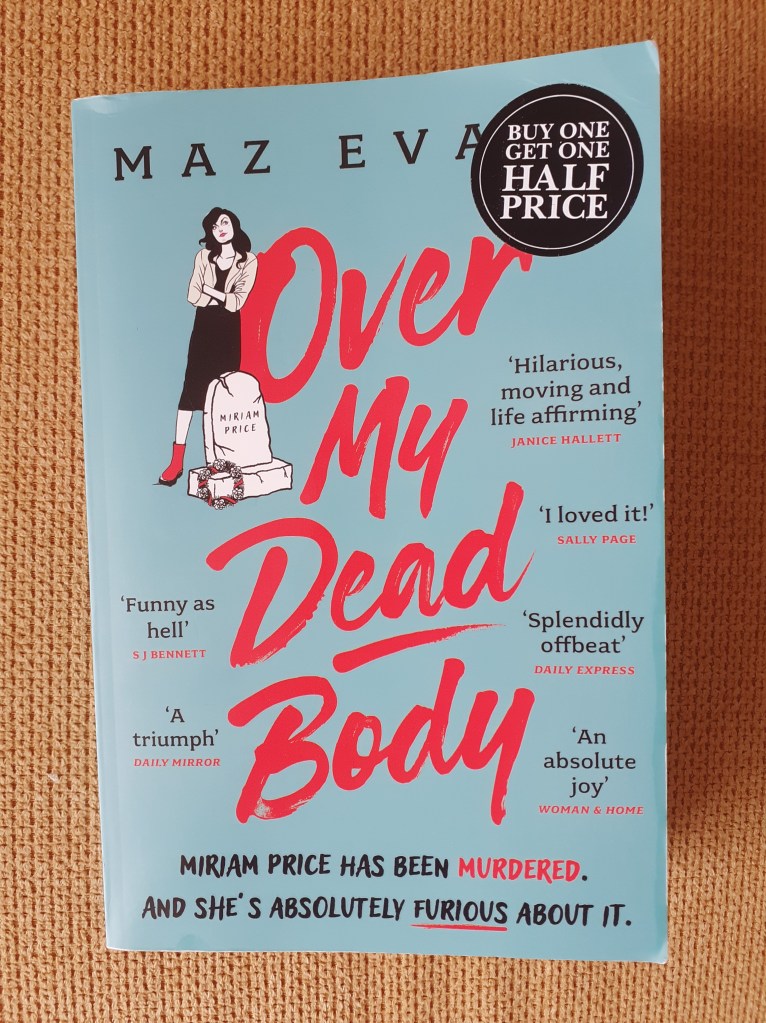
Meet Miriam Price. Forty-something doctor, unhappy wife, slightly unpleasant woman. Dead. The police have ruled her death accidental but Miriam knows it was not because she was there. Also, she’s still there, stuck in Limbo and not allowed to move on to the afterlife until she either reaches her death date, or solves the mystery of her murder. Because there’s no way Miriam is going to hang around in orange dungarees for the next fifty years, she sets about to solving her murder. But it’s not easy figuring things out when you’re a lowest-level ghostly figure, so she needs outside help. The only person who can see and hear her, is her elderly neighbour Winnie. The problem with that is that the two can’t stand each other and that asking for help from the person she sent an envelope filled with glitter as recently as the day before her death, is not easy. The good news though, is that Winnie is an amateur sleuth and up for the adventure, if only to get rid of her annoying neighbour for good. Throughout the story you learn more about the antics the women have been up to and it’s hilarious. Winnie and Miriam are nothing alike but driven by the same moral standards, which makes them the perfect odd couple detective team.
Like in a lot of ghost stories, Miriam gets to stalk her friends and family and glance behind the curtain of the people in her life, and of course, she learns that not all is what it seemed: her lover, her best friend, her brother, they all have a reason for their behaviour in relation to her, and despite her self-awareness this still catches her by surprise. That felt a bit too much of a cliché to me. Everything else though, is really well done. Miriam is grouchy and sarcastic and her commentary is sharp as spikes. Her brother (“more woke than a shop full of alarm clocks”), Millennial medical students (“snowflakes” she refers to as No. 1, No. 2 and No. 3) and Diagnosis Murder especially, bring out the worst (and best) in her.
This book had me snorting and laughing out loud and Miriam and Winnie’s exchanges were the biggest contributors to this. The book is a breezy read, doesn’t get scary, and although I could predict the ending by the time I reached the second chapter, I enjoyed this book a lot. This very fun read was exactly what I needed after the slightly more angsty books I’ve been reading of late; it was the perfect palate cleanser.
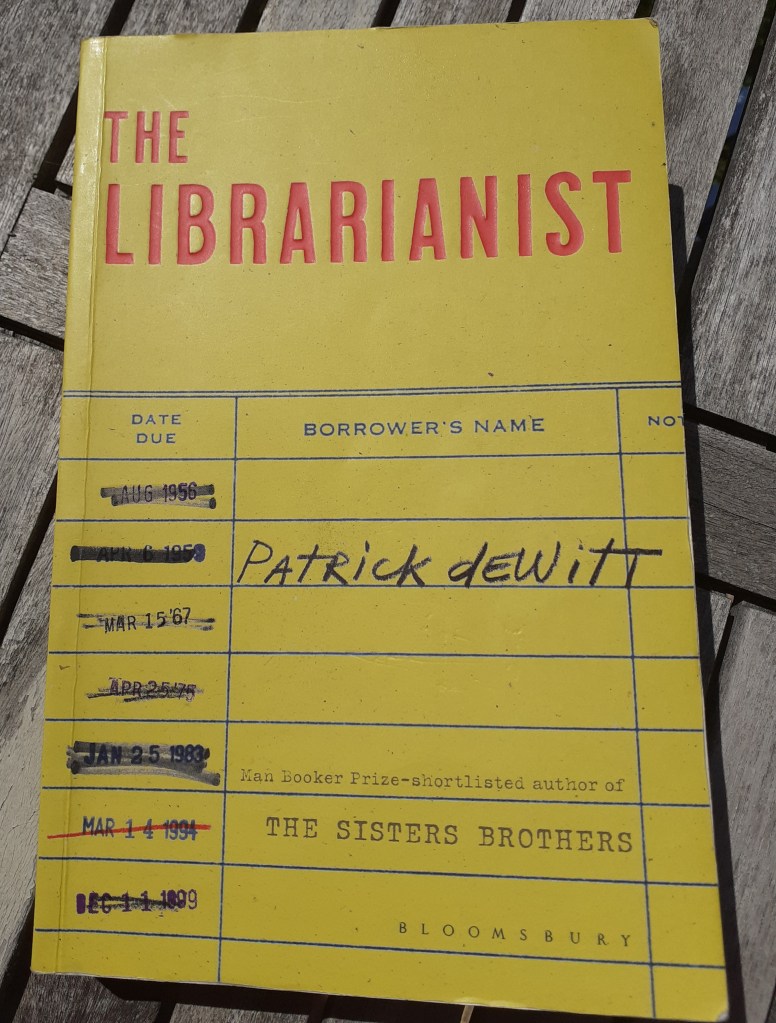
I absolutely loved the out-thereness of deWitt’s The Sisters Brothers, French Exit, and Undermajordomo Minor. With bonus points for cover art. Although the cover art is easily as wonderful, The Librarianist has a very different feel to it, as this story is less out-there and more barely-there.
The story is about Bob, the retired librarian(ist) from the title. Bob lived his life according to a strict schedule which existed of work, mainly, and not much of a personal life otherwise. Bob is the ultimate loner, spending his entire life in the same house. Routine is everything to him. Then, on his daily one-mile walk, he finds an elderly woman lost, staring into the freezer of a corner shop. She is wearing a badge, so he returns her to the assisted-living home where she is registered, and this leads to Bob becoming a volunteer there. The people at the home are quite the characters, which Bob isn’t, and they aren’t interested in him nor what he has to offer (book readings, starting with the great Russians). Slowly but surely Bob’s past is revealed and it turns out that his loner-ship is a natural state of being. Bob was an only child, he didn’t know his father, and never had any friends. That is, until he starts working at the local public library where he meets Ethan. Ethan is everything Bob is not: charismatic, dashing and outgoing. The library is also where he meets his wife Connie. She is pretty and sociable; the yin to Bob’s yang. Bob grounds both Ethan and Connie, but their personalities need to fly and it’s not a spoiler to say that it doesn’t take long before Bob is a loner once again. The things that happen to Bob, truly happen to him and he is never really active in anything. He’s the ultimate stoic: whatever happens, he just shrugs and trudges on. The two exceptions to this are his decision to become a volunteer at the assisted-living home, and the time when as a kid he ran away from home. He got onto a bus and a train, heading for the Oregon coast. Halfway through the train trip, two traveling performers join him on the journey and accept him as a stowaway, but from then on out, he loses his momentum and decision-making skills: the ladies invite him to come along with them and he does. He doesn’t really make any choices any more, he just goes along with everything. If ever there was a follower, it was Bob. That his only real decisions took place at the beginning and near-end of his life are like bookends to the story of Bob, and totally fitting.
The beginning and end were the stronger parts for me, as I found the middle part a bit slow. I think if I re-read this, I might feel different about it, as it was mostly because I kept waiting for the part where things took a turn and went wild. And they just never did. That’s not to say this isn’t a good story. It really is. It’s also funny, in a very dry way. It’s just very normal compared to the other work I’d read by this author, and I guess I wasn’t prepared for that. So let this be a warning for others: do not expect this book to be outrageous. This book is as calm and solid as its protagonist.



 Bookworm in the City