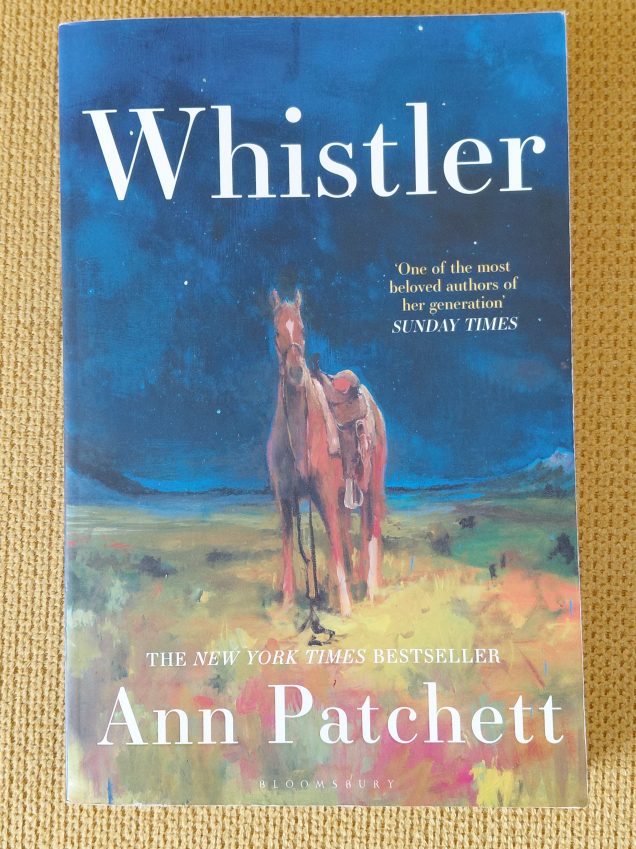
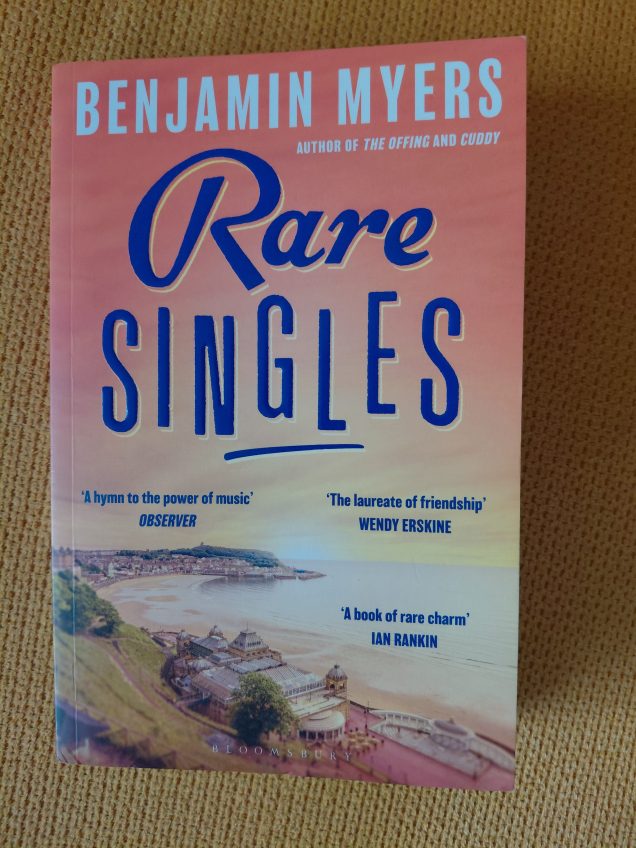
What it is: portrait of a family Did I like it: absolutely
The combination of the title and the cover art made me think this book would be about the painter Whistler (“did he paint horses too?” was what went through my mind), but the back summary made it clear that wasn’t to be the case. And then I was confused and wanted to know what the title meant so I dove straight in, forgoing the reading challenge right away once again.
It turns out that this book is the story of Daphne and Eddie. For a brief amount of time they were family and then that bond got disconnected. Daphne was nine at the time so she doesn’t immediately recognize Eddie when they randomly meet again at a museum in New York more than forty years later, but they spend hours at the museum café catching up. Meeting her once-stepfather sets off a watershed of memories and emotions in Daphne. Their bond is reignited and over the summer the two get to know each other as adults and do not waste the opportunity to get the answers to questions that had gone unanswered for so long. Daphne’s sister Leda is just as happy to be able to reconnect with Eddie but she is two-years younger than Daphne and as such even has less clear memories of the short time that they were family. All three of them went through traumatic events at the same time, Daphne and Eddie share an event, that just so happens to be connected to Leda’s moment. Now they have a chance to look back at these events together and they realize that they have filled in the gaps in their memories in very different ways. For the first time they get to a complete picture. And Whistler? That turns out to be something difficult to explain without giving away spoilers so all I can say is that there is a story within the story.
This book is about memories and what we think we know. It’s about choices that were made, either by us or for us. It’s about people that enter your life and leave a solid imprint, no matter how long or short they stayed. This book wasn’t difficult or complicated or big. It had an easy flow, covered universal subjects, and boy did it pack a punch. All the characters in this book felt real, and it contributed to make the special bond between Eddie and Daphne feel very believable. The ending was so nicely done and for me it was what lifted the book above the good mark to a good plus.
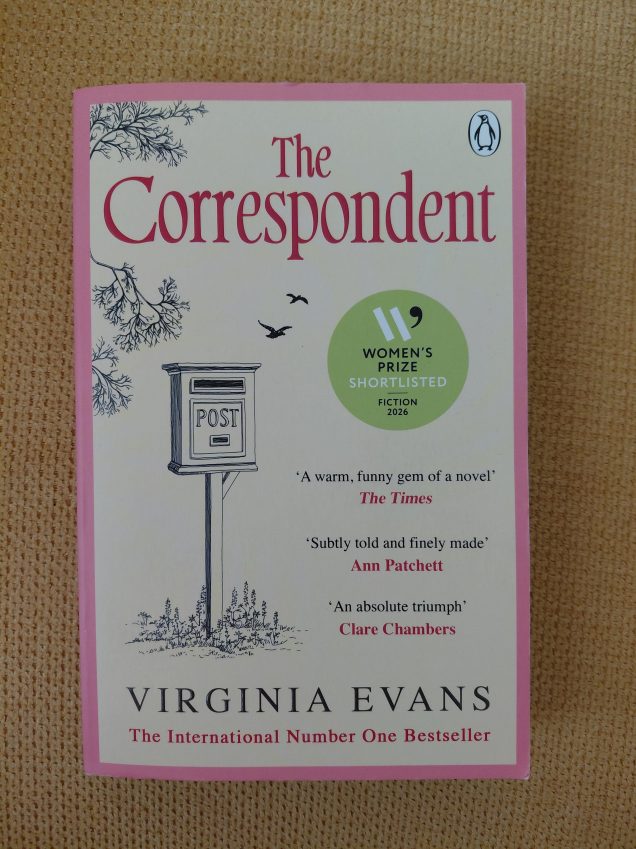
What it is: a tale told through letters Did I like it: I loved it
This book had been on my i-want-it list for a while so the moment I spotted the paperback edition available it ended up in my shopping basket. It doesn’t fit any of the remaining reading challenge items but I wanted to read it nonetheless and am I glad I did because it was everything I hoped it would be and then some.
Sybil Van Antwerp is the correspondent of the title. Every other day she sits at her desk to write to, well, everybody. She has been writing letters since she was a young girl and has lost count of the number of letters she has written and received. Her story is told solely through her correspondence, outgoing and incoming. For this as a trope to work it requires an interesting enough character that we can get to know them even through their own words. But fear not, because Sybil certainly is interesting and has a great way with words. Sybil is a mother and grandmother, a retired judicial clerk, avid reader and gardener. She is sharp, witty, outspoken and set in her ways. But at seventy-something she is confronted by some serious issues and is forced to reflect on her own behavior and events that happened in the past. Sybil has always used her writing to process her thoughts and feelings and it shows because the story includes some unfinished letters as well. These parts confused me at first but the way it all folds together at the end was so well done it made me tear up. Sybil’s writing is smart, funny, and heartbreaking. She exchanges letters and notes with anybody and everybody, from her neighbor, brother, and best friend, to a helpdesk administrator, her favorite authors, and the Dean of a university department. The book is a love letter to letter writing and while Sybil encourages a young girl to start writing letters, she also warns that written words are immortal. (If only social media came with this warning.) The story is set over a couple of years and you get to follow Sybil’s life through time and space. There are family issues, suitors, and friends in need. Sybil has experienced a lot of Life and even though some experiences happened decades earlier, the pain remains close to the surface, eventually bursting through.
I loved every page of this book: the setup was so well executed and even the minor characters came alive through their correspondence with Sybil. This was another one of those books where I wanted to savor every page yet blew right through it. The story easily could have gone fully dramatic or saccharine sweet but all praise to Virginia Evans for keeping it just the right amount of bittersweet. This book won the Women’s Prize for Fiction 2026 and I completely understand why.
What it is: nonfiction about the injustice of witch-hunts Did I like it: it put a spell on me
This book did not fit into any category for the reading challenge, but the title was too tempting. Especially after reading The book of secrets, this seemed an appropriate read. So, I pressed pause on the reading challenge a little bit and dug in. And was I glad I did, because this was as delightful a read as I had figured it to be! First of all, there’s that title making it seem like this is a guideline. Hilarious. It’s made clear in the authors’ note that this was the original idea but eventually the setup was changed slightly. Chapter titles are a left-over of that original idea as well, which gives you wonderful titles such as “How to start a witch-hunt” and “Know your enemy part II: Daemonologie”. The chapters have fictionalized starter parts which I thought was really nicely done as it made the factual history come alive. The book focuses on the witch hunts in Scotland, but there are mentions of other famous incidents in the Western hemisphere, with the Salem witch trials as a special standout (for all the wrong reasons of course).
The authors formed The Witches of Scotland campaign a couple of years ago for recognition of the historic injustice of the witch trials in Scotland. This resulted in a formal state apology in 2022 by the then Scottish First Minister. The campaign, which includes a podcast as well as this book, remains active to generate awareness for this horrifically unfair treatment of people (mostly women) by the patriarchy. Also, it has its own tartan which looks awesome (of course I looked it up) and the story behind the design is explained in one of the “About” chapters.
The message of this book is clear: as long as we don’t learn from the past, we can’t expect change in the now. Because the last part of the book isn’t about history, it’s about “How to accuse a modern-day witch”. The patriarchy is still ruling so why would witch hunts have stopped? There is a very informative chapter about ‘classic style’ witch hunts that are still happening today, with a focus on sub-Saharan Africa, and there is, equally informative, the last chapter that makes it clear a modern variant of witch hunt is happening as well in north-western parts of the world, setting female progress back decades. Yes, it’s written by women, about women’s rights and I’m sure there are people not even bothering to read or listen by labelling it “feminist”. But data doesn’t lie: there still isn’t parity in the workplace, it is still mostly women accused of being a witch, algorithms of social media and AI are unfavorable towards women, statues of men far outnumber those of women, and I could go on and on.
This book put a spell on me; I liked the combination of facts and fiction. These authors clearly have done their research and I also enjoyed how they generously allow their expert sources space on the pages as well. There is an extensive list of sources/further reading material, a translation list for the (olde) Scot used, an index, and there are drawings and pictures to show and not just tell. The writing is wonderfully and painfully informative, and it’s deliciously snarky, cynical and sharp. Quarrelsome dames for the win!
How to Kill a Witch : A Guide for the Patriarchy / Claire Mitchell & Zoe Venditozzi
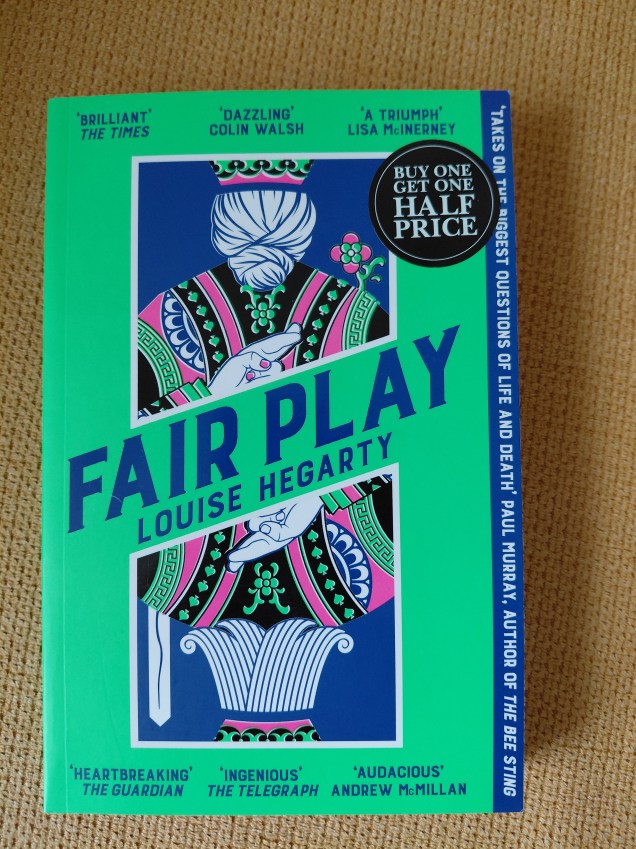
What it is: a multi-layered detective story Did I like it: no mystery about it, I did indeed
A book that didn’t fit into any category of the reading challenge but I read it anyway because I wanted to. The brightness of the cover was most certainly a pull, as well as the art itself. You might be aware of my opinion on blurbs by now, so it’ll be no surprise that I think there were way too many on it. That said about the outside, let’s dig in to what’s inside.
The story is about Abigail. She has a brother, Benjamin, who dies during their annual New Years Eve/Benjamin’s birthday combo get-away with friends. During these getaways they play murder mysteries that Abigail sets up as she’s a big fan of the genre and knows her classics. With Benjamin’s death, the story turns into a real murder mystery. But when the police are eager to dismiss his death as a suicide, Abigail refuses to accept that. This is where the story takes a surprising turn and splits into two different story lines. One about Abigail and how she is (not) dealing with her brother’s death, and one in which the consulting detective she hires takes the lead. Consulting detective Bell is a classic consulting detective a la Poirot and the story contains more classical elements: a big country house, a mysterious foreigner, jilted lovers, money problems, and big reveals. The story read very English to me, until the guards popped up and I realized this was actually set in Ireland. I think my mind went to England because of all those classic murder mysteries. This story is not just about a murder mystery, it’s about how people deal with grief as well. It’s a brilliant set up and I enjoyed this book a lot. I would recommend this to anyone that’s looking for a not-too-big murder mystery with a twist.
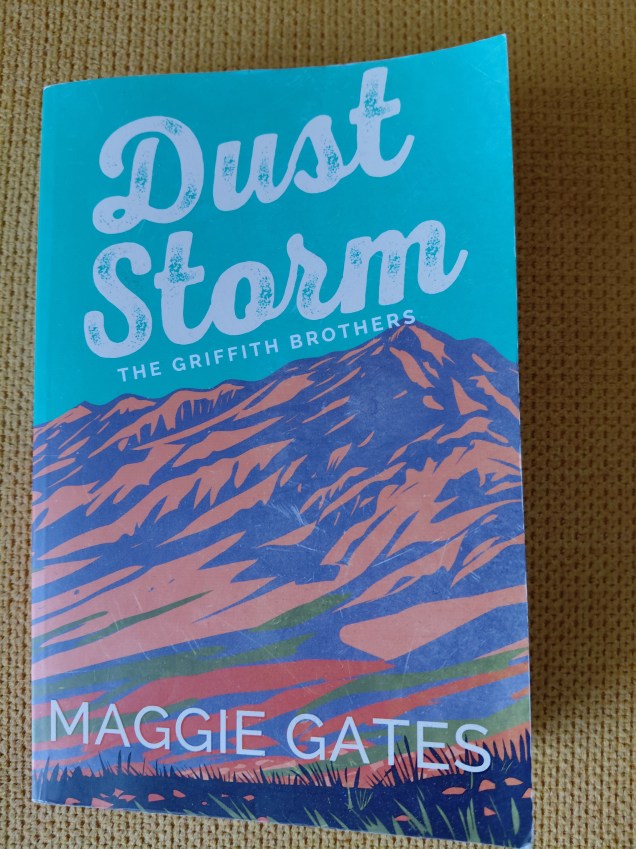
What it is: contemporary romance with a content warning Did I like it: it wasn’t for me
For months I’ve been trying to remember when, where or why I bought this book. My best guess is a train station bookshop by lack of anything else from my wish list or within budget available because contemporary romance is not something I veer towards and the summary on the back isn’t the most intriguing. It turns out I can not only surprise or scare myself, but confuse myself as well. But, as we all know, there is a time for every book and it came in handy during my first week of commuting to and from the new job. A new job comes with a lot of new information to process and a light and fluffy read during the commute allowed me to give my brain some much-earned rest to compensate.
The book starts by warning the reader about the adult content (something I had never seen before) and it wasn’t for nothing because this story contains a plenty of that, so I’m following up with a warning of my own: if that’s not your jam, don’t bother with this book. Ignoring the language part, the story was..hm, sort of okay. It contains multiple tropes from the romanceverse: opposites attract, grumpy-vs-sunshine, and fish out of water. Main characters, and telling the story in present tense in alternate chapters, are Christian and Cassandra. Cassandra has a type A personality, lives in New York City where she enjoys a high-flying career in publicity that includes mingling with celebrities and fashion designers. An incident sees her demoted to working corporate accounts only, starting with a cattle ranch in Texas. Her boss, who is also her fiancé, drops her off on the ranch before he flies off to Spain to take over her former client. Messy. The ranch belongs to the Griffith family, and super mellow Christian is its general manager. He is a widower and father of two young girls, and doesn’t hold back on his opinions (even though he doesn’t like it when people tell him theirs). Within two minutes of meeting, he tells Cassandra that her fiancé is an idiot and she should dump him. Thinking that is one thing, but to basically tell someone you literally met minutes ago and don’t know at all, that they are making bad life decisions is pretty rude. And it doesn’t stop there; Christian is also absolutely adamant that a woman riding in his car is not allowed to open the doors herself. On multiple occasions he makes his daughters and Cassandra go back in the car, shuts the door on them, and then makes them wait for him to open it. It’s probably well-meant but it made me itch as it read more about dominating women to me than chivalry. As the trope predicts, Cassandra is a fiercely independent woman who doesn’t like being told what she can or cannot do. Cassandra doesn’t like people, especially children, nor pets. So, moving into the house with Christian, his daughters, dog and pet cow, because the guest house is flooded, is her personal nightmare. Christian doesn’t like the way Cassandra talks to his daughters (as if they are adults), even though the children find it refreshing and like her for it. Cassandra, the daughters, and I were annoyed by Christian’s closed-mindedness.
The story has something to do with future proofing the ranch but it’s mostly about how Cassandra and Christian are opposites that attract. It seemed that Cassandra was the one doing the growing, as she was also the fish out of water, and Christian tended to be a bit of a bully with her which is why I didn’t like him. Then there was a big incident involving one of Christian’s brothers which causes him to break down, revealing some unexpected and oddly timed (too close to the end of the story) revelations about his personality. The incident with his brother is also something that kicks off another book and I wonder about the timelines of these stories, where and how they overlap. (Although I’m not curious enough to consider reading it.) Then to add to the oddness, the epilogue is in two parts as well, one from each of their perspectives, taking place eleven years later. It was such a big jump in time and it didn’t really add anything for me. Especially with romance novels I always question the use of epilogues anyway, because if one thing is for certain, it’s that there is a happily-ever-after.
All in all this book was okay enough to keep me entertained on days that I didn’t have enough brain cells available for anything else. If you like reading spicy contemporary romance this might be just for you (and if so, don’t forget to check out the other titles in the series), but for me, the kids and animals were the best parts of the story and I was keen to move onto something new as soon as I finished the last page.
What it is: a story with a lot of soul Did I like it: oh yeah
This is the last book I started last year, as part of the 2025 reading challenge due to the blue letters of the title. It doesn’t count anymore, so it’s just a review now. I had bought this book specifically for the reading challenge and I recognized Scarborough on the cover. Then I realized I had read another book by this author, The Offing, which I remember as a very quiet story about self-discovery and growth. This book is different, yet there are comparisons that can be made: there are two main characters with a big age difference, it’s about self-discovery and growth as well, and both stories are set on the Yorkshire coast.
Rare Singles is set in Scarborough where Dinah is living her not-so-best life. She works as a checkout lady, is deeply unhappy about her personal life, and only cares about the weekends when she gets to enjoy soul music at a local club, as part of the Northern soul scene. She’s a massive fan of Bucky Bronco and asks him to travel to England and perform at the club for the last soul weekend of the season. Bucky Bronco lives in Chicago where he is surviving, just about, and not exactly living. His wife has passed away and all he is left with, is a crippling addiction. When he receives an invite to do the show at a club in Scarborough, he’s stunned to discover people not only remember him, but still love the one song that he had released five decades before. He decides he has nothing to loose, and gets himself on a plane to England. Bucky has never travelled outside the US and his musings about northern England are fun to read. Just like Dinah and Bucky, Scarborough’s glory days are a thing of the past and the setting felt like a proper third main character to me, especially the way it is seen through Bucky’s eyes. The story is set in just a few days, but covers a lifetime. I really enjoyed Bucky as a main character, he is the star attraction in more than one way, and Dinah is his loyal second-in-command. There are discoveries made, mostly about personal growth and development, and I think this story can easily be made into a movie. (Actually, it totally should! The soundtrack would be awesome.) At just over 200 pages this is not a big read at all so even if you don’t like big books, or want to travel light, book-wise, this comes highly recommended!
What is it: screwball detective Did I like it: so much so, that this was my third time reading
Stephanie and Lula are at it again: they’re chasing down skips for cousin Vinnie’s bail bond’s office and do so with more luck than wisdom. They are after Geoffrey Cubbin, who is out on a lots-of-zeroes bond for embezzling millions of dollars from an assisted living home. Cubbin disappeared in the middle of the night from the hospital where he was getting surgery, so that’s where the bounty hunters go first. The security manager at the hospital turns out to be Randy Briggs, whom they’ve met in previous adventures. Also looking for Cubbin, is Stephanie’s currently-on-again boyfriend, detective Joe Morelli. They bundle their forces for this search and it’s a lot of fun. Cubbin is not the only skip that Stephanie and Lula must recover; also out on a bond is Dottie Luchek, who was arrested for solicitation at a bar, and Brody Logan, a homeless man who took a hammer to a police car. Brody listed a religious item considered to be worth a lot of money for his bond but never turned it in. Now Stephanie and Lula need to get both Brody and the Tiki back, which proves a more difficult task than imagined. These smaller cases are the running gag for the story because aside from the Cubbin case, there is another big plot which involves Ranger. Ranger and a friend of his are both receiving death threats and Ranger asks Stephanie to be his bodyguard. Although there is a lot going on, the story reads smoothly. I like these books because the characters are a lot of fun, and it never gets boring. Of course, there’s a grenade shot into Stephanie’s apartment and there are several cars demolished in explosions. Grandma Mazur is all too eager to spy on behalf of Stephanie, and Lula wears bright spandex outfits and shares her knowledge on how to be a proper ‘ho with Dottie. The entire Stephanie Plum series is part of my comfort reading, and this book delivers as they all do; it’s fast and fun, and it got me back to reading.
What is it: a heart-warming story Did I like it: I was absolutely charmed
Arthur Pepper is a widower living in a suburb of York (the Old one). Losing his wife was hard on him and he has had difficulty moving on, of finding a new way to live life on his own. Arthur never had any real friends and his son and daughter are very much leading their own lives. His son lives in Australia with his family and his daughter lives nearby in York and neither of them attended their mother’s funeral. This was a great pain to Arthur but he’s too polite to mention it whenever they call. On the anniversary of his wife’s death he goes to clean out her closet and finds a charm bracelet. It contains an elephant, a painter’s palette, a flower, a thimble, a tiger, a book, a ring and a heart. Upon closer inspection the elephant charm has a phone number engraved on it and before he knows what he’s doing, he’s calling the number. It turns out he’s calling India and when he mentions his wife’s name, a man starts to tell a story about his former babysitter. This confuses Arthur because his wife never told him she had ever been to India, let alone to work as a babysitter. But the conversation with the Indian man sparks something in Arthur and curiosity gets the best of him so he starts to think about the other charms and what they could further reveal about his late wife. So, for the first time in a year, Arthur has found purpose again and sets out on a road trip, hitching a ride with his neighbour Bernadette and her teenage son. And so starts an adventure Arthur didn’t know he needed or wanted, but he ends up enjoying nonetheless.
Arthur is a man very much set in his ways. He always wears the same outfits, and has the same meals. He keeps the house the way his wife liked and prefers to go into statue mode when someone’s knocking on the door rather than having to invite them in. The only thing he picked up since his wife’s passing, is caring for Frederica the fern. For him to go out on a spontaneous trip is a lot and his daughter Lucy has a hard time believing it, instead fearing he is starting to lose his mind and she starts looking into assisted living homes in the area. But, going out and meeting new people makes Arthur realize just how small his world had gotten, and that he’s too young to waste away behind closed curtains. The trip doesn’t limit itself about learning of his wife’s life from before they met; it’s a trip of self-discovery as well.
Arthur is a delightful character who is not afraid to do some soul-searching and confronts his own flaws. At nearly seventy he learns to make friends and to take an interest in things that happen outside of his home. He’s sometimes hesitant to try new things, but eventually does jump into the deep end.
I thought this was a very charming story and I enjoyed every page of it.
The curious charms of Arthur Pepper / Phaedra Patrick
What is it: a classic who-dunnit Did I like it: I-dun
This book was intended for the no. 13 slot of the reading challenge but there was a waiting list at the library and by the time I could collect it, I had already read the Banned books of Berlin instead. I ended up reading the city-books back to back, so this book is kind of a bonus to the category, like a 13-b.
The story is about Jess, who goes to visit her brother in Paris but when she arrives at his apartment he’s not there. This is odd because he had left her a voice note in which he gave her the address along with instructions on how to get there and told her he would be waiting for her. In his apartment she finds his wallet, as well as the keys of his Vespa so why would his friends and neighbours all suggest that he took a spontaneous trip out of the city? Jess is determined to find out where Ben is and what the other people in the building are hiding.
This mystery borrows heavily from the classic gothics: a picturesque setting for a house that gives off a sense of unease. Clearly, something is wrong here but it’s more a feeling than anything tangible. There are echoing footsteps in the dark, creaking floorboards and hidden doors. Jess newly arriving at the apartment building, has the reader come along with her on her exploration of the building and meeting the people living there. The chapters switch point of views between Jess and Ben’s neighbours and it quickly becomes clear that everybody has something to hide and everybody is a suspect. The chapters are short, and the book reads fast and easy.
If you’re looking for a modern classic who-dunnit, be sure to pick up this book.
Also, the artwork of this book is cool, from the cover art to the chapter headings.
After finishing the one book I had brought with me on holiday, I got to pick something from the hotel library. What a choice I made.
The story takes us to the make-believe island of Gordilla, where Miranda flees to because she needs some alone time. This island is a yet-to-be-discovered-by-the-masses destination so it’s quite and there’s not much happening. So little is happening, that Miranda decides to join an excursion into the jungle where recently discovered ruins can be visited. Within no-time she loses her group though and of course that’s exactly when disaster strikes: earthquake! The jungle floor opens up and swallows our heroine who lands underground in parts of the ancient city that is still in the process of being excavated. One of the archaeologists working the site is trapped in the same space as Miranda is, and that makes this Nick Jago our hero. Miranda and Nick spend the rest of the day and night trying to find a way out, climbing back up to the surface. They entertain themselves by swapping stories of horrible childhoods: they both come from politically influential and wealthy families but had to grow up without their parents as they were raised by nannies and dropped off at boarding schools. For Miranda this ended when her parents died (their yacht sank) and for Nick when the story broke of his father’s love-child. Nick “rebelled” by turning his back on his family, and Miranda did so by wild partying. This resulted in a pregnancy and her considering abortion. No need to get excited about a Mills and Boon going to this topic because just as this could have become a real conversation starter, Miranda’s pregnancy is ended by nature. Even though there are so, so, many reasons for a woman to suffer a miscarriage, Nick’s first guess is that this was an ectopic pregnancy. Of course, this was exactly what Miranda suffered from and it has her in awe of Nick’s knowledge. Turns out, the archaeologist had a grandfather who was a doctor, and this grandfather once told a young Nick about a patient of his who had an ectopic pregnancy and that this was extremely painful. Why a doctor thought it okay to tell anyone this, let alone his grandson, is beyond me. I missed a couple of paragraphs because I was still fuming over this stupid doctor and when I tuned back in Miranda was kissing Nick. It turns out this was not just a kiss, but a kiss-of-life and I have no idea what happened there because I refused to read back. In any case, this leads to Nick in awe of Miranda for saving his life. Somewhere Miranda also told how after the miscarriage she spiralled out of control and it got so bad that her brother had her admitted to a psychiatric hospital. Again, great opportunity for some depth and interesting character development that gets entirely dismissed and ignored. This couple is so awful. Or is that not how you say it when two people are deeply in awe of each other? After spending the night trapped in the ruins, they manage to climb to safety the next morning, dive under a waterfall and have unprotected sex. For real. But don’t worry, Miranda’s chances of getting pregnant again after that ectopic pregnancy are zero so there’s no way this could lead to an(other) unwanted pregnancy. Way to exploit that incident even further. Once fully clothed again they go back to town where people have been worried sick about them. Nick is tackled by an ex (she stole his discovery) and Miranda is taken away on a helicopter. Two months later they meet in London where Nick crashes the viewing party of a Miranda’s new documentary. They walk out on the showing to find the young girl that features in the documentary but had gone missing. They literally lure her out of hiding with a bacon sandwich, adopt her and get married.
The pacing of this book was odd, with half or more taking place during the half day and night that the two are trapped underground. Then everything moves on superspeed afterwards. Both Nick and Miranda are flimsy characters at best and their “oy me” attitude really got on my nerves. It read very much like this book was an afterthought, that Miranda was a side-character in the story about her brother and that she could have been interesting. Unfortunately it got all flattened out and left without any sizzle.