Reading challenge 2023 – No. 6

No. 6 – A book that was made into a movie

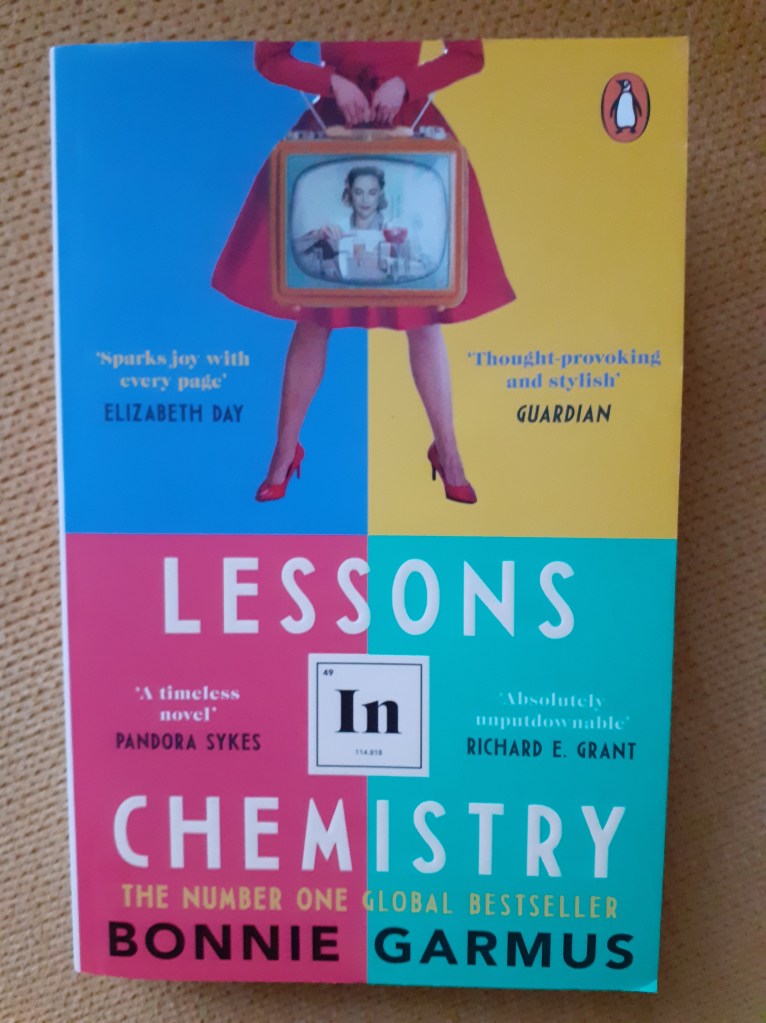
Lessons in chemistry / Bonnie Garmus

Okay, so this book wasn’t made into a movie, but a drama series (streaming on Apple TV in the NL), so I’m taking some flexibility for this entry, but trust me, it’s worth it.
I had my eye on this book for a long time, but because the word chemistry is in the title, and from the description I learned it’s about a scientist, and my brain starts to short-circuit whenever science is involved, I didn’t buy it until I found it with a “second book half-price” sticker on it. Mostly, because this meant I got to buy another book as well, but still.
Picture my surprise when I learned that yes, this book is about chemistry, but it’s about so much more! Because main character Elizabeth Zott is a kick-ass lady, who has the unfortunate timing of being a scientist in 1950’s America. She gets belittled, discriminated, undermined, and harassed, on a daily basis. The fact that she’s smarter than any of the men in her lab, doesn’t help.
The only person who is interested in her intellect, is oblivious to her daily struggles, and women’s struggles in general, and is surprised to learn that women would actually like to study and work in STEM, but are held back by the men that rule the field. Calvin Evans is the male version of Elizabeth, and despite his young age, has been up for a Nobel prize multiple times, and his fame and wunderkind status provides the institute they both work at, with generous funding.
Calvin and Elizabeth are in a relationship that is considered unconventional and strange, and therefore frowned upon: they live together, and despite his proposals, Elizabeth refuses to marry Calvin, not wanting to be forced to quit working, changing her name, and getting stuck in the background, only to be known as the supporter of her husband. Elizabeth doesn’t even consider herself to be modern, to her this is just common sense.
Elizabeth teaches Calvin that anything a man can do, a woman can too, and Calvin uses this theory to teach Elizabeth to row. Calvin considers rowing the ultimate sport, but Elizabeth isn’t an athlete and it isn’t until she applies science to rowing that they stop toppling over.
They find a dog and adopt it, and give it the wonderful name of Six-Thirty, because that was the time they came home with him. Of course, this leads to a running gag of people confusing the name with the time, and subsequent dead-pan responses from Calvin and Elizabeth. But Six-Thirty is as smart as they are, and his observations are a great addition to the story.
When Elizabeth suffers a major loss, she has to pivot to keep afloat. She does what she has to, and if that means going on television and presenting a cooking show, so be it. Elizabeth can cook and bake really well because she applies science to it, as she does to anything in life. She refuses to present a “fun” show though, rationalizing it’s not just demeaning to her, but to the women watching, and makes her director faint when during the first show she invites the audience to come down to the stage and take anything from the carefully designed set they like. Within minutes the set is near-empty and Elizabeth has the clean work surface she asked for.
She uses the scientific names of products, acetic acid instead of vinegar and sodium chloride instead of salt, and to the director’s amazement viewers don’t seem to mind that the cooking show turns into chemistry lessons. The show becomes a success locally first, and soon nationally as well. Elizabeth learns a hard lesson herself, when she discovers that despite everything, her fame is considered different from Calvin’s, and she still cannot get a decent job at any lab.

Belittling, shaming, discriminating, harassing, is still happening today as well of course. In any field, to anybody who is different from the majority. It’s scary and it’s frustrating. This book is about all that, and probably should come with trigger warnings for harassment and assault, because the book contains plenty of incidents, and horrible people that make life ever so complicated and painful.
Elizabeth’s frustration seeps off the pages, and you have to be made of stone not to get frustrated on her behalf. The way she is treated is horrific. The fact that victim blaming happened back then, is ridiculous. The fact that victim blaming is still happening today, is downright shameful.
But this story isn’t just about the injustice Elizabeth encounters, Calvin, and chemistry though. It’s about family, acceptance, support, and mostly, love.
The story has wonderful side characters in neighbour Harriet, Mad, doctor Mason, and director Walter. It’s not only Elizabeth that needs these people in her life, but as a reader, you need them too, in order not to forget that there are generous, caring, and wonderful people in the world.
And don’t think this book is all doom and disaster; it’s clever and funny and a treat to read!

Lessons in Chemistry / Bonnie Garmus

Reading challenge 2023 – No. 10

No. 10 – A retelling of a classic

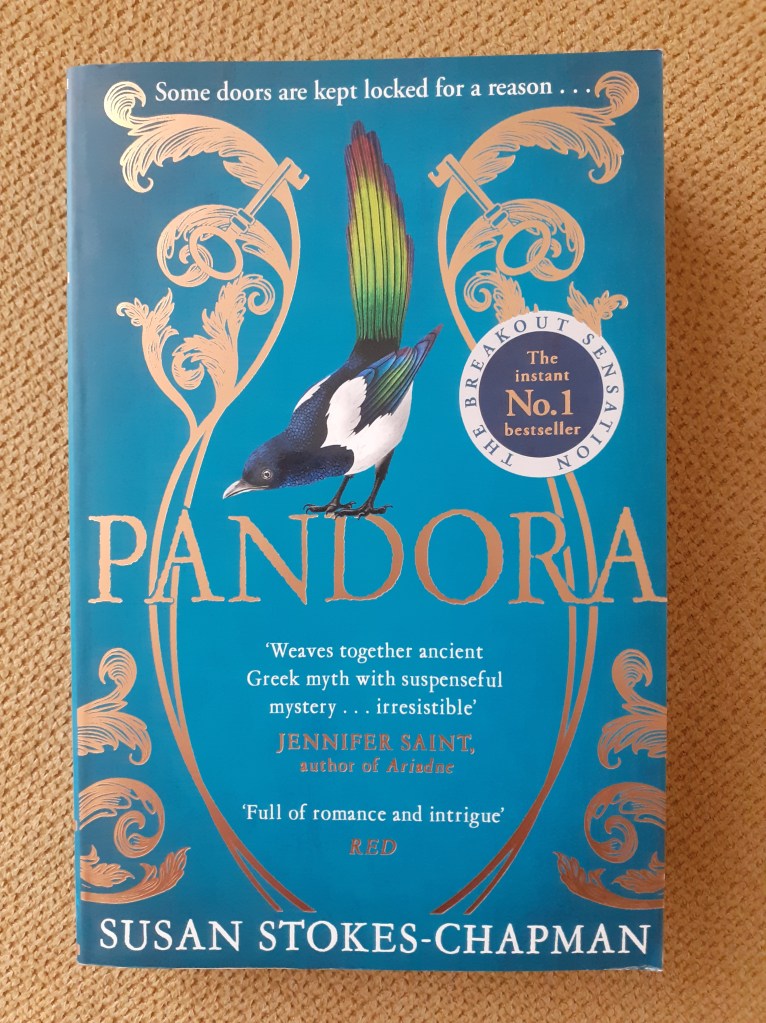
Pandora / Susan Stokes-Chapman

Well, it happened again. First, I wanted more Australian authors and promptly read three in a row. Then, I asked for more not-your-typical animal sidekicks et voila: Pandora delivers me a pet magpie.

Pandora / Susan Stokes-Chapman

I guess I should think of other reading wishes to come true but I don’t want to be too greedy.
And first things first: this retelling of a classic.
I didn’t learn about the Greek classics in school, and only know some of the Greek and Roman mythology from doing crossword puzzles. All I know of Norse mythology, is with thanks to the Marvel movies. A few years ago I decided to dive into the subject, but honestly, the big books were scaring me off. So, I settled for Stephen Fry’s Mythos to cover the basics. It was a fun read and I learned a lot! I’m not sure if that was the book that set off the flow of modern retellings of those classic stories, or if it was just part of the early wave, but since then so many stories based on (mainly) Greek mythology have been published, that I was spoiled for choice for this entry. In the end I settled for Pandora. I’m being honest here and will admit that size of the book was part of its appeal: some of these books are just so big and it was the end of October and with so many items on my reading list still unchecked, I wanted to make as short work of it as possible. This book came in at just shy of 400 pages, so still a decent size.

Main character is Dora. Her full name is Pandora and she was named after the first woman created by the Greek gods. Her mother was Greek and slightly obsessed with the story.
As a child, Dora travelled along with her parents, archeologists, all over southern Europe to dig, and find antiquities, but when she was eight, her parents were killed when a dig site collapsed. She was pulled out of the rubble and shipped back to London with her uncle. At twenty-one she still lives with that uncle, Hezekiah, in the attic above the antique shop he took over from her parents. Lottie is their housekeeper, although she’s mostly Hezekiah’s live-in lover, and both Lottie and Hezekiah have great dislike of Dora. The feeling is completely mutual, and they exist in the same space but that’s about it.
Whenever she has to work in the shop Dora mostly dreams about designing jewelry, sketching her designs in-between tending to the few customers that come in. Hermes is her pet magpie (with an amazing Greek God name), who delivers her the necessary trinkets to use for making mock-up versions of those jewelry designs. Hermes resides either in his cage, or on Dora’s shoulder. The two have an incredible bond, and honestly, it’s changed my opinion of the birds a bit (their caw is just something that’s not my favorite sound in the world).
Dora is aware that Hezekiah is mostly conning his customers by selling forgeries, but doesn’t care enough to stop him or warn the customers. The story takes place in 1799 which means that as a woman without other family, she is completely reliant on him and cannot afford to rock the boat.

Then there’s Edward, who very much needs to rock the boat if he ever wants to get accepted into the Society of Antiquaries. So far, his attempts to get in have not been received well and he’s been told to come with something strong, something truly interesting.
When Dora finds out that Hezekiah is hiding a magnificent vase in the basement and is being incredibly secretive about it or its origins, she sets out to discover if it is another forgery, or the real deal. For this, she needs someone with an expert eye, and she finds her way to Edward. For Edward, this is a win-win: if the vase is real, he’s got an incredible subject to write about. If it’s a fake, his subject will be forgeries, which will still be interesting enough.
Edward has a dark past that results in him suffering from claustrophobia and a fear of the dark, so working in the dark and damp basement of the shop in the middle of the night, is not within his comfort zone. However, he’s aware that they have to sneak around Hezekiah, and this is the only time and place available for research. So, he confronts his fears and gets to it.
Edward’s benefactor and best friend, is Cornelius Ashmole, an idle gentleman and delightful grudge. The first half of the book I kept misreading his name as Asshole which seemed fitting because Cornelius doesn’t hide the fact that he is suspicious about Dora’s motives and does not like that Edward is so committed to the research.
The moment Edward and Dora start to ask around about the vase and its origins, it sets a series of events in motion and I kept wanting to remind them about the story of Pandora’s box, thinking these two should know better. There’s a hint of the mystique surrounding the story, befitting of the myth.
The way the characters and their environment are described, is so vivid and clear, that it all easily comes alive. It also fits especially the two main characters, Dora and Edward, who have observant personalities, and spent most of their lives living in the background.
With books like this, you don’t need a time machine. (Also, it kind of puts you off time travel, because the way the stink is described…oof, I feel I can do without that experience in person.) Every character in this book has motives, reasons for their behavior, even if they’re not immediately clear. The characters also aren’t perfect and have flaws, but they grow and develop, and it makes them all the more real. Nobody is just grumpy, or mean.

This is a Greek myth, wrapped in a Dickensian story. Strange as that might sound, it totally works. I don’t know enough about the Greek myths to know if I missed references, names or the likes, but I was too immersed to care, and even without knowing, this book was a great read.

Reading challenge 2023 – No. 4

No. 4 – A book with a city in the title

The Stationary Shop of Tehran / Marjan Kamali


The title of this book makes no false claims: the most important location of this book, is a stationary shop in Tehran, Iran.

The main character of this story is Roya, a senior citizen living in the US. She’s invited to meet an old friend living in a nearby assisted-living facility, and the invitation has her flashing back to their first meeting. This takes place in 1953, Tehran, when she is a seventeen-year old high school student, focused on graduating with high marks so she can pursue a university study. Her father wants the best for his two daughters, starting each morning with a declaration on the importance of education, and how he wishes them to become famous scientists or authors, like Madame Curie and Helen Keller.

On Tuesdays after class, Roya hangs out at the stationary shop across from her school, because not only do they sell pencils and notebooks, but books and poetry bundles as well. This is where Roya meets Bahman, a boy with charisma-a-plenty, who is passionate about politics. Roya learns that the stationary shop is used as a message portal for those involved in politics: people drop off letters, and leave with messages hidden inside books.

In 1953 politics is as hot, and dangerous, a topic as it is now: the country is on the verge of a change and the two sides of the argument are coming to clashes as they grapple for power.

Roya’s parents have modern views which makes it easy for them to connect with Bahman, who quickly becomes her boyfriend, and not much later, fiancé. Bahman’s parents are less progressive and had lined up an arranged marriage for their son, so they do not like Roya, who interrupted their chance to get ahead in society, and blame her for getting Bahman involved in politics. Bahman, however, was already deeply involved in politics before he even met her, and is the one to take Roya to a political rally. She is horrified when she witnesses him getting attacked by police there, and tries to persuade him to stop his involvement.

The attack only makes it clearer to Bahman that he cannot stop though, and so he even increases his involvement.


This story is one of heartbreak: there is a failed elopement, death, a failed suicide, and emotional blackmail. It’s about missed chances, and lost love.

Happy-go-lucky Roya is not, and it all felt very heavy. Of course, I understand that revolution, generations of secrets, and devastating loss, are very heavy topics. The only characters in the story that have a positive and can-do energy, are Roya’s father and sister. And Roya does not understand them, and assumes they don’t understand her either. Her experiences made Roya who she is, but I have a feeling, she’s one of those people who even in the best of circumstances, would just drag down on your energy, and hold onto the negatives.

That’s not how I roll, so I found her a difficult character to connect with.

The story itself was okay (the cooking scenes were amazing and had me drooling), with an interesting setting in Iran first, and following the lives of immigrants settling in the US later. I was even willing to accept the ending, even though the coincidence of it, was on the verge of too much.

The Stationary Shop of Tehran / Marjan Kamali

Reading challenge 2023 – No. 14

No. 14 – A western

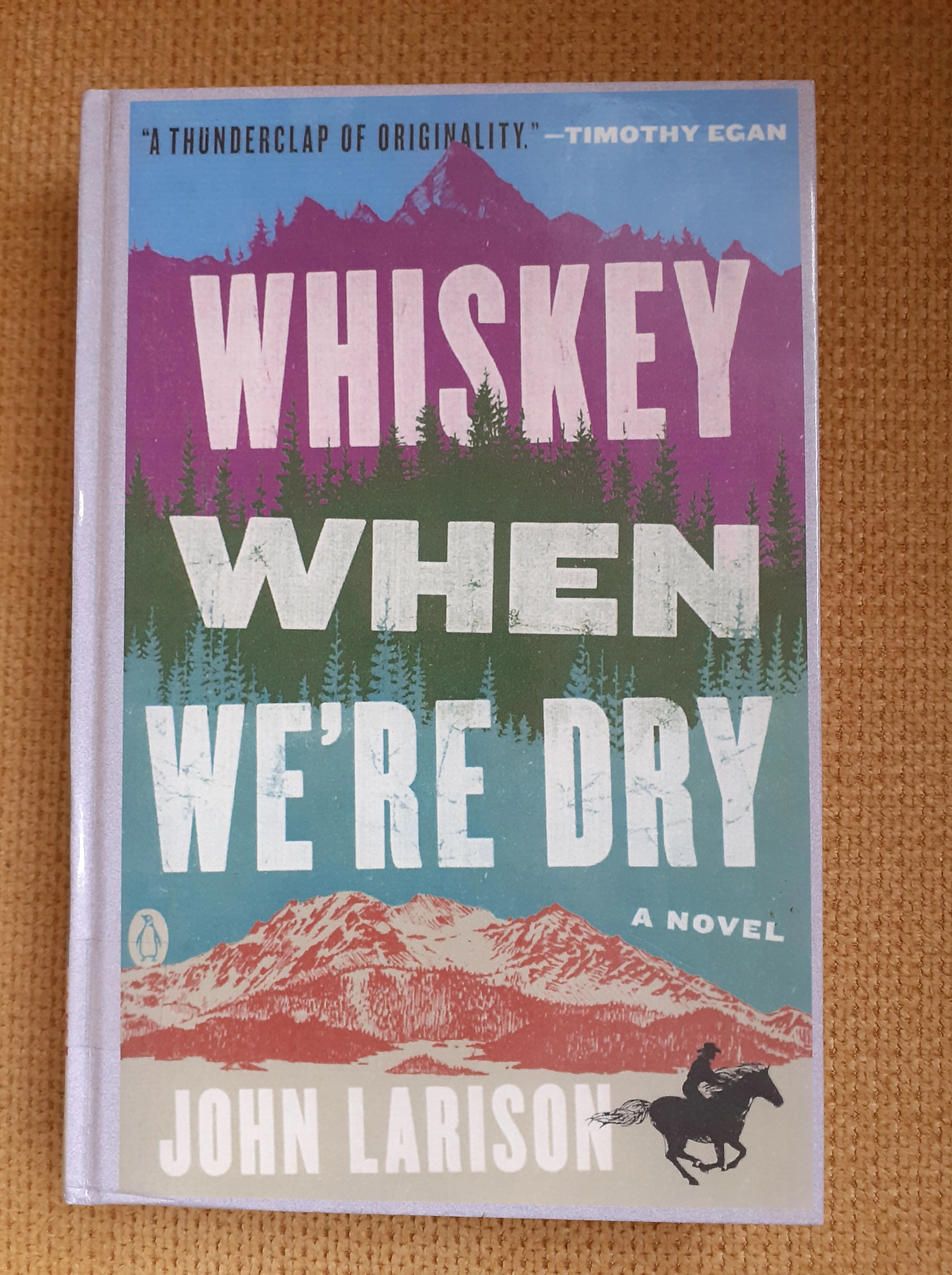
Whiskey when we’re dry / John Larison

I love, love, love western stuff: the movies (Giant, The Bravados, The Big Country) and country & western music. I don’t know why, but my best guess is, that I was a rancher in a previous life. On second guess, a rodeo clown would be more fitting. But, that’s a different topic. While the music and movies are easy to get to, the books are a bit more complicated to get one’s hands on here; an online search mostly results in the kind of westerns that have half-naked cowboys on the cover. Interesting for sure, but not what I was looking for. (No worries: titles were safely taken down for future reference.) So, I stuck with browsing the library shelves until I spotted a book with a western symbol on its spine instead. It felt like striking gold (yup, I went there): not easy but worth the effort because wowee what a book it turned out to be!

Whiskey When We’re Dry / John Larison

I’ll try my best not to tell about the book in an “and then…and then…and then…” manner, but forgive me if I slip because a lot happens in this book and I haven’t had a chance to talk about it with anybody yet.
Let’s start with the best thing about this book: main character Jessilyn. She is telling her own story, and she is amazing. As a character she felt authentic and original and she had me at hello.
Jessilyn is raised by her father and brother after her mother didn’t survive her birth. The family place is a small homestead on the outskirts of a town in the south/west of the US. The men take care of the animals and hunt, while Jessilyn takes on the womanly tasks of cleaning, washing, and cooking from the moment she can walk. Her father is addicted to cough syrup which doesn’t make life easier for any of them. Her older brother Noah almost kills their father with a single punch during a fight, and flees home. Jessilyn is left taking care of their permanently injured father and when they realize Noah isn’t coming back, her father starts teaching Jessilyn the additionally useful skills of reading and writing, and shooting, thinking it might increase her chances of a marriage proposal, or in the worst case, increase her chances of survival. When her father dies when she is only seventeen, Jessilyn figures she needs to find her brother, so he can help her running the farm. Her first stop is in town, where she discovers a wanted poster with her brother’s face on it: it turns out that Noah has become a notorious gang leader, and he and the Wild Bunch gang have robbed banks and trains, and there is a big bounty on their heads, dead or alive. The local men are only interested in her because they figure she might lead them to her brother and bring in good money. Not keen on playing that part, Jessilyn quickly leaves town.
Because life for women, let alone women of mixed race like her, is tough in the west, she realizes she needs a disguise and chops off her long hair, binds her chest, exchanges her dress for trousers, and shortens her name to Jesse. She rides out following the Wild Bunch’s trail based on newspaper reports and chooses the paths less travelled to avoid other people as much as possible out of fear to be discovered a poser, but she soon realizes that thanks to her observation skills she can behave like a man enough to pass. If people dare to cast doubt, she bluffs her way through the situation thanks to her big-mouthing skills. Another skill that comes in handy, is her shooting. She earns money with shooting tricks and bets on shoot-outs.
There’s an incident that leaves her killing a man in self-defense. Horrible as that is, Jesse can justify it. Later someone tries to steal her horse, and without hesitation she aims at the disappearing figure, shooting them in the back. This is more difficult to deal with, as she feels she not just killed, but became a killer by shooting like a coward. The fact that this victim turned out to be a girl dressed as a boy, just like herself, doesn’t make it any easier. She wants to burry her victim, but can’t, and leaving the body out in the open to be eaten by animals, creates an open wound on her soul.
With her brother being one of the most wanted men in the west, with bounty hunters on his tail that will only get in her way, Jesse figures the best chance to track him down is to follow the governor’s militia who are chasing him, as they will have the most accurate information on his whereabouts. But she accidentally gets herself into an even better position: she becomes part of the militia after winning a shoot-out against the governor’s best shooter. The job has her trained in battle, and honing her shooting skills with different guns, and it makes her better and faster. She wears the uniform, bunks with one of the other guys, and realizes she is making more money than she ever dreamt possible. She soon finds out that life at the governor’s place isn’t all that it seems though, and she gets frustrated because the job isn’t leading her where she thought it would. Then by complete accident she finds her brother and leaves all securities behind to follow him and his gang to their hide-out. She now is the one being chased, by her old friends in the militia no less, but she’s with family again and that is all that matters to her. It’s a slippery slope though, with the violence of a life lived on the run becoming the norm. Jesse is aware of the ease with which she ends up killing, and knows that she won’t be able to live another life anymore, will never be able to return to the family land and run a farm. Even her most trusted companion, horse Ingrid, doesn’t recognize her anymore: she is a changed woman. It’s a sad realization, and one that makes her even more reckless to a point where both Jesse and you as a reader, know this cannot end well. I don’t think I ever felt so much empathy for a killer.

This story contains everything a western should: chases across the rough lands of the American west. Tough guys, and tougher girls who will do anything to survive. Whiskey, wanted posters, and shoot-outs. The blurring of lines between right and wrong. Heartbreak, vulnerability, and love.
This story sucked me in from the very first page: it had me on a ride-along with Jesse, and I held my breath during the shoot-outs, wondering if this was the moment where things would go awry or not, where things could possibly go next.
I had difficulty letting go of this story to the point where I wasn’t able to start a new book for a while. Although that is not a productive feeling with regards to the to be read-pile, I love it when a book has this effect.

Reading challenge 2023 – No. 20

No. 20 – A book that prominently features an animal

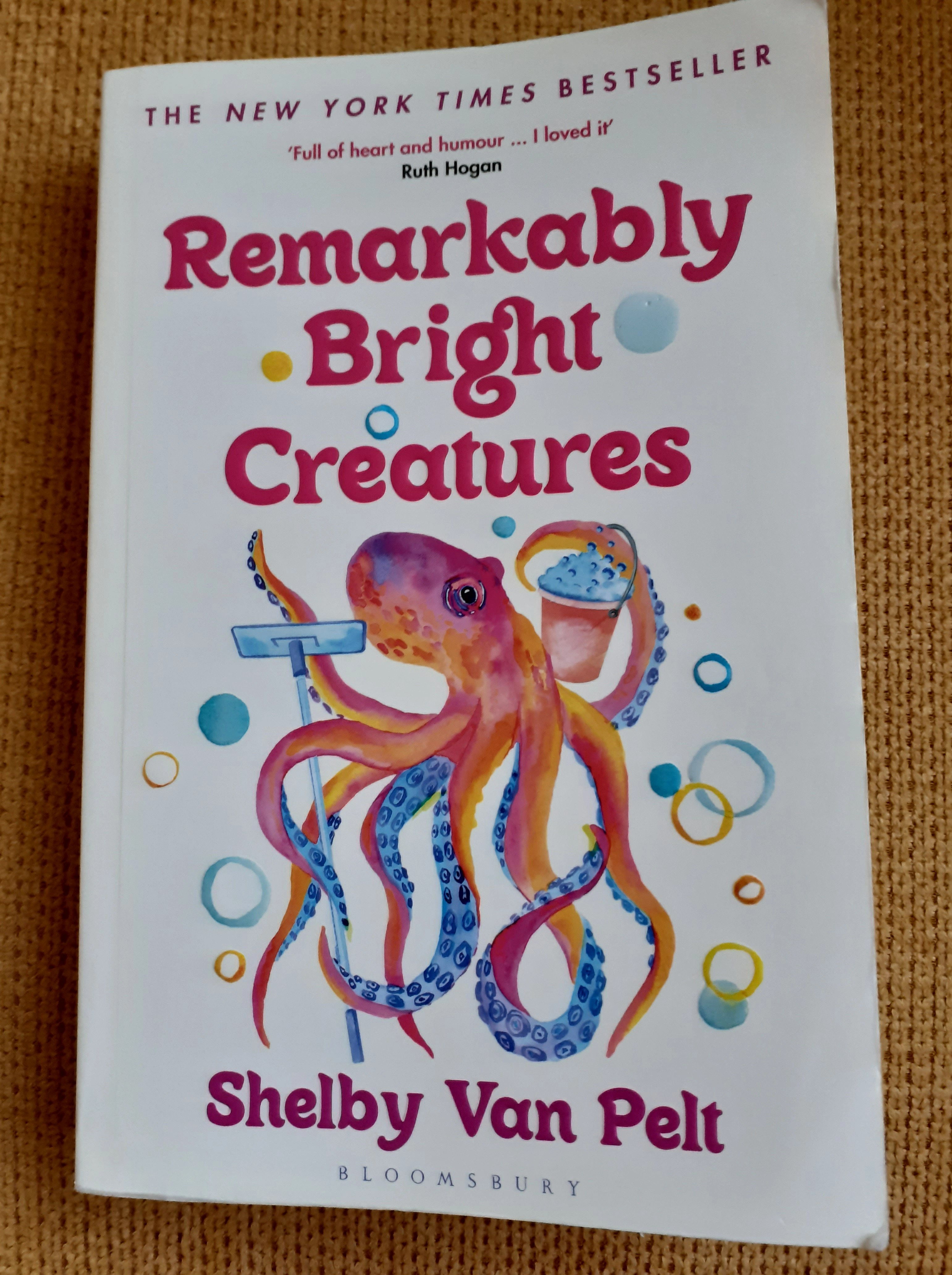
Remarkably bright creatures / Shelby Van Pelt

I was afraid that this challenge entry would end up being a book with/about a cat or dog (nothing wrong with those, just a bit predictable), but then I found this gem and now I want to read more books about not-your-average animal side-kick, so if anyone has any tips on that, please let me know!

This book is about Tova, Cameron, and Marcellus:
Tova is an older woman who still has a cleaning job at the aquarium because retiring would mean stop moving, and she’s not sure she can do that. She’s been moving and cleaning ever since the disappearance of her son.
Cameron is a young man who’s messed up another relationship, lost another job, had his truck repossessed, and is watching his friends starting to grow families.
Marcellus is an octopus living in the aquarium, studying humans and their behavior from behind the glass of his tank.

Tova lost her son when he was eighteen and the mystery of his disappearance is still only talked about in hushed voices. Then Tova’s husband passed away, and she’s left alone in the old family house that is now too big. Unlike her friends, she has no children or grandchildren who will check in on her, or help her out and she is considering moving into a retirement home.
When she suffers a bad fall and has to wear a protective boot for weeks and isn’t allowed to work, she’s forced to sit still and think things over. The only thing she can really think about though, is Marcellus, the giant Pacific octopus back at the aquarium.
Marcellus has become Tova’s confidante and she talks to him while she cleans the glass of his tank. She also lets him pet her, and helps him escape or get back into his tank.
Marcellus is a smart cookie even though he isn’t a baked good, and he knows things about Tova she isn’t aware of. Marcellus also knows that he is fast approaching the end of his life expectancy. He knows this because getting in and out of his tank is becoming increasingly more difficult. He’s also been counting the days of his captivity and the sign outside his tank reads that his species averages four years. It’s an easy sum to make, and he’s accepted his fate and the fact that he won’t experience the open ocean ever again.
When Tova is out with her injury, the aquarium needs a new cleaner, and in steps Cameron. Cameron has moved to Sowell Bay from California after learning it is the place where his father was from. His mother was a troubled teenager when she had him, and attempted to raise him despite her addictions. She walked out of his life when he was nine though, and has never been in touch since. Cameron was raised by his aunt instead, and carries a lot of anger and resentment. Refusing to leave until he’s spoken to his father, he gets himself a job at the aquarium as a temporary cleaner, a job, he is surprised to discover, he actually likes.
Tova is sitting at home, imagining grubby finger prints on the glass of tanks in the aquarium, and dust bunnies underneath benches now that she’s not there to clean, so she sneaks in late in the evening to check on things. She’s surprised to discover that Cameron is doing a pretty decent job, although he’s not quite up there to her standards. So, she decides to train him, not just in the importance of properly lining the trash bags in the cans, but also in how to treat Marcellus.

This book is about family, blood-related or not, the questionable practice of keeping animals in cages or tanks, the cycle of life, and the importance of feeling appreciated. That might sound heavy, but it’s still an easy read because this book has a whole lot of heart in it. (An octopus joke. They have three!)

Remarkably bright creatures / Shelby Van Pelt

Reading challenge 2023 – No. 12

No. 12 – A book about travel

Beach Rivals / Georgie Tilney

If you’re looking at this cover, and are thinking: “that seems fluffy”, you’re absolutely right. Comfort reading, easy reading, beach reading, airport reading, whatever you want to call it, that’s what this book is. If you want to read something low on angst, with a bit of romance, that takes place on a sunny island, and makes you crave cocktails, look no further.

Clare is a twenty-something who abandoned university after the death of her father, used her inheritance to travel for two years, and when she came home, couldn’t settle into a serious or even half-decent job. Living at home and fired from yet another job that didn’t suit her, she’s tired of not getting ahead, not having found her “thing”. So, when she spots an ad for a dream job on Bali, she half-jokingly applies and to her own surprise, gets accepted. This dream job consists of running a bookshop at the beach, while living above it: dream job, indeed! The position is for three months and her mom warns her that she better uses the time to come up with a plan for life after those three months because she won’t allow Clare to live at home anymore, figuring that she’s made things too cushy for her. Clare’s backpack suddenly carries more weight, but she agrees with her mom and realizes that she’s been taking the easy way out.
Upon arrival in Bali she learns that the bookshop owner has left out a few things in the interview: she will actually be co-running the bookshop, and her co-worker will also be her roommate. The apartment is as small as the bookshop so sharing it with straight-laced Jack is asking for trouble: he is focused on statistics and budget, while she’s all about creating a vibe. He’s careful and responsible, she’s flaky and creative. But, as the saying goes: opposites attract, and it isn’t long before Clare and Jack have sparks flying.

I do like fish-out-of-water tropes, and reading about people who throw themselves into an adventure. (Especially when that adventure contains a bookshop!)
Being away from your known, safe, environment, will make you look at things differently. A distance that is required every now and then, to evaluate and look beyond the obvious. You don’t have to go half-way around the world for this, but there’s something about being in a place with a different language and culture: it creates perspective, and it forces you to be open. This story plays on those feelings and therefore fits the reading challenge perfectly.
The story has no big surprises (even the so-called rivalry isn’t much of that), but it’s always fun to read about books, bookshops, book nerds and authors. I was I no mood for big surprises: after reading a couple of murder mysteries back-to-back, followed by books about spies and war, this book came at the right time for me and I eagerly embraced its fluffiness.

Reading challenge 2023 – No. 15

No. 15 – A book with food in the title

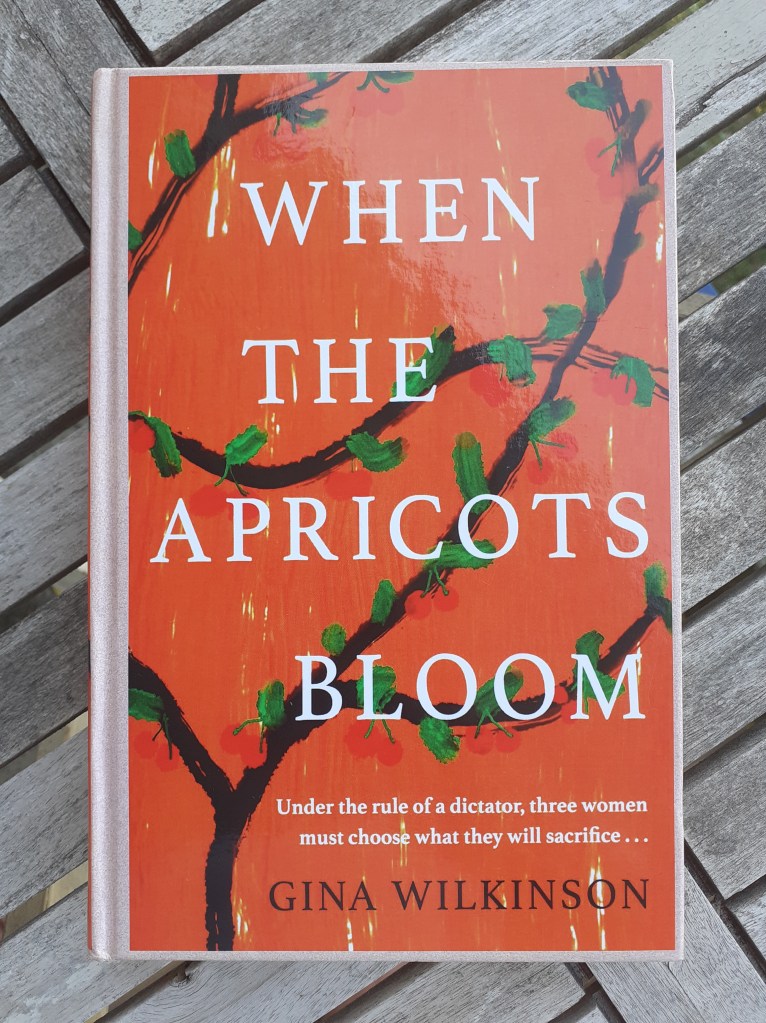
When the apricots bloom / Gina Wilkinson

Aaaand here’s the third book by an Australian author in a month. It’s like the secret: if you believe it, it will happen. It should probably freak me out a little bit, but I’m just too happy with it to question it, so onto the challenge.
This challenge entry proved a difficult one, because I kept overthinking it but then I realized that in my mind I had turned “food” into “meal” and of course that’s not the same. So, I decided to stick to what border security says in those real-life docuseries: if you can eat it, it’s food and you should have checked the box on your papers. It left me browsing the library shelves for edibles (so to speak of course) and I took this book out without even checking what it was about.

It turned out that When the apricots bloom is a modern historical novel that takes place in Baghdad, 2002, and is inspired by the author’s experiences in Baghdad.
The story centres on three women. Huda and Rania were childhood best friends but an incident drove them apart and they moved on, got married, and raised families. Their lives are brought together again with the arrival of Ally, a young newlywed who followed her diplomat husband to his new appointment at the Australian embassy. Huda works at the embassy as a secretary and although the pay is great, the downside is the secret police, who are keeping close tabs on her because she works with foreigners. They push her for information and when they feel she’s not getting enough for them, threaten to draft her son into the horrible fedayeen.
Out of desperation Huda contacts her old friend Rania who, as the daughter of a sheikh, has connections that Huda is hoping to use to get her son a passport so he can escape the country and live in safety abroad. Rania, however, has problems of her own: broke, and forced to draw art for Saddam Hussein’s Ministry of Culture, she cannot afford to rock the boat.
Ally, in the meantime, is having a hard time adjusting to life in Baghdad where her “housewife” visa doesn’t allow her to do anything more than that. A journalist by training though, curiosity keeps drawing her out and she starts investigating the past. Her mother had been a nurse and worked in Baghdad in the seventies. Although her mother passed away when Ally was young, she left pictures and postcards behind and Ally wants to find her mother’s old friends and learn more about the time she spent in the city. The seventies were a very different time though and one not a lot of people are willing to talk about, especially because Ally goes about it like a bull in a china shop: although she is aware of the secret police listening in on her calls and conversations, she doesn’t realize that local people are also under their control, and she is endangering any person she talks to simply because they are seen in the company of a westerner.
The women are brought together by fate and realize that they need to trust each other to make it out alive. But trusting someone you know has lied and betrayed and is keeping secrets, is not easy.
As it is said: “two people can keep a secret, when one of them is dead.”
The anxiety of being watched at all times, the whispers, the dread of not knowing who is an informant and who can be trusted, is well-written and makes the book a page-turner.

Not having read any other books set in this country at this time, I’m really glad I picked up this book and let myself be surprised.

When the Apricots Bloom / Gina Wilkinson

Reading challenge 2023 – No. 2

No. 2 – An award-winning book

The woman in the library / Sulari Gentill
Won: Best Indie Novel – Crime Fiction Lover Awards 2022

Just in case you have this book on your TBR pile and want your reading experience unspoiled, I’ll start with my conclusion: concept + murder mystery = solid effort. If you want to know how I got to this conclusion, keep reading but beware of spoilers ahead.

The best way to describe this book, is by comparing it to Matryoshka dolls: one story is nestled into another which is nestled into another. I will try to explain as clearly as possible. The story is about Hannah (doll one), an Australian author who is writing a story about Freddie (doll two), an Australian author living in America, who is writing a story based on the people she meets in the Boston public library (doll three). Although this technically makes Hannah the main character (without her the others wouldn’t exist), she’s the one we know the least about. What is known about her, is provided to the reader through letters from Leo, a fan who lives in Boston and sends her feedback and suggestions. To make things as complicated as can be, Hannah writes a Leo into Freddie’s life: a neighbour, who has the same air of vagueness and intrusiveness about him.
Thankfully, there is no Leo in the third storyline.
Doll two takes up the most of the book, and it makes Freddie the most developed character. Her story starts in the library, where she seeks inspiration for her book and finds it in Handsome Man, Heroic Chin, and Freud Girl, or: the people sitting at the same table as her, Cain, Whit, and Marigold. Then suddenly there is a scream that terrifies everyone in the library, and the police is called in to find out what happened. The foursome immediately bonds over this incident and are convinced someone was murdered, even though the police didn’t find a body. The way they instantly become close friends over this seemed a bit odd, although part of how that is possible is explained later on as the mystery unravels. There also was a lot of young adult relationship drama that did nothing for me. But when a body is found after all, the little group suddenly is involved in attacks, stalkers and more deaths, and the focus shifts more to the mystery.
To me this book wasn’t the page-turner it wants to be though, as I felt it was lacking angst and urgency in the biggest story (Freddie’s story). The most angsty parts, are Leo’s letters to Hannah which become increasingly uncomfortable, but even that storyline peaks at the wrong time so it never gets truly scary. The third story is the smallest and least developed as it mostly follows Freddie’s own exploits and it’s basically a repeat of what she goes through. It’s also abandoned half-way through as she is too busy solving the mystery to continue writing. I liked the concept of this book a lot, and I really wanted to like it a lot, but the story (stories) felt “so-so”. That’s not to say this is a bad book, it just left me a bit disappointed. I would like to point out the cover, which I think is really cool and represents the story within a story so well.

The Woman in the Library / Sulari Gentill

Reading challenge 2023 – No. 22

No. 22 – A book with more than 500 pages

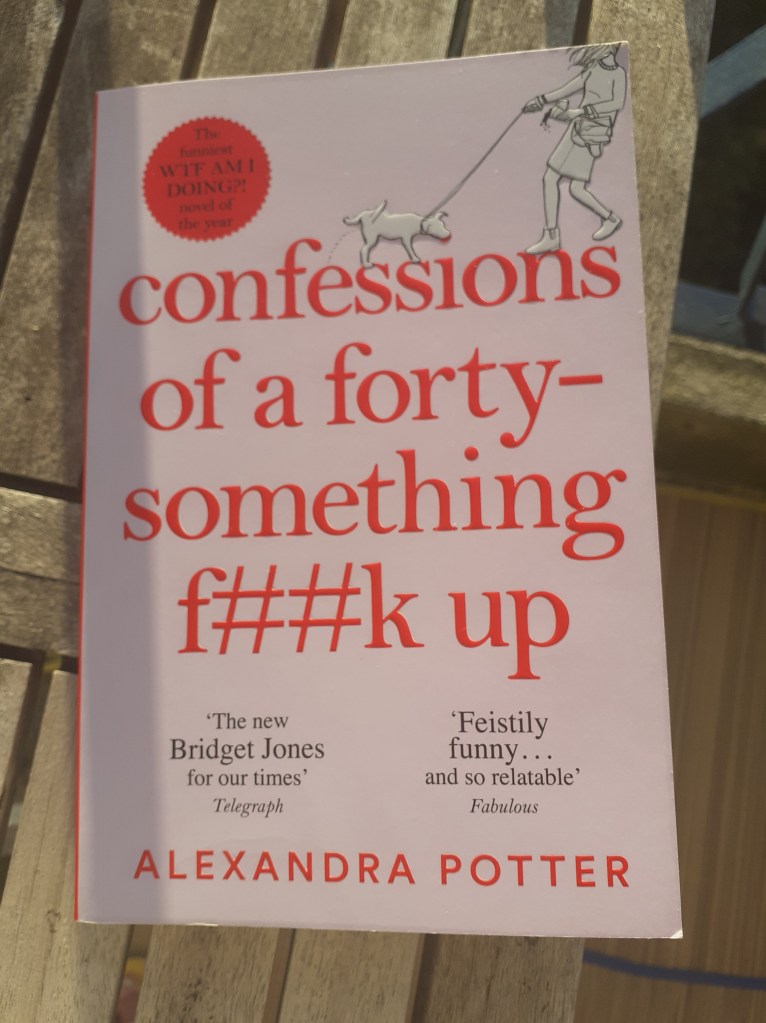
Confessions of a Forty-Something F**k Up / Alexandra Potter

This book has 547 pages but the last 43 turned out to be preview chapters of books yet to come. I find this annoying to a level where I make loud sounds of disappointment and anger: you’re reading and then out of the blue, bam, book done. It’s like climbing stairs but you’re already at the top or bottom and there’s nothing to step left. It’s weird. (It’s also very easy to land on your face.) In the end the book came in at 504 pages so it still counts for the challenge. Which I was happy with because, staying on topic, I have to confess I don’t read a lot of big books.
Nice as they might be, they are just too impractical as it requires both hands to carry the weight, which rules out reading on public transport and in bed. They also take up too much weight and volume in my bag to carry them along. And yes, an e-reader could solve those problems, but for me this would be the only argument to use them and that’s simply not enough. Instead, I just extra enjoy those moments where I do have time and the right mindset to sit down and dive in. And did I dive! Despite its volume, I finished this book in one day. That’s a record for me but it’s an easy read and to be honest, the layout helped, with pleasant font, size and alignment. Also, I had no other plans and was not in the mood for chores so basically it meant as long as I was reading, I didn’t have to do laundry.
And yes, of course, it was the title that made me gravitate towards this book, but I’ve read and liked other books by this author (Me & Mr. Darcy, Who’s That Girl?) so picking this up was a no-brainer.

Nell is the forty-something f**k-up from the title. Returning to London after losing a business and a fiancé in the US, she has to start over again at an age where she had pictured herself all set. Instead, she’s now renting a room and sharing the flat with her landlord. She’s back to basics on the job front as well, lucky to land a freelance gig writing obituaries. She’s not keen on meeting up with her parents, fearing a second degree questioning from her mother. And while she is keen on meeting up with old friends again, they have all moved on and don’t have time for wild nights out or even coffee in the city, as they are too busy dropping kids off at various places.
Seeing her friends married with children and living in houses they own instead of rent, makes Nell feel less than capable and their Instagram feeds of perfect kitchens, baked goodies and glamping trips, leave her crying in self-doubt.
I guess this is exactly why doctors and psychologists warn against the use of social media. I naively also thought that grown-ups would know better, but I’m not on Instagram or TikTok, so I don’t know how addictive it can be.
Instead of going offline, Nell keeps torturing herself with self-doubt, and when she finally realizes she needs to talk to someone, she decides on the broke-ass version of therapy and buys herself a microphone, downloads an app and starts to podcast.
When she learns her first episode had two listeners, she already feels less alone and continues to podcast.
Out in the real world, she makes friends with an elderly widow she met writing the husband’s obituary. This lady (Cricket) lost friends when she lost her husband and also has to start over in life. So, when Nell has tickets for a concert, she invites Cricket, and when Cricket needs help donating her husband’s clothes to charity, she calls Nell.
Although Cricket seems to be coping well and moving on, Nell discovers that not only might people paint a different picture online, even in real life people put on a brave face to hide their true feelings.
I’s easy to relate to Nell: who hasn’t questioned her own plans, or compared herself to friends? Insecurities are for all ages. Ditto for arguments with roommates, the horrors of (online) dating, and the ups and downs in friendships.
Being the only one of your friends without a relationship or children, was something I related to as well, but even if you don’t, it’s easy to get into Nell’s mindset.
And Nell’s mindset is not something only relatable to the readers, but of course, her podcast audience keeps growing as well. I won’t spoil anything more than this.

One of the blurbs mentions Bridget Jones and it’s easy to compare the two. However, where Bridget Jones was more romantic comedy and about finding love, this book is about being okay with yourself, even when yourself is not at her best.
That makes this book more women’s fiction than romantic comedy and it’s a cosy and easy read.
The sequel is about to be released any moment but I’m waiting a bit so as not to overdo it.
And the same applies to the tv series. I watched the first ten minutes of the first episode, and although it seems more inspired by than based on, I need some more distance before watching this.
(Not Dead Yet is streaming on Disney+ here, not sure about other countries.)

Confessions of a Forty-Something F##k Up / Alexandra Potter


Reading challenge 2023 – No. 17

No. 17 –  A recommendation

The reading list / Sara Nisha Adams

Things just got meta: I read a book titled The Reading List for my reading list.
This book was recommended to me by my colleague and fellow librarian, E. As you might imagine, E and I talk books A Lot and recommend titles to each other all the time, and while she has the courage to join a book club, I stick to my trusted reading challenge.
This book was a wonderful read and I can’t wait to tell you about it, so here goes.

The Reading List takes place in Wembley, London, where different members of the community find themselves thrown into reading, after finding a list of book titles.
Main characters are Mukesh and Aleisha. Mukesh is a grieving widower, trying to find his readjusted place within his family, and society in general. Aleisha is a teenage girl, who landed herself a summer job at the local library branch despite not liking reading. She lives at home with an older brother and a mother who has mental health issues. Her mother’s illness is a huge stress factor for Aleisha and her brother, although they both refuse to acknowledge that. It’s Aleisha’s brother who suggested she work at the library, because he did one summer and loved it and is convinced she will too.
One day at work, Aleisha finds a list of book titles that was stuck between the pages of a returned book and with lack of anything better to do, she starts reading the first book on the list: To Kill a Mockingbird.
Simultaneously, Mukesh finds a library book his late wife forgot to return, and starts reading it to feel closer to her. The Time Traveller’s Wife resonates with him and he decides to read more. So, he goes to the library where Aleisha suggests he reads To Kill a Mockingbird.
Because she never read much, she has no other books to recommend to patrons and after the success of the first book on the list, she continues with the next.
Rebecca first freaks out Aleisha, then Mukesh. And one after the other they get to experience the emotional rollercoaster that is The Kite Runner.
It’s wonderful to read about people discovering the joys of reading. It’s even better when they are reading and talking about books you have read yourself.

Aleisha and Mukesh don’t just start reading, they start stepping out of their comfort zones: Mukesh hesitantly goes out again, meets up with old friends and makes new ones. Aleisha takes off her headphones and connects with the people she sees around.
When Mukesh’ daughters start mingling in his private live, he imagines them as the Bennet sisters. He channels his inner Atticus Finch when a friend is going through a tough time, trying his best to find the right words for the situation. He reminds himself that if Pi could survive on a boat with a tiger, he will survive organizing a gathering for friends. Aleisha wants to become a lawyer and is in awe of Atticus Finch. She also discovers that reading out loud to her mother not only has a calming effect on her mother, but it also helps create a connection they haven’t felt in years.

Aleisha and Mukesh’ chapters are mixed with chapters about other people, all finding the same reading list throughout the years.
The further along the story gets, the less attention there is for the books on the list, especially near the end, and I had a hard time remembering which the last two books on the list were (Beloved and A Suitable Boy).
Despite the somewhat rushed feeling of the ending, this book is a joy. It’s about reading, libraries, friendships and love. Do not expect a fluffy book though, as it packs some punches and although those punches can be seen coming, they still hit hard.

All in all, The Reading List is a warm and wonderful read and I heartily pass on the recommendation.

The Reading List / Sara Nisha Adams