Book review: The Paris apartment / Lucy Foley

What is it: a classic who-dunnit
Did I like it: I-dun

This book was intended for the no. 13 slot of the reading challenge but there was a waiting list at the library and by the time I could collect it, I had already read the Banned books of Berlin instead. I ended up reading the city-books back to back, so this book is kind of a bonus to the category, like a 13-b.

The story is about Jess, who goes to visit her brother in Paris but when she arrives at his apartment he’s not there. This is odd because he had left her a voice note in which he gave her the address along with instructions on how to get there and told her he would be waiting for her. In his apartment she finds his wallet, as well as the keys of his Vespa so why would his friends and neighbours all suggest that he took a spontaneous trip out of the city?
Jess is determined to find out where Ben is and what the other people in the building are hiding.

This mystery borrows heavily from the classic gothics: a picturesque setting for a house that gives off a sense of unease. Clearly, something is wrong here but it’s more a feeling than anything tangible. There are echoing footsteps in the dark, creaking floorboards and hidden doors.
Jess newly arriving at the apartment building, has the reader come along with her on her exploration of the building and meeting the people living there.
The chapters switch point of views between Jess and Ben’s neighbours and it quickly becomes clear that everybody has something to hide and everybody is a suspect. The chapters are short, and the book reads fast and easy.

If you’re looking for a modern classic who-dunnit, be sure to pick up this book.

Also, the artwork of this book is cool, from the cover art to the chapter headings.

The Paris apartment / Lucy Foley

Reading challenge 2025 – No. 13 : A book with a city name in the title

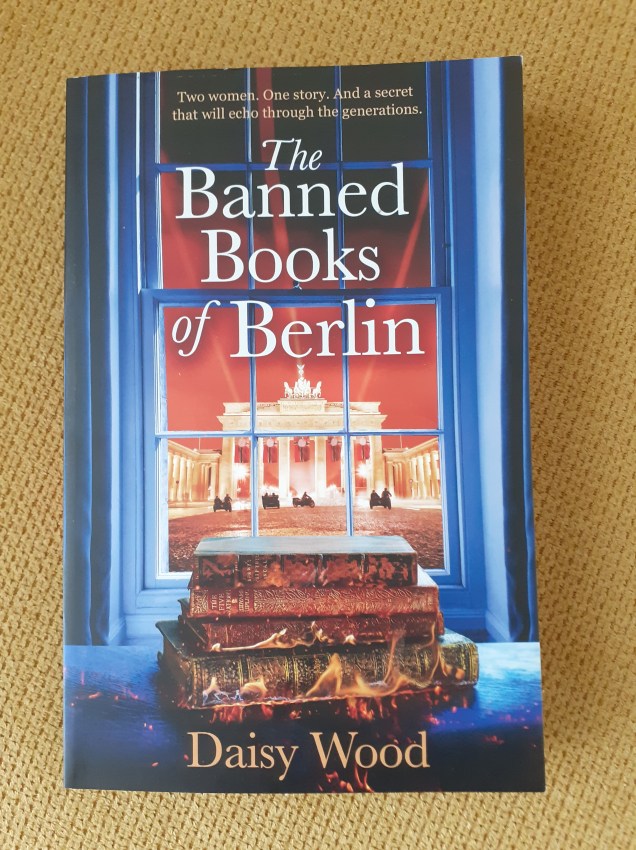
The banned books of Berlin / Daisy Wood
What it is:
historical fiction with a solid alliteration title
Did I like it: so-so

I gave this a so-so because this book has two storylines, and one felt weaker than the other.
Let’s dive in.

This book starts off with an author note to provide historical context and then we’re off to Berlin, 1930, where Freya is losing her mother to cancer. Ingrid has been her ally, has made sure Freya gets to continue her studies, and Freya knows that everything will change once her mother is gone: she will be expected to quit school and take over Ingrid’s sewing business and the running of the household, leaving her without time to study and write, which is her biggest passion. All Freya’s fears come true, and to make things worse, the dire economic circumstances in the country mean that people can no longer afford to splurge on new clothes, and business goes down fast. So, she fires her assistant, closes the sewing room, and instead makes it available for rent. A lodger allows for a steady income and gives Freya a chance to explore the world outside of the suffocating house, finding employment as a seamstress and costume designer at a cabaret theatre. Although this is still far from being her dream job, it allows her a level of freedom, and a social circle of openminded free spirits.
Her new friends encourage her creativity, and she starts to write short stories. It is her dream to get published but when the nazi’s order a book ban, she learns how dangerous writing can be.

Then there is the story of Madeleine, who lives in the present in Los Angeles.
Madeleine is a journalist, and she got trolled after a story she wrote was not as well-received as she had hoped. One troll in particular is posting hurtful messages and Madeleine can’t deal with it. Instead of turning off social media and moving on with her life, Madeleine hops on a train and travels home to LA. Home is not quite the calm and relaxing environment though, as her mother and brother are at odds and her grandfather is freaking them out with his death cleaning. Madeleine is a little bit more accepting of this and helps him and even goes along on a trip to a Death Café where they meet Eva and her grandson Daniel. During the cleaning they have found letters and papers belonging to her great-grandmother, but they are in German which neither of them can read. When they learn that both Eva and Daniel can read German, this meeting turns out to be very lucky.

Unfortunately, one of these timelines was much stronger than the other and I wonder if it might have worked better if the weaker one got scrapped altogether as it didn’t seem to add much. The biggest reason the LA setting didn’t work for me, was the Madeleine character. I got rather annoyed by her: she’s paranoid and suspicious about anyone and anything even though she does exactly what she assumes and fears people will do with her; researching them online. This adds hypocritical to the list of traits I disliked her for. And while Madeleine is intrigued by Freya’s story and wants to be like her, she misses Freya’s fierceness and never truly stands out as a headliner. Madeleine’s grandfather and brother are the more interesting characters in the LA storyline, and they drive that storyline and thereby create Madeleine’s story. There also was more growth and development in their characters than in Madeleine’s.
Freya’s story in Berlin is set in a time and place that is as intense as it gets, yet this story still is more driven by character than setting. It takes a lot of a character to achieve that, and Madeleine pales by comparison.
The difference in storylines was not just about the characters, but the Berlin storyline also stood out due to the tension and action built up gradually. The LA storyline has no real tension built up and the big reveal in the ending felt rushed.

I really wanted to like this book, but it ended up never being more than an “it was okay”.

The banned books of Berlin / Daisy Wood

Reading challenge 2025 – No. 20: A book with a five-word title

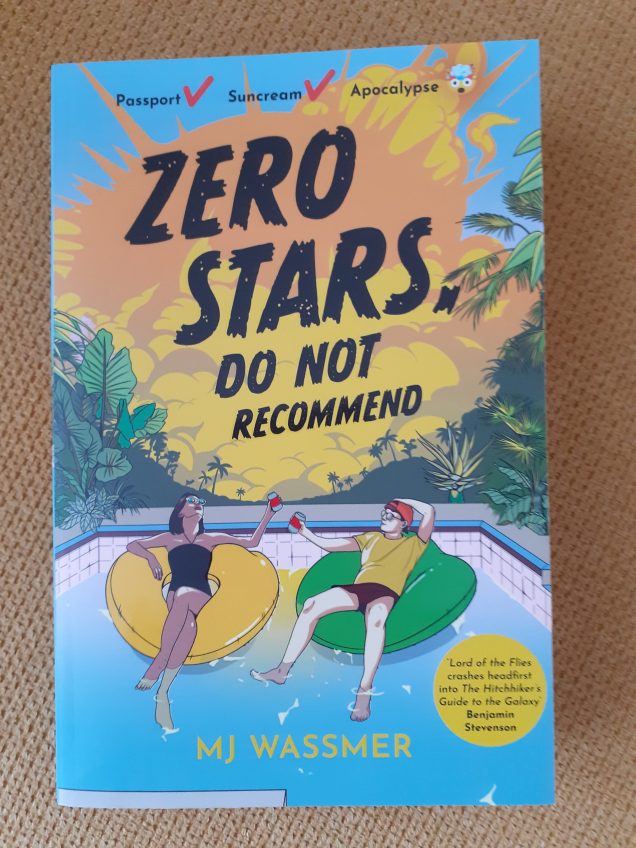
Zero stars, do not recommend / MJ Wassmer
What it is: Lord of the Flies in the dark
Did I like it: thumbs up

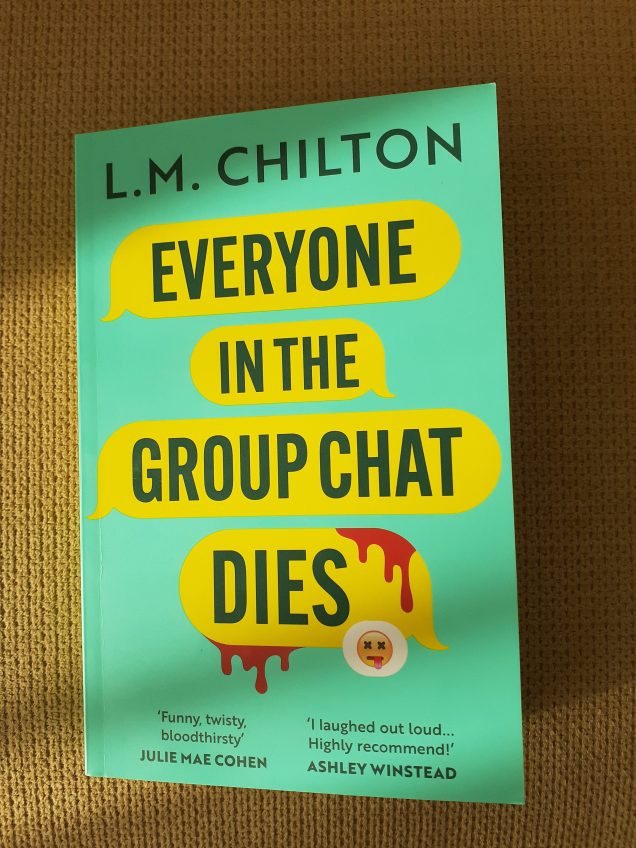
By sheer coincidence this is the second book in a row I read that has an emoji on the cover.
By extra coincidence this book also gave me strong vibes of familiarity, of basically being a retelling.

Dan and his girlfriend Mara were enjoying their second day of a holiday in the Bahamas when the sun exploded. Or melted. Nobody knows exactly how it happened but one thing is for sure: the light’s gone out.
The newly opened resort and the island it is on are owned by a billionaire youngster who doesn’t know what to do or how to handle the crowd. So, Lilyanna Collins steps forward. She’s a fitness guru and influencer and a guest staying in Building C.
The resort contains three different buildings, originally named A, B, and C. Building A offers basic facilities with just staircases, rooms with small tv’s and no balconies. B offers elevators, bigger tv’s and balconies. C is all about luxury and if you’re not staying at C you won’t know what it contains because you’re not welcome there.
In record-breaking time Lilyanna turns into a James Bond baddie, running the resort-in-crisis with an iron fist and only caring about getting herself and her husband off the island and back home by whatever means and at whatever cost.
This could have made Dan the James Bond of the resort, if only he hadn’t already been preoccupied by a bit of an existential crisis. He’s been feeling stuck in a job that prevents him from becoming something “more”, and fears he never grew into a “real” man and that he doesn’t deserve someone like Mara in his life. Mara, in the meantime, isn’t aware of any of his feelings and simply loves him for who he is, imperfections and all.
Their room neighbours Alan and Charles suggest they team up, find a way to get home themselves, and have each other’s backs all the way. Dan is hesitant but Alan assures him this conversation is happening all over rooms at the resort and they can’t waste any time. Because the two couples are getting along and Alan seems to be a “real” man with a plan, Dan agrees.
Except the plan keeps changing because the circumstances keep changing and self-doubting Dan learns to make some tough decisions along the way.

The story is a retelling of Lord of the Flies with adults and in the dark, and with hints of Animal Farm thrown in. (It is also very much something else that I won’t mention here as it would spoil everything.)
Seeing as the world is a pretty dark place at the moment and humanity is not exactly treating the planet with the best intentions, it’s kind of scary how this book seems not too futuristically dystopian. Putting that aside, it’s an easy read that contains plenty of snarky-ness to keep it entertaining. Although Dan started out on a four-out-of-five on my annoyance radar, he redeemed himself by showing growth and letting go of his dick-y behaviour. I guess some people need a near-apocalypse to become a decent human being. I started out by liking Mara more than Dan, but eventually I rooted for them as a couple.

All in all it was an entertaining read and if you’re in for some light-hearted dystopian adventure reading, look no further than this book!

Zero stars, do not recommend / MJ Wassmer

Reading challenge 2025 – No. 5 : A book published this year

Everyone in the group chat dies / L.M. Chilton (2025)
What it is: hip murder mystery
Did I like it: it was okay

This book falls into what I call the “hip murder mystery” category: a story that contains a lot of current cultural references, chat/text messages and slang. There’s a fine line between this all being used right or wrong: too much of any of it risks the book not aging well and or alienating readers. Books that do this well however, are easy and fast to read, and tend to be a lot of fun even if there is a high body count involved.
For me, this book skirted the line and it just made it to the safe side.

The story is about Kirby who has escaped Britain and is not living the dream in Spain where she is cleaning up the pool area of a hotel full of 18-to-30-year-olds in party mode, while she desperately tries to forget the past year, and the fact that at thirty-one she’s too old to join the party. An incoming text message in an old group chat makes everything even worse: Miss me?
It’s not so much about the question but more that it was sent by Esme, who died a year ago.

Da-da-da-dum.

The story keeps switching between last year and now to explain why the message has Kirby in a tailspin.
The Kirby of a year ago is living in a shared flat in Crowhurst back in England. The flatmates call themselves The Deadbeats because they’re all pushing thirty yet cannot afford to live on their own due to their terrible career tracks and the fact that they’re all stuck in a rut.
Then one day Esme arrives at the flat. Esme is a social media content maker and in town “to catch a serial killer”. Esme is very Gen Z and the Millennial Deadbeats are confused by her career and behaviour while Esme in return does not understand the cultural references the Deadbeats throw around.
Esme plays Sherlock on ShowMe (“the edgy version of TikTok”), and she digs into murders and disappearances that have gone cold. (And yes, her followers are called Watsons.)
Crowhurst is a boring and in-decline kind of town and the only thing noteworthy that ever happened there was a killing spree at the local fair in the nineties during which five teenagers were killed. The killer was killed as well though, so the Deadbeats are confused by Esme’s declaration that there is news to discover.

Da-da-da-dum.

This book did what it was supposed to do: it was easy and fast to read and it had a decent mystery. However, about half-way through the fun started to disappear a bit and it became more angsty and just an updated version of I know what you did last summer. By the last quarter it was definitely more serious than (dark) fun and I got a bit annoyed by Kirby.
While I happily kept picking up this book to continue reading I’m afraid I will have forgotten all about it in a few months as it really was just an average breezy read.

I recommend this for people who want something light and breezy with a mystery to solve.
I do not recommend this for people who want something original.

Everyone in the group chat dies / L.M. Chilton

Reading challenge 2025 – No. 2 : An award-winning book

The Heaven & Earth Grocery Store / James McBride (2023)
What it is: an incredible saga slash murder mystery
Did I like it: so, so much!

This book caused a lot of discussion before I had read a single page, as I had purchased it thinking it would fill the five-word title position of the reading challenge. But counts a symbol as a word? I asked this question to just about everybody I bumped into, friends searched the interweb to find out what “the world” thought, discussions were had and opinions were divided. Then I decided to let the Word word-counter have the final say and that’s why the book was put in the award-winning category instead.

This book won the National Book Award and there are so many blurbs, proclaiming this to be a masterpiece. And I’m happily agreeing with all of them: this book is wonderful, incredible, and highly recommended.

The story starts with human remains that are found in a dried up well in the ‘70s in Pottstown, Pennsylvania. To find out the who, how, and why behind this, the story dives into the history of the Chicken Hill neighbourhood which decades before is the poor part of town where immigrant Jews and African Americans live. This is how we get to the title, because The Heaven & Earth Grocery Store is located there, and it is run by Chona. Chona is married to Moshe, who owns and runs a theatre.
There are a lot of characters that are introduced at different points in the story. And the story jumps through time so you really have to pay attention but that’s not difficult with a captivating story such as this.
The set-up is done wonderfully, and the main story is that of the community coming together to protect Dodo. Dodo is a young boy who became deaf in an exploding stove accident. His deafness puts him on the side-lines of society and because he lost his mother in the accident as well, the people of Chicken Hill embrace Dodo and take care of him. Nobody takes to him as much as Chona, who walks with a limp and knows what it means to be ignored by people. Her husband Moshe is less eager to help out, afraid of retaliations, but he can’t refuse Chona anything and along with his trusted janitor Nate, embraces Dodo as well.
An incident that involves both Chona and Dodo has the “people in charge” decide that Dodo isn’t well and dangerous and should be committed to the local asylum. When the people of Chicken Hill learn about this, they band together and try to keep Dodo safe. The story gets rough and real and it makes you hate characters and cheer on others.

As said, the story contains a lot of characters but the way they and their lives are described down into the finer details, is beautiful. The story is both heart-warming and heart-breaking, it punches you in the gut and it lifts you up. And it makes you say these kinds of things.
There is such a particular flow to this book, it just grabbed me and wouldn’t let go until long after I had finished it. Gosh, I love it when books do that.

Friend P: I’m reading a book, and it’s ah-may-zing and you should read it too, you’ll love it.
Me: We can swap, because the book I’m reading is so beautiful and I know you’ll love it.
Friend P: shows copy of The Heaven & Earth Grocery Store.
Me: pulls copy of The Heaven & Earth Grocery Store out of my bag.

The Heaven & Earth Grocery Store / James McBride

Book review: Wedded in a whirlwind / Liz Fielding (2008)

After finishing the one book I had brought with me on holiday, I got to pick something from the hotel library. What a choice I made.

The story takes us to the make-believe island of Gordilla, where Miranda flees to because she needs some alone time. This island is a yet-to-be-discovered-by-the-masses destination so it’s quite and there’s not much happening. So little is happening, that Miranda decides to join an excursion into the jungle where recently discovered ruins can be visited. Within no-time she loses her group though and of course that’s exactly when disaster strikes: earthquake! The jungle floor opens up and swallows our heroine who lands underground in parts of the ancient city that is still in the process of being excavated.
One of the archaeologists working the site is trapped in the same space as Miranda is, and that makes this Nick Jago our hero. Miranda and Nick spend the rest of the day and night trying to find a way out, climbing back up to the surface. They entertain themselves by swapping stories of horrible childhoods: they both come from politically influential and wealthy families but had to grow up without their parents as they were raised by nannies and dropped off at boarding schools. For Miranda this ended when her parents died (their yacht sank) and for Nick when the story broke of his father’s love-child. Nick “rebelled” by turning his back on his family, and Miranda did so by wild partying. This resulted in a pregnancy and her considering abortion.
No need to get excited about a Mills and Boon going to this topic because just as this could have become a real conversation starter, Miranda’s pregnancy is ended by nature.
Even though there are so, so, many reasons for a woman to suffer a miscarriage, Nick’s first guess is that this was an ectopic pregnancy. Of course, this was exactly what Miranda suffered from and it has her in awe of Nick’s knowledge. Turns out, the archaeologist had a grandfather who was a doctor, and this grandfather once told a young Nick about a patient of his who had an ectopic pregnancy and that this was extremely painful. Why a doctor thought it okay to tell anyone this, let alone his grandson, is beyond me.
I missed a couple of paragraphs because I was still fuming over this stupid doctor and when I tuned back in Miranda was kissing Nick. It turns out this was not just a kiss, but a kiss-of-life and I have no idea what happened there because I refused to read back. In any case, this leads to Nick in awe of Miranda for saving his life.
Somewhere Miranda also told how after the miscarriage she spiralled out of control and it got so bad that her brother had her admitted to a psychiatric hospital. Again, great opportunity for some depth and interesting character development that gets entirely dismissed and ignored. This couple is so awful. Or is that not how you say it when two people are deeply in awe of each other?
After spending the night trapped in the ruins, they manage to climb to safety the next morning, dive under a waterfall and have unprotected sex. For real. But don’t worry, Miranda’s chances of getting pregnant again after that ectopic pregnancy are zero so there’s no way this could lead to an(other) unwanted pregnancy. Way to exploit that incident even further. Once fully clothed again they go back to town where people have been worried sick about them. Nick is tackled by an ex (she stole his discovery) and Miranda is taken away on a helicopter.
Two months later they meet in London where Nick crashes the viewing party of a Miranda’s new documentary. They walk out on the showing to find the young girl that features in the documentary but had gone missing. They literally lure her out of hiding with a bacon sandwich, adopt her and get married.

The pacing of this book was odd, with half or more taking place during the half day and night that the two are trapped underground. Then everything moves on superspeed afterwards.
Both Nick and Miranda are flimsy characters at best and their “oy me” attitude really got on my nerves.
It read very much like this book was an afterthought, that Miranda was a side-character in the story about her brother and that she could have been interesting. Unfortunately it got all flattened out and left without any sizzle.

Wedded in a whirlwind / Liz Fielding

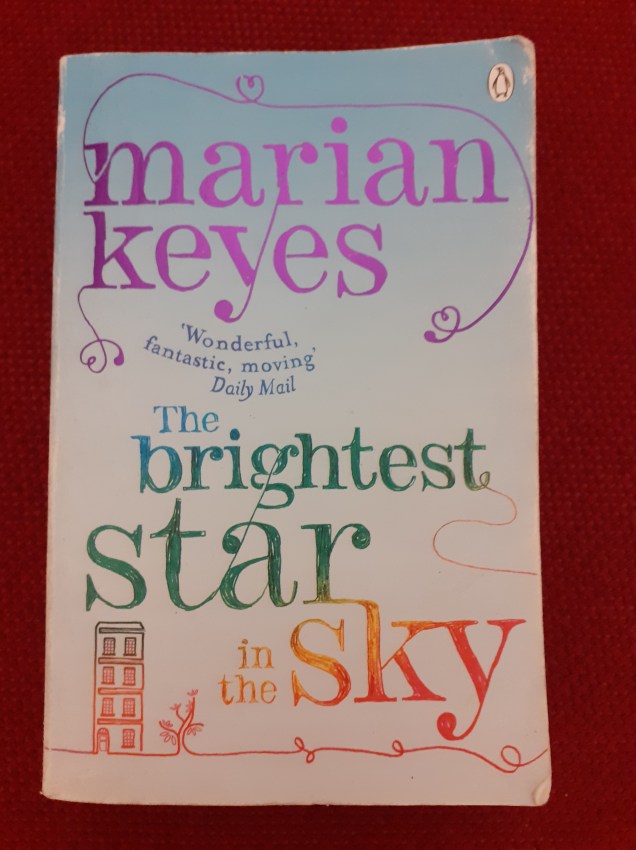
Book review: The Brightest Star in the Sky / Marian Keyes (2009)

This book was such a welcome treat after the disappointment of The Library of Borrowed Hearts that I devoured it. Marian Keyes writes books that seem fluffy but pack a punch. I’ve enjoyed several of them and was happy to add this one to the list.

The book is centred on the people living at Star Street 66. The address contains multiple apartments. Maeve and Matt, married, live on the ground floor. Then there’s Jemima with her dog, Lydia with Polish roommates Alexei and Jan, and Katie on the top floor.
We learn about them and their lives through a presence that floats in one evening and observes them. This presence is also able to sense heart beats, recognizing when people’s hearts are a match or not. This is how it slowly becomes clear that something is off between Maeve and Matt.
Jemima’s foster son comes to stay with her and he brings a complicated energy with him.
Lydia’s roommates are scared of her but the reasons for her stand-offish and blunt behaviour quickly become clear and turn her into a much more likeable character.
Katie’s boyfriend Conall is a workaholic and she faces the realization that he might never prioritize her over his work.
These are ordinary people, leading ordinary lives. Things get messy and complicated like life tends to get. Difficult decisions need to be made sometimes. 
This story is an example of an easy read that still contains complicated and real characters who learn and grow, and we learn who they are through their actions and not just through descriptions.

Spoiler alert for trigger warnings: rape and suicide attempt

The brightest star in the sky / Marian Keyes

Reading challenge 2025 – No. 18: A book that contains multiple points of view

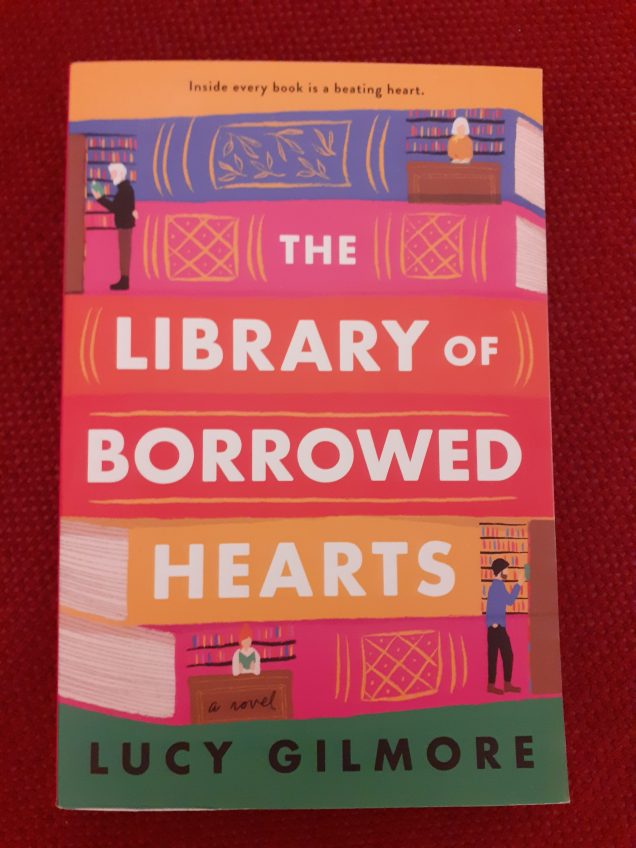
The library of borrowed hearts / Lucy Gilmore (2024)
What it is:
lukewarm bookish romance
Did I like it:
nope

This story counts no less than five different points of view.
There are: Chloe, Jasper, Catherine, Noodle and Zach.
Despite all these people, there are two clear main characters, namely Chloe and Jasper.
Chloe and Jasper are neighbors and that’s about the only thing they have in common. Jasper is an old grouch who keeps any frisbee and ball that flies over the hedge into his garden.
Chloe is struggling to get by on the meagre salary of a library worker, paying off student loans for a half-finished library degree, while also paying the bills to keep herself and her three younger siblings clothed and fed.
Then one day in the library she finds a rare book amongst the ones selected to be sold off and takes it home to sell herself. At home she discovers that the book has writing in the margins. With there being two different styles of handwriting, she realizes the book was used by two lovers to communicate.
Chloe is hooked by the love story but when Jasper-the-Grouch insists on buying the book at any price (he hands her a blank check) it’s easy to deduct that he was one of the two writers. This makes Chloe more determined to find out everything and uncover the mystery identity of the other writer.
Then in the past is the story of another librarian, Catherine.
And in the now is also the point of view from Noodle, who is one of Chloe’s siblings. He had gotten himself into some trouble and was rescue by Zach, a mountain man, who also becomes a teller in the story.
All in all this book has a lot going on, even though the story (stories) are not complicated. Noodle’s and Zach’s storylines were okay but only used as catalyzers for other people to keep meeting or get moving. Therefor they were clearly the weaker parts.

I had bought this book, all excited about the title, the cover, and the premise. I managed to keep myself from tearing into it and saved it for my holiday. In fact, it was the only book I allowed myself to pack*.
But oh boy, what a disappointment. The so-called mystery that is teased on the backflap is solved within two chapters and the twist at the end could be seen from chapter three onwards. What is left, are two lukewarm love stories. The problem with that is that love stories should sparkle, burst with chemistry, and have you rooting for the main characters. Alas, one of the main characters here is Chloe, who scored high on my scale of annoyance: she’s feeling so sorry for herself that she’s leaving a trail of self-pity wherever she goes. Sure, the circumstances that made her her siblings’ legal guardian were tough but she’s stuck in a martyr role and that’s not a good color on her. And the message about the family struggling financially is driven home hard in the first couple of chapters and it was just too much.
Because so many people got to tell their point of view, I felt sorry for the two siblings who weren’t given that position. They were also complete scene-stealers whenever they did pop up.

The idea of the story is a nice one. The execution unfortunately not the best as it packed no punch. As far as I’m concerned the best thing about this book is the cover.

*that’s a mistake on my end; never again!

The library of broken hearts / Lucy Gilmore

Reading challenge 2025 – No. 1: A book set in a country I have never visited

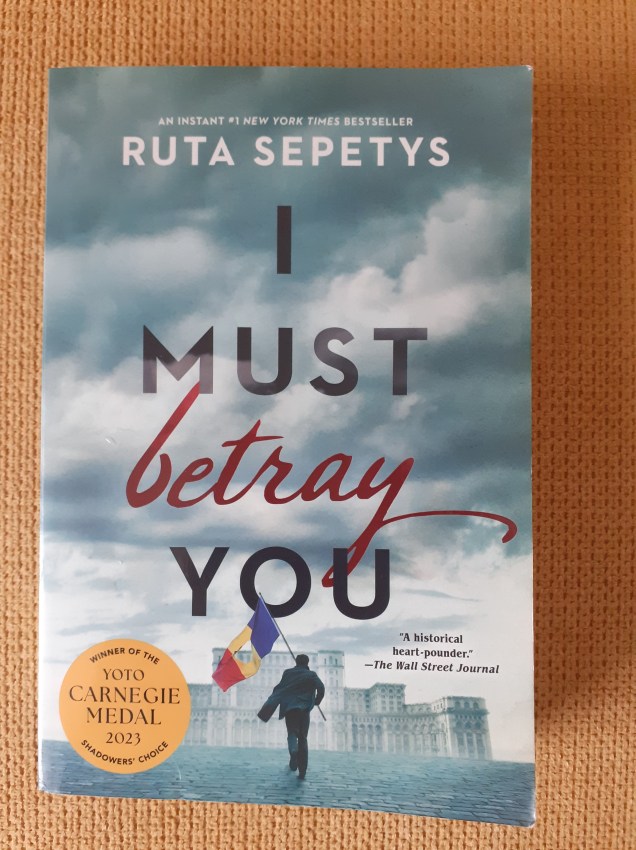
I must betray you / Ruta Sepetys (2022)
What it is: YA recent historical fiction
Did I like it: foarte mult (which is Romanian for very much)

Wonderful friend P, knowing I have never been to Romania, sent me this book and explained that it was meant to fill the no. 1 position of the new reading challenge. It makes me one lucky and incredibly grateful Bookworm to have friends like this!

The story starts in October 1989 which means Romania is still under the tightly dictatorial regime of the Ceaușescu’s.
Protagonist Cristian Flores is a seventeen-year-old high school student. Cristian lives with his parents, sister, and grandfather in a typical apartment building where they are used to the elevator not working due to electricity outages. They are used to whispering inside their home, knowing that listening devices are everywhere. They are used to having only one lightbulb in the apartment. They are used to standing in endless lines for groceries.
Cristian is an aspiring writer, and he’s being a typical curious teenager, asking questions, challenging the authorities. His grandfather encourages this, his mother freaks out over it, his father doesn’t voice any opinion, and his sister quietly supports him.
Then Cristian’s life gets turned upside down as he gets blackmailed into informing on his friends and family by the Securitate. The stronghold of the regime relied on this network of informers, creating a fear of never knowing who was trustworthy and who was reporting to the authorities.
Left feeling he has no choice, Cristian tries to make the most of his informer status by demanding medication for his terminally ill grandfather in return. He decides to feed his handler a minimum of useful information and at the same time find out who has betrayed him, roped him into this position.
Cristian receives a special assignment from his handler, which is to inform on the son of an American diplomat. Cristian has an “in” because his mother works at the family’s home as a cleaner. He hates his task but is curious at the same time and cannot resist getting to know a teenager from the West. This Dan not only shows Cristian home videos from his friends in the States, but also introduces him to the American Library in Bucharest. Here, Cristian reads Time magazine and to his shock sees a report on neighbouring country Hungary being freed from the Soviet communist grip. This news had not reached Bucharest yet, and it makes him realize just how isolated the country is. It also makes him wonder, if people can fight an oppressive regime in other countries, couldn’t they do that in Romania as well?
Angry with the system and tired of not allowed to be free, he throws caution in the wind and decides to become part of the change. Together with two friends, he joins students in a big protest. This protest becomes the big finale of the story and things move fast and it ends with a big bang.

If any setting is fitting for angsty young adult, it is one that is seeped in paranoia and angst all around.
The story reads easy, the tension building with each chapter. Cristian is a great protagonist, insecure about his feelings, questioning his own actions and dreaming big.
The author obviously did a lot of research, which delivers a setting that is well-written and believable.
This was an amazing read and if you like to read (recent) historical novels, YA or not, do yourself a favor and add it to your TBR list; you won’t regret it!

I must betray you / Ruta Sepetys

Reading challenge 2025 no. 6 : a book with an animal in the title

Black butterflies / Priscilla Morris (2022)
What it is: a beautiful debut
Did I like it: absolutely

This book could be used to fill three different categories as it is set in a country I have never visited, and has a colour in the title as well. But the reason it stood out to me was the word butterflies so I’m using it for the no. 6 slot.

The book is set in modern history, starting in Sarajevo 1992.
It’s spring and there is tension in the air.
Main character Zora is a painter and art teacher and she’s passionate about her job. She’s also optimistic about the tension, figuring it will end well, but gets served a reality check by an incident that leaves her mother in a state of severe shock. As a teacher, Zora is stuck to a school schedule and cannot leave, so Zora and her husband decided that he and her mother will travel to England where their daughter lives. Her husband will stay for a week to help get her mother settled and then he will go back to Sarajevo so Zora will only be alone for a week.
However, two days after her husband and mother have left, Bosnia-Herzegovina is acknowledged as an independent state which is a catalyst for fighting to break out. As a Serb, Zora is proud and relieved to be living in a recognized independent state, but the fighting confuses her: how is a civil war possible in a place where people from different cultures have been living alongside one another for so long?
Suddenly, there are snipers on city rooftops and roads into the mountains are blocked off by the military. The airport has been closed by the military as well and Sarajevo has become a sieged city.
Because her husband can’t travel back the family tries to arrange transportation to get Zora out, but that’s near-impossible and Zora isn’t really trying too hard from her end of the situation: she still thinks it will all pass quickly and she doesn’t want to leave the properties unattended or her students without a teacher.
To escape reality, she works daily in her studio which is located in the national library. This building houses the national library as well. The studio offers her a safe space and she paints with newfound energy. Until one day she’s no longer allowed to go into the building and left standing on the doorsteps along with the librarians. When one of the soldiers recognizes her as his former teacher, he sneaks her in and allows her an hour to pack up anything she can carry.
Upset and confused she takes what she can, and from then on starts painting at home instead. One of the neighbour’s children becomes her private student and because they don’t have canvases they paint on the walls of the apartment.
All the while the situation becomes more and more dire. No phones, no mail, no electricity, no water.
When after months without contact she finally gets the opportunity to call her family in England, it turns out her husband and daughter have more information on her situation than she does herself and it makes her realize just how bad it is. So, when the opportunity arises to get herself listed for an evacuation convoy, she doesn’t hesitate and starts to prepare for her leave. She informs her family, she says goodbye to neighbours and friends, and gives away personal items. But the transport gets delayed twice and by the time a new date is issued, winter has arrived and people are realizing the harsh winter will be brutal. So, more and more sign up for the evacuation, and because the elderly and sick get prioritized Zora gets bumped from the list and has to survive the winter in the city after all.

Zora is naïve and innocent, which makes her clash with the horrible setting of the story. You witness her growing smarter, tougher, and a veteran of survival who eventually has no trouble breaking a pigeon’s neck with her bare hands.
The story is about survival, about the people left behind becoming a community, about people being able to celebrate wonderful things in the most terrible times.

But what about those butterflies?
Although some titles require little to no explanation but for this one, it took a while for it to become clear. I could be heard making an “aah” sound when I found out. And no, of course I’m not going to spoil anything here. The book’s too good to be spoiled in such a rude fashion.

Black Butterflies / Priscilla Morris