Reading challenge 2023 – No. 18

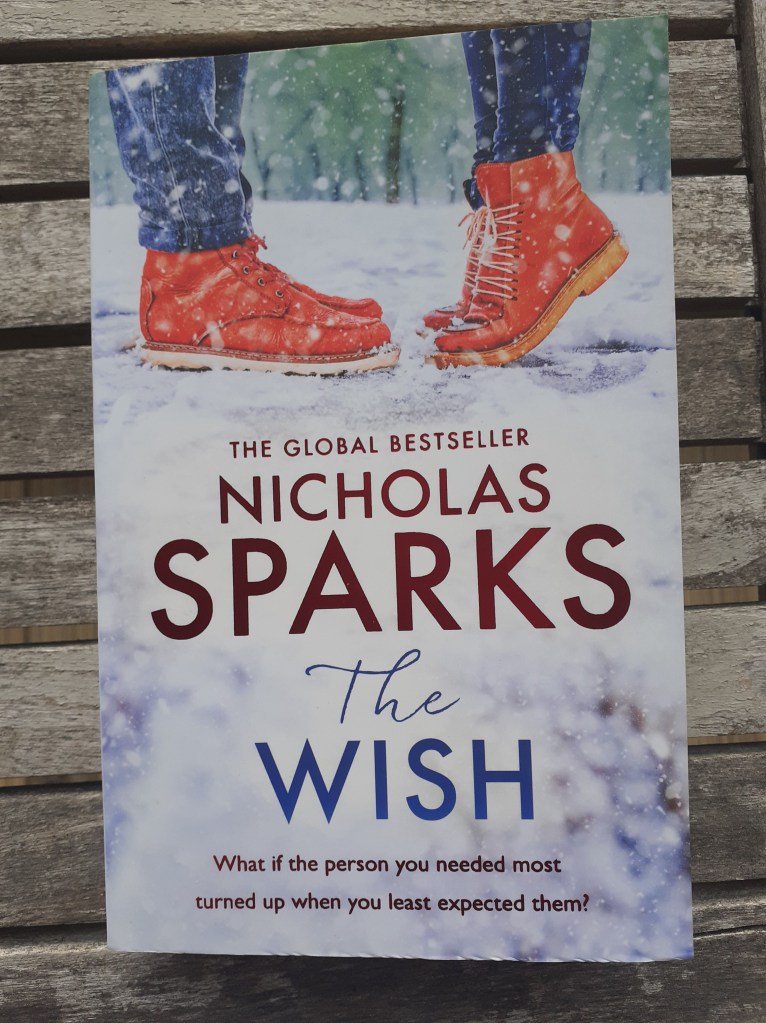
No. 18 – A book with snow on the cover

The Wish / Nicholas Sparks
The Wish / Nicholas Sparks

Years ago someone tried to shame me for not having read a Nicholas Sparks book. Needless to say, that did not make me run to the library/bookshop for one of his titles any faster.
(Don’t worry, this was a complete stranger and not someone I had to cut out of my life.)
Then during last year’s Christmas break, I treated myself to a trip to the bookshop and ended up at the register with a copy of The Wish. It had a cozy cover with snow which I was in the mood for, and I figured it was about time that I give this author a try after all.
However, the book ended up on my TBR pile and it wasn’t until this weekend, on the hottest days of the year so far, that I picked it up. You can never predict when the mood strikes you.
By the time I finished the book I had half-melted. Unfortunately that wasn’t because of the story, but purely due to the heat.

I’ll try not to give away more than what it says on the preamble on the cover while expressing my reading experience.

This book is a tearjerker with frosting for extra sweetness on top.
It’s set during Christmas time and the main character is Maggie, a successful photographer who shot to fame due to social media.
The gallery she co-owns gets visited by fans who hope to catch a glimpse of her.  
Maggie got pregnant at sixteen and was made to sit out the pregnancy, waiting for the baby to be born so it could be adopted. She does this far away from home, on an island off the North Carolina coast.
There she meets Bryce, who at eighteen is basically superman: he’s cute, non-judgmental, patient, smart, sweet and caring. He helps out anyone; from his mother, to his fisherman grandfather and the ladies running a diner in the only town on the island. He also helps homeschooling Maggie, and he received recommendations from multiple Senators for his West Point application. Oh, and he trains aid dogs.

Over the course of a few days Maggie tells the story of how she and Bryce fell in love during those six months way back when.
She is talking to the gallery’s new sales assistant whom we get to know little about expect that he is very much in love with his girlfriend and can skate really well.

I don’t mind an emotional punch or two and have sobbed over books many a time, but this felt a bit like an attempt to cram as much emotional stuff in there as possible: Adoption. YA angst. Lost loves. Other stuff. Christmas time.
Subtle it is not. As a result nothing of the story came as a surprise to me and it left me with an “is this it?” feeling.
Maybe my expectations were too high after all the praise from friends who read the other books.
Maybe these books just aren’t for me.
Based on this title, I’m not in a rush to try more.

Banned books

I’ve been thinking about banned books a lot recently.
It’s an item on my reading challenge which in recent days became a hot news topic (again), and to be honest, the concept about banning books is just beyond me and it had me in a bit of tailspin.

I did a deep dive on the subject which left me feeling slightly depressed and very angry.
Libraries here are allowed to, and can without fear, have any title on their shelves. I cannot imagine having it any other way.
Pupils can read anything in schools.
Bookshops can sell almost any title.
That last one is an almost, because we do have one banned book here: Adolf Hitler’s Mein Kampf.
This ban is an official one, making it illegal to sell and publish the book, which can lead to hefty fines.
However, libraries are allowed to have it in their collection as they don’t sell/publish, and in 2014 an antiquarian in Amsterdam who was sued and fined for having a copy in the shop window, fought his case in court and had the charges dismissed.
(For curious minds: due to its publication date the book was considered to be in line with everything else on sale. There was no proven intend to discriminate and because the book is available in libraries and online as well, the judge ruled in favour of the shop owner. It was also noted that all cases would not, from now on, automatically be waved in favour of booksellers; each case will be weighed carefully still.)

Although the ban is understandable with the darkness and devastation of what it caused still so close and tangible when it was imposed, I think a review is overdue: we’re living in different times now and in fact, so much time has passed that the copyright of the original work has expired.
And almost as soon as that happened, new editions were published: after an updated edition was released in Germany in 2016, a Dutch language update was released two years later.
The ban does not apply to these works because these editions include historic context and were published with academic “feedback” to the original text.
The new editions also lack the creepy cover art of the originals, and are just solid grey with a title and author mentioned.
The new releases proved no rise in the number of antisemitic, fascist or racist incidents, taking away the main arguments for the ban.
So what use does the ban still have?

In my idea of a perfect world there would not be a single banned book, no matter how controversial the contents of the work.
Because banning books is more scary than whatever can be written in it.
Because someone deciding what you can or cannot read, is oppression.

Banning books doesn’t stop violence. It doesn’t stop racism.
It doesn’t stop people from coming out as part of the LGBTQIA+ community.
It doesn’t stop people from using drugs or having sex.

Banning books does stop people from getting smarter.
It does stop discussions and growth.
It does limit freedom of expression.
It does feed bigotry, fear, narrow-mindedness.

I went to the library and checked out the 2018 edition of Mijn Strijd – Mein Kampf. I haven’t found the courage to get started yet, but I will. Just because I can.

Reading challenge 2023 – No. 8

No. 8 – A book with a one-word title

Booth / Karen Joy Fowler

The family history of John Wilkes Booth. The name doesn’t necessarily ring bells for many people in the NL, which I’m guessing is why the publisher made sure to add a blurb on the cover that mentions him as Lincoln’s killer.

The book caught my eye a while ago thanks to its gorgeous cover, but I feared it would be a difficult read.
Then recently, I passed the book in the library again and picked it up after all. And I’m glad I did, because it was an easier read than I had anticipated and I learned a lot.

Booth / Karen Joy Fowler

Aside: I read in both English and Dutch, depending on availability / price of a book. I read Booth in Dutch; the title wasn’t changed in translation.

The family history is told from the perspective of Booth’s siblings and is fiction based on facts.
Every now and then Lincoln’s story seeps through as well, interwoven to remind the reader where he stood at the same time: there are quotes from letters and speeches, and passages telling about his personal life.
The Booth family history is dramatic with infant deaths, bigamy, money problems and alcohol abuse.
What makes them stand out from the average family at the time though, is the fact that they are famous and a lot gets written about them in newspapers.
Their father is an actor and all the children can recite Shakespeare. They all play-act in their younger years although it is only the boys that are allowed to dream of, and eventually chase, acting careers themselves.
The family income is depending on the jobs the acting members of the family can get, and good times are inevitably followed by bad times.
The siblings have very different personalities which causes tension and difficulties, but they do (almost) all stick together throughout the years.
The chapters are told from their different perspectives, although some siblings have a bigger, clearer, voice than others. The author explains in her notes, that this is due to the simple fact that some had more known about them.

The topics of politics and slavery are an aside to the story, they’re something that happens in the background, and doesn’t seem to be of much interest to the family. It must have been all the more shocking to have their son and brother do what he did.

I’m guessing this book would read differently if you are American or know more about the American Civil War. For me, a lot of it was new information (the treaties, politicians involved and incidents that preluded the war), but this is because my knowledge of John Wilkes Booth comes mostly from the tv show Timeless (loved that show) where they had an episode about Lincoln’s murder.

Reading challenge 2023 – No. 25

No. 25 – A book set in a country I’ve visited

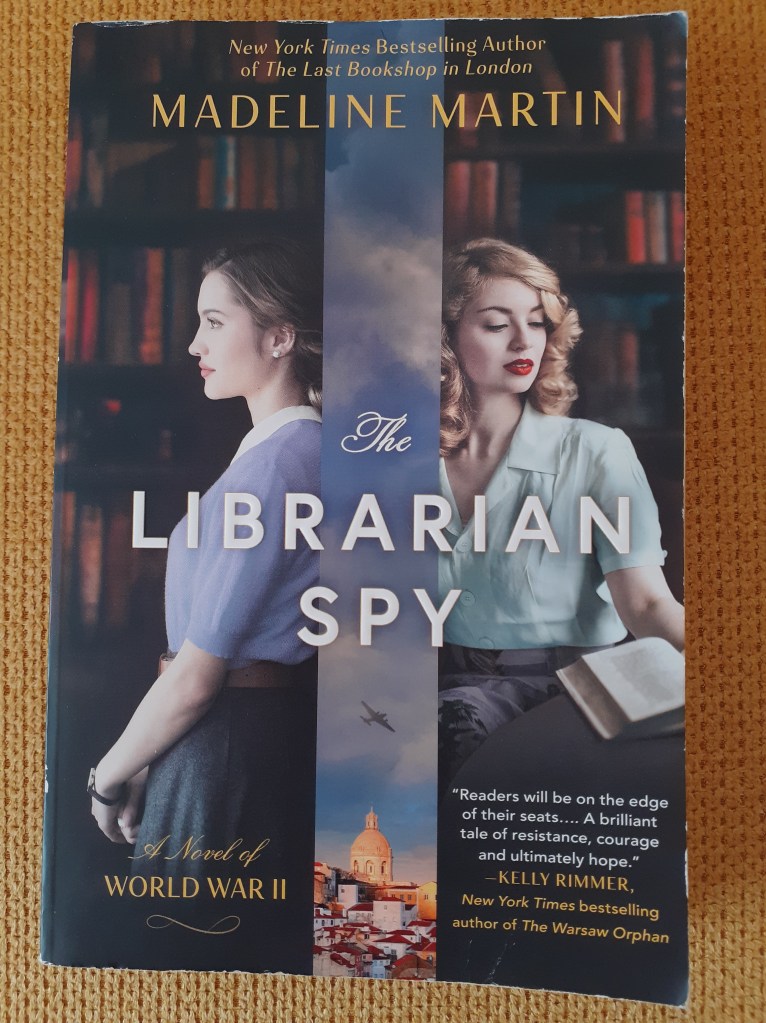
The Librarian Spy / Madeline Martin
isbn 978-1-335-42691-8

In all honesty, this book was mainly purchased based on the title.
Finally, I thought, someone realized that the perfect spies are hidden in plain sight: librarians.
As a species, we generally know a lot of stuff because either we’ve read about it, or questions from patrons had us perform deep-dives into subjects. The job has us improvising basically all the time, and we’re great judges of character thanks to the sixth sense that tells us which patron or supplier is going to be trouble.
And, of course, we can sneak around quietly.

Why the book matches the challenge: it’s set in Portugal and France and I’ve been to both, so it’s kind of a two-for-one.
For some reason the Portugal part stands out more in my memory, and that’s nothing to do with the story, but mostly because I couldn’t remember reading a book that’s set in Portugal ever before. Books set in France, I’ve read a lot of those, making that country/setting stand out less.
Onto the story.

Ava works at the Library of Congress and gets recruited by the US military for a mission that involves gathering intelligence abroad. She’s brought to Lisbon, Portugal.
Lisbon is well-described as a hub for refugees and intelligence alike: a hotbed for intrigue.
Arriving from a safe and relatively quiet United States, Ava is appalled at the sight of the many refugees that have gathered in Lisbon, their living circumstances and the stress they experience, trying to secure passage to safer locations.
She’s also shocked to find out that in a neutral country, there’s no rationing and everything from food to clothes and makeup, is available as long as you have the money to buy: people who can afford it, party, eat and drink without holding back.
Only hours into her first day in Lisbon, Ava is swept up in the intelligence game and finds herself starting to get paranoid about everything and everyone.
Lisbon had not just Americans and Brits stationed, but the Germans were there as well and the Portuguese had their own secret police in the mix.
Nobody is who they seem and everybody is playing games: Ava’s confusion and paranoia is perfectly understandable.
Despite all that, she’s slightly disappointed when her bosses don’t want to utilize her full skillset and only have her gather and photograph international newspapers and journals.
So, she does what any librarian does when they are told “no”, and does it anyway. She starts to read the materials while she processes them. One of the papers she reads, is an illegal paper printed by the French resistance.
One of the women risking all to deliver the papers to readers in occopied territory, is Elaine, in Lyon.
Elaine joined the resistance after she learns her husband, who has been arrested, was part of a resistance group without telling her. She soon is all in and after starting out as a delivery girl, she moves onto printing.
Papers didn’t just print news, but they printed contact ads in code, so the resistance could communicate with allies outside of the country.
When Elaine stumbles onto a woman and child who are desperate to flee France for Portugal, and the US from there, she hides them and creates a code, asking for help.
It is Ava who spots and unscrambles the message, but she has difficulty navigating the red tape in Lisbon and has trouble getting a rescue mission going.

The story navigates easily between Lisbon and Lyon, free world versus occupied territory.
One woman enters the war eager to make a difference, the other is hesitant at first. Both remain true to themselves and refuse to give up when the going gets tougher than it already was.

I don’t know why, but I’d never read a book that is set in Portugal before.
I also hadn’t been to Portugal until earlier this year, when I fled the cold and grey weather of a typical Dutch winter, and got to enjoy the sun and warm air of the Algarve, in the south of Portugal, for a week (total bliss).
The Portuguese edition of The Librarian Spy featured in a lot of shop windows and I recognized the cover and realized that this very book was part of my to-be-read pile at home.
I started reading as soon as I got back.

There are many novels about women in the resistance and women in intelligence during World War II, and I’ve read a lot of them.
Most are okay, some are good, and a few are exceptional. I would qualify this one in the middle category, mostly because it’s different from the others in that it (partially) takes place in a neutral country and it has a librarian in it.

Reading tips about Portugal, librarians in wars, and women in intelligence are welcome!

The Librarian Spy / Madeline Martin
isbn 978-1-335-42691-8

Reading challenge

It’s been a while since I did a reading challenge (pandemic times were challenging enough on their own) but I felt stuck in a reading rut recently and decided that the way out of it might be a new challenge. So, I found myself a new list and sure enough, have been able to strike off two items already. Examples of reading challenges can be found on library websites and Pinterest among other places: they come in all shapes and forms, so if you want to give it a go yourself, go ahead and explore!
I’ll keep track of my list on this very platform and will let you know how I get on.

Reading challenge 2023

  1. A book with a color in the title
  2. An award-winning book
  3. A book based on a true story
  4. A book with a city in the title
  5. A book with a person’s name in the title
  6. A book that was made into a movie
  7. A book that is at least a 100 years old
  8. A book with a one-word title
  9. A book with an item of clothing or accessory on the cover
  10. A retelling of a classic
  11. A book bought at a thrift store
  12. A book about travel
  13. A banned book
  14. A western
  15. A book with food in the title
  16. A classic
  17. A recommendation
  18. A book with snow on the cover
  19. A trilogy
  20. A book that prominently features an animal
  21. A book with a flower on the cover
  22. A book with more than 500 pages
  23. A book with an ugly cover
  24. A sports related book
  25. A book set in a country I’ve visited