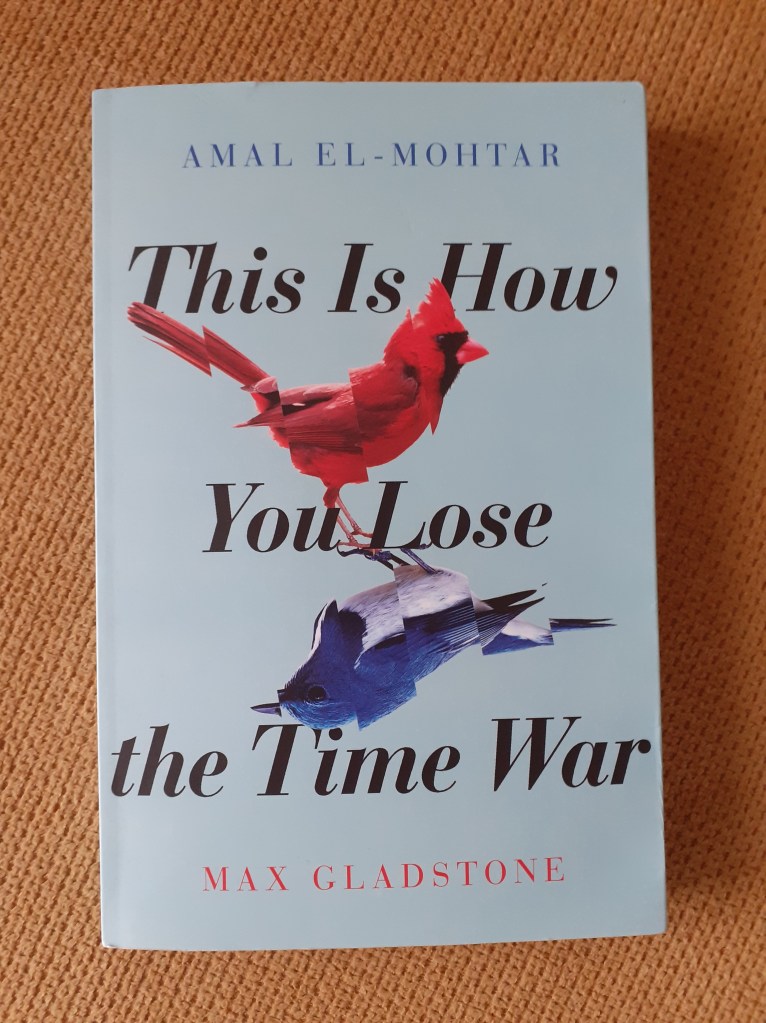
Here I was wondering why the heck my posts weren’t being sent/published. Turns out, December 2025 is a long way out. Oops. Now that I know how I made that mistake I can’t promise I won’t make it again, but I will be paying closer attention. Also, I’ve reset the upcoming posts so keep an eye out!
Author: loesielou
Reading challenge 2024: No. 20
No. 20 – A book with a body part in the title
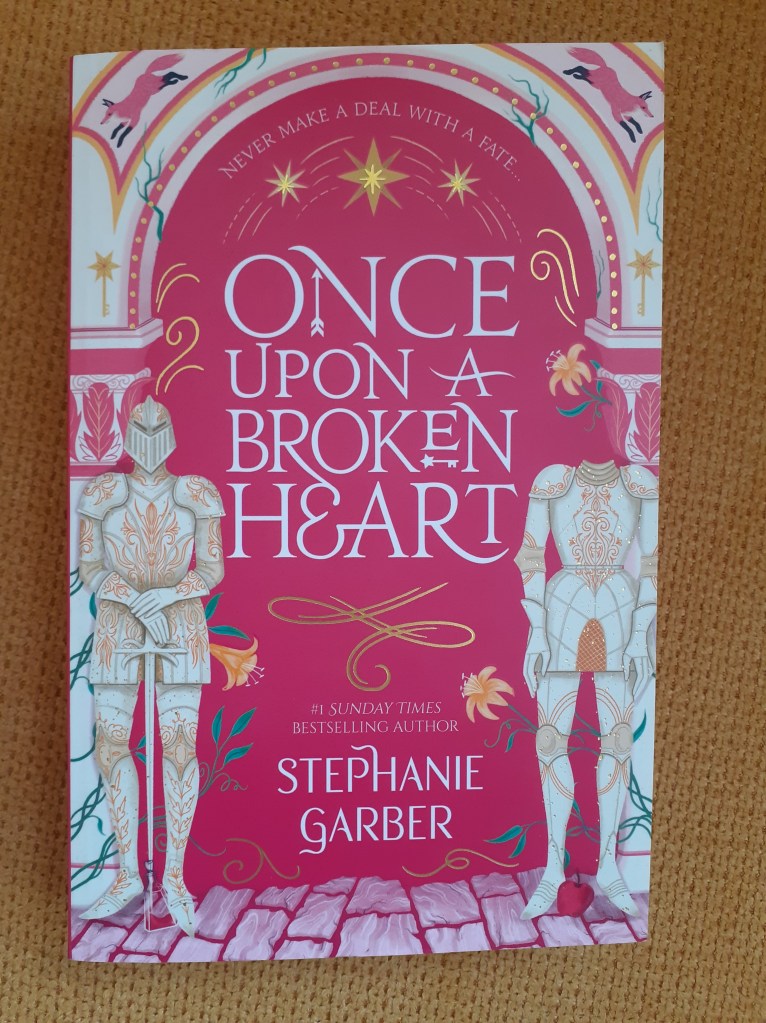
Once upon a broken heart / Stephanie Garber
This book is YA fantasy and that’s a combination of two genres I don’t typically gravitate towards. And after the disappointment of my previous read, I was a bit hesitant to start this but I was pleasantly surprised by what a palate cleanser this turned out to be!
The book is the first in a trilogy and sets the scene really well. The story contains all the elements of a classic fairy tale: orphaned pretty girl, wicked step-family, curses, love, and a morale.
Evangeline Fox is the heroine. She believes in happily ever afters, is a tad naïve, and only dreams about marrying her one true love.
When Evangeline finds out that the guy she loves is about to marry her step-sister, she is utterly heartbroken. She’s so desperate to stop the wedding that she goes to a church and begs the Prince of Hearts to intervene.
The Prince of Hearts is called Jacks and he is an immortal, a Fate. Once upon a time there was an incident and all the Fates were captured in a deck of cards. Jacks has escapted the deck.
Jacks is charismatic and eager to answer Evangeline’s request, in return for only three kisses, to be given at a time and place of his choice (the kisses don’t even have to be for him). This deal seems too good to be true but Evangeline is eager and gives her word. Evangeline quickly learns that striking a deal with a Fate requires reading the fine print, because Jacks’ solution to stop the wedding, nearly causes her demise. The event makes Evangeline realise that Jacks must have an agenda of his own but she is stuck to him due to their deal.
The adventures that follow see Evangeline travel to The North, where she meets a prince, and more Fates that escaped the deck of cards. There are vampires, potions and spells, and there is murder.
Evangeline’s naïveté borders on annoying: she makes some silly mistakes causing unnecessary drama. In the beginning she is also very much apathetic and has stuff happening to her (she has people decide on her outfits, is practically married off to someone she doesn’t like), rather than be involved in any way herself.
But, she does show growth and three-quarters into the story, finally starts to show a bit of an edge.
On the opposite end of the spectrum Jacks is nothing but edge. He’s very broody and mysterious and doesn’t let anyone get close. He holds his cards close to his chest (ha) and doesn’t want anyone involved in his personal business (whatever that might be).
The book ends with Evangeline finally realizing that and making a decision purely for herself. The door that she opens is connected to another door in the castle and that’s where the story ends. What’s the door of Evangelines chosing? What’s the deal with that other door? How is Jacks going to react to Evangeline’s action? It’s a to be continued!
I liked this book enough to borrow the other titles if ever bumped into them, but I’m not that eager that I’ll bother with a reservation or a run to the library.
The other titles in this series:
Book 2: The Ballad of Never After
Book 3: A Curse for True Love
Note: I’ve seen different versions of cover art for this title (series) so be aware when you purchase! (so annoying when one of the books of a series you have is in a different edition than the others)

Reading challenge 2024: No. 17
No. 17 – A book with an antonym in the title
Big little spells / Hazel Beck
(book two of the Witchlore series)
This wasn’t an easy category to fill and I admit: I settled for this book.
Like in real life, one shouldn’t settle because it’ll only end in disappointment. Yup, this one became a DNF: Did Not Finish.
Books about witches are generally not on my radar but they’re hard to ignore this time of year, and because it’s a genre that seems to be particularly into pun-fun titles, I put my doubts aside and went for it.
And it might be on me for picking the second book in a series, but I never got into swing of things: it felt like jumping onto a moving merry-go-round. This book picks up right where the first one ended and I never truly found my balance and kept stumbling through it. And because that’s no fun either on a merry-go-round nor in a book, I eventually gave up and jumped off. I’m still counting it for the reading challenge though, because I did give it my all and didn’t quit until page 212 out of 374.
The story is about Rebekah and Emerson Wilde, sisters and witches. After Emerson has re-discovered her witch-being, and Rebekah helped her and her friends save their hometown (book one), the book starts with the sisters and their friends facing the local coven to face the consequences of their actions. Something had happened ten years ago that had Emerson forget that she’s a witch and Rebekah was exiled, and because they have broken those punishments the coven decides that the sisters have to take an exam on their witch skills. I guess you can’t have witches with half-skills running around. Along with their friends they also have to attend their local high school’s prom. This is not just a prom, but more of a coming out like they do in high society with involvement from the parents.
A lot of the drama is high school related and not in the healthy grown-up way where time and distance make you look back and reflect, but in a way that felt petty and silly. This made the story feel more YA than the witchy rom-com it says it is.
The first twenty pages contain a lot of introductions with names, and titles attached to them (there are diviners, immortals, healers), and it felt more like an information dump than actual story. And although the story is not that complicated to get into, there was something about the style that didn’t work for me. There was a lot of inner-thought narrating (that just never seemed to stop), and especially in combination with the information dumping it didn’t feel natural. (Nor super-natural).
Then I started noticing that there was a lot of cursive to emphasize words. On top of that, the cursive is also used for internalized conversations with cats, text message conversations, spells, and text that is being read, and it was so much that it overshot its intention and reached a point that it became distracting and annoying. It got so bad that I started to keep track of it for a chapter, and out of twenty pages there was one (one!) that didn’t have this tool used.
I don’t consider myself a nit-picker but when a story isn’t pulling you in, you notice these things.
Because it’s (sort-of) a rom-com, Rebekah has a love interest. This is local immortal Nicholas. Nicholas and Rebekah have history, and not in the good way: ten years ago, he set her up to fail and now she needs him to teach her and her sister and friends what they need to know for their exams. Needless to say, Rebekah isn’t happy about the situation and doesn’t trust him as far as she can hit him with lightening. Everybody that witnesses them arguing and battling in magical fights, comments that they have so much tension together but I didn’t feel that. I also didn’t really feel the connection between any of the other characters; there was a lot of description but not enough showing for me.
Rebekah complains that she’s being treated like a teenager, but she’s also acting like one. When I started the book, I kept going back to the part where her age is mentioned to remind myself of it because she reads young and immature. She’s considered edgy and cool (mostly by herself) because of her tattoos and piercings and choice of clothes. I guess this was all meant as a way to indicate her status as the local rebel but again, the actions to cement that were lacking. Rebekah came across more like someone who really wants to be something, rather than is something. And for a main character in a very specific state of being, that’s problematic.
When I was ready to call it quits, I checked the last chapter to see how this book ends, hoping that would intrigue me into continuing. Unfortunately, it didn’t and realized I just didn’t care enough about these characters to put in more effort. While I really wanted to like this book, I admitted defeat and gave up: it and I just didn’t click.
If you do want to dig in and give it a go, I strongly suggest starting with the first book in the series (Small Town, Big Magic). And if you really can’t get enough, it might be good to know that there is a third book as well (Truly Madly Magically).

Reading challenge 2024: No. 13
No. 13 – A book set during a holiday
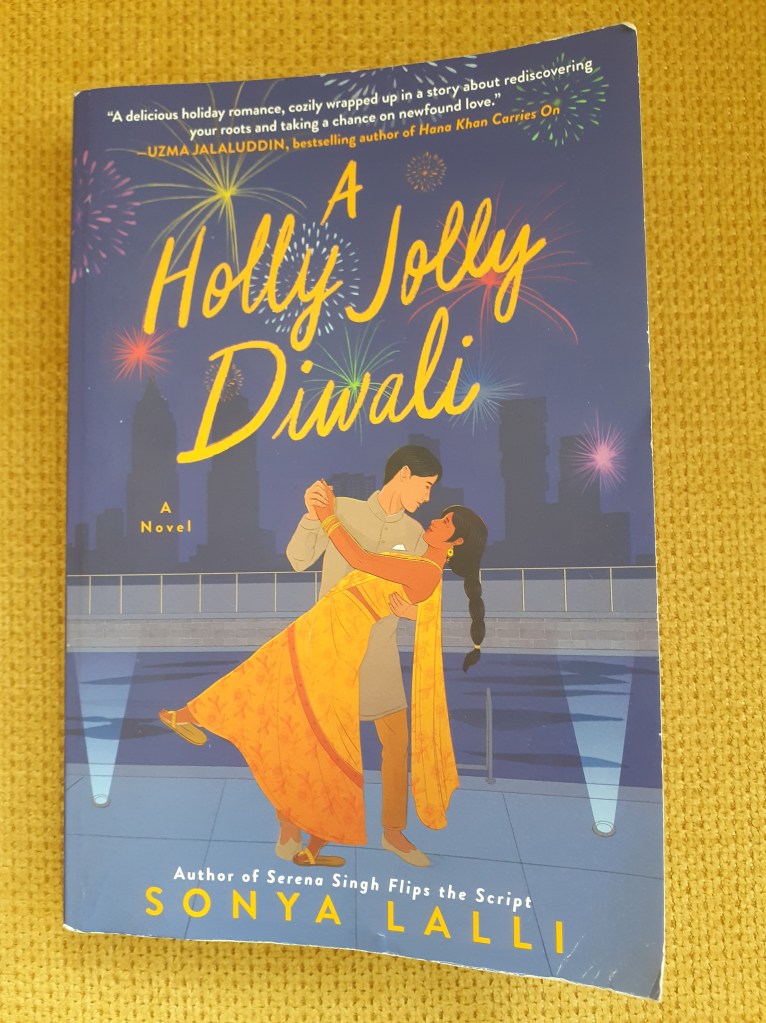
A Holly Jolly Diwali / Sonya Lalli
In my experience holiday reads mostly tend to be cutesy low-angst reads set during Christmas; it’s an entire sub-genre of romance novels and cosy murder mysteries that seems to have gained in popularity over the past few years. Hanukah seems the second-most popular holiday for setting.
And I have to admit; I was tempted. I’m into Christmas (booked a trip to a Christmas Market way back in September) and do enjoy cozy reads, but for some reason I wasn’t feeling it yet. I also kind of wanted something different because Christmas and Hanukah are not the only holidays celebrated in the world. So behold: a book set during Diwali, the Festival of Light celebrated by Sikhs, Hindus, Jains and Buddhists. Judging from the cover alone I figured one thing would be the same: it’s a cutesy low-angst read. After a couple of serious and intense books I could use something a bit lighter so I eagerly got in.
The story is about Niki: twenty-nine and single. Or very single, as her parents call her when they stage an intervention one Saturday night in the living room. Because yes, she’s still living at home. She chose to stay at home in order to save up as much money as possible to repay her student loans after she graduated college and landed herself a job as a data analyst. Niki is organized, always thinks things through, and isn’t the most spontaneous of people. Her parents have set up a blind date for her with the son of friends of friends and although Niki isn’t enthusiastic she is too obliging not to go. To her surprise she has a good time on the date but the timing isn’t perfect: she’s late to meet him because she was busy getting fired due to budget cuts in the office.
Getting fired leaves her in a state of shock but it also suddenly frees up her calendar. Now, she can go to India to attend her friend’s wedding there. Her family is surprised to discover her spontaneity but welcome it. Niki herself isn’t quite sure how to feel about it but does realize that the trip will be a good way to get a new perspective on her life and future.
Niki travels to India for the first time in her life. The daughters of immigrants, Niki and her sister grew up more American than Indian: Niki doesn’t speak Punjabi, doesn’t know the meaning of Diwali, or names of Bollywood actors. This meant Niki and I had the same knowledge gap and I learned along with her, which made things very easy to follow.
During the wedding celebrations Niki meets Sam, bass player in a band, and it is lust at first sight for both of them. Niki’s flirting skills are rusty but Sam isn’t much better. Sam lives in London, Niki in Seattle, and because there’s no risk about bumping into each other after the wedding, Niki is onboard for a fling. She’s never had a fling and thinks it’d be a great way to get rid of her goody-two-shoes image.
Sam and Niki are both close friends of the bride and both of them get invited to join the bride and groom on their honeymoon, in fact, there’s a whole group of friends going along to Goa.
Side note: I think it’s a wonderful idea to have your best friends along on a holiday and this couple had been together since high school and had been on a lot of holidays together already anyway and combined with a massive wedding I get that you’d like some quality time with the “insiders”. What made it slightly weird for me was that it was still referred to as a honeymoon instead of as just a holiday but probably that’s just the word association.
Although they are not officially a couple (Niki has her mind set on nothing serious) they are considered so by their friends and basically anybody they meet. It doesn’t help that Sam invites her to stay at his family’s home. His mother is there as well so it’s no wonder their fling doesn’t move beyond flirting and some kisses. Niki’s sister warns her that this is all too serious for a holiday romance but Niki doesn’t want to hear it and shouts angry words back at her.
After the call, she has to admit that this is indeed more than a holiday romance and tired of being the boring one, is ready to throw caution in the wind: because she’s between jobs anyway, and he’s seen her at her worst after she suffers from food poisoning, she tells Sam she will move to London for him. As I can tell from personal experience it’s not smart to move country for anyone unless you really want to move for yourself as well. Because Sam’s smarter than both Niki and me, he tells her that. But because Niki isn’t really listening she’s hurt by the message, and the travel romance becomes the travel drama.
This book is a lot of things: it has romance, travel, self-discovery, and cultural sense of being.
Every time I felt I had reached my limits with Niki, she did something that made me give her another chance. And in the end she did show growth and development and those are the most important things in a main character.
Most importantly, I really liked reading a book set during a non-Christmas holiday and will be on the lookout for others. Additionally, I’ll also be on the lookout for the follow-up on this book, which is centered around Niki’s sister Jasmine.

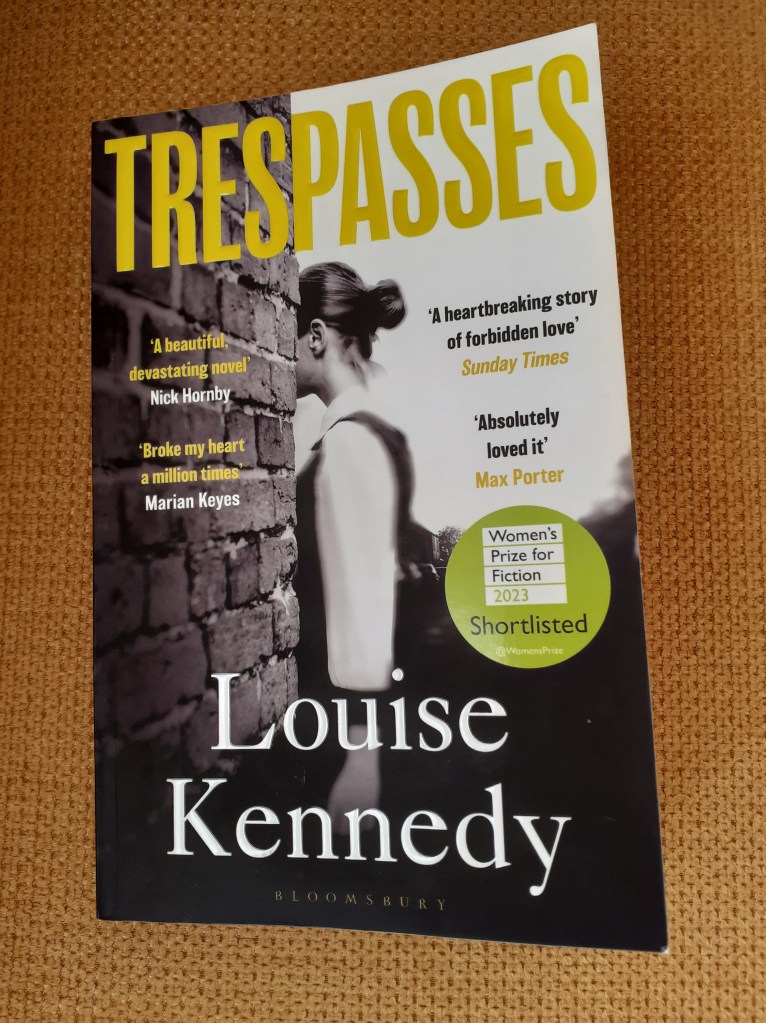
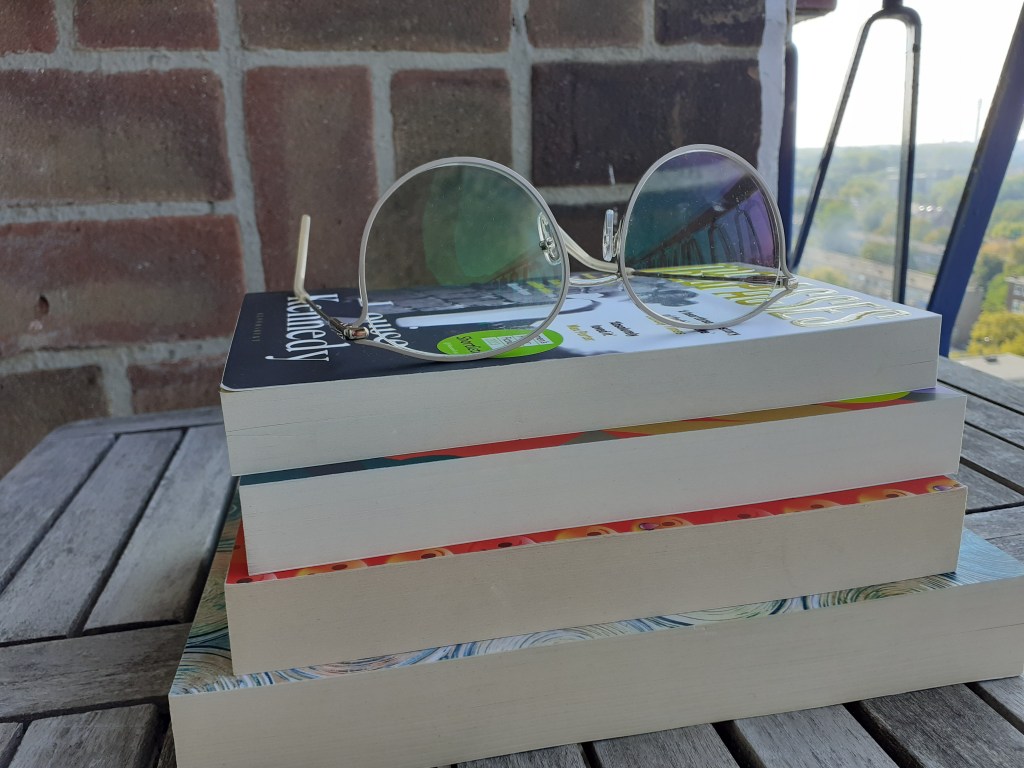
Book review: Trespasses / Louise Kennedy

Cushla. Twenty-something primary school teacher.
Michael. Fifty-something barrister at the courts.
They meet at her family’s pub where she works the occasional shift.
The place is the Belfast area.
The time is the mid-seventies.
Cushla is Catholic. Michael is a married Protestant.
Michael has outspoken political opinions.
Cushla has been taught to keep her opinions to herself.
Everything about their relationship is asking for trouble.
I’m not sure why I liked this book as much as I did. In a way, it’s nothing new or spectacular and I absolutely cannot stand for cheating and do not like reading about it. But the way this story is written has something that lifts it and made me enjoy it nonetheless.
Although “enjoy” might be the wrong word to use here, because if you couldn’t guess already, this story does not come with a happy ending: it has a dark cloud of doom hanging over it from the first page. Maybe it’s the awful reality of the time and place in the form of returning news headlines. Maybe it’s the writing itself, in a stripped-back style that still manages to provide the necessary details for a complete picture. Which is quite something because at the same time, there is a lot left unsaid, left out.
This book seems to be all about opposites that way.
The last chapter takes place in the near-present, by way of a very brief reunion between some of the characters. Strangely, for me this wasn’t something I needed: I think I might have liked it better as an open-ending because it was so brief anyway.
I wholeheartedly agree with all the accolades this book has earned (blurbs, prizes, nominations) and I just couldn’t put it down. It was the kind of story that transported me for a bit to another time and place, and that stayed with me after finishing it, making it difficult to start a new book.
Want to experience what that’s like? Add this book to your TBR.
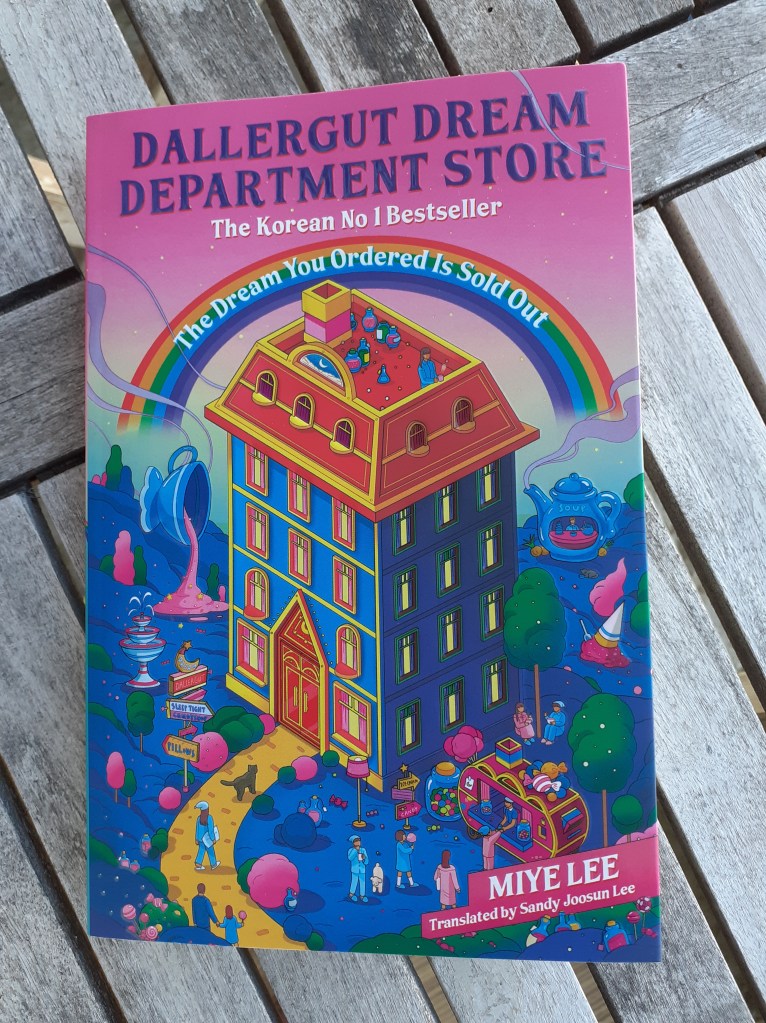
Book review: DallerGut Dream Department Store / Miye Lee

The feeling this book left me with can best be summed up in a sound: hm.
The cover and title called out to me (how couldn’t they), and although the story itself was dreamy and original, it wasn’t quite up there on the same level for me.
The story is about Penny, who starts a job at the DallerGut Dream Department Store of the title.
It’s smart to have this story being told from her point of view since her newbie-status is a natural way of explaining the setting, processes and going-ons. It explains the dreamworld where sleepers go to purchase dreams, and the stores dealing in dreams. The dreams aren’t paid in money though, but in emotions that are achieved from the dreams: people pay with flutter, excitement, or enlightenment after they have had the dream.
This isn’t just about the running of a department store, it’s also about the people creating the dreams. Santa, is one of them, along with Yasnoozz Otra and Babynap Rockabye.
There are yearly prizes awarded to best dream concepts, oh and the store has animals walking around, chasing (near)naked humans to be provide them with sleepwear.
Yes, this book is out there; a fantasy with an original take. But for me that’s where it ends, as it felt a bit flat, and never went beyond being cute. The story is about setting an original scene but doesn’t get any deeper than that; there isn’t much of a plot. There also isn’t any character development: Penny is the newest employee but we don’t learn more about her. We don’t learn anything about anyone.
A story without character development or much of a plot, isn’t all that exciting.
Maybe more is revealed in the second book, but to be honest this book didn’t leave me wanting to get my hands on that asap. If I ever bumped into it in the library I would probably take it out but I wouldn’t go so far as to make a reservation for it.
Reading challenge 2024: No. 7
No. 7 – A non-fiction book
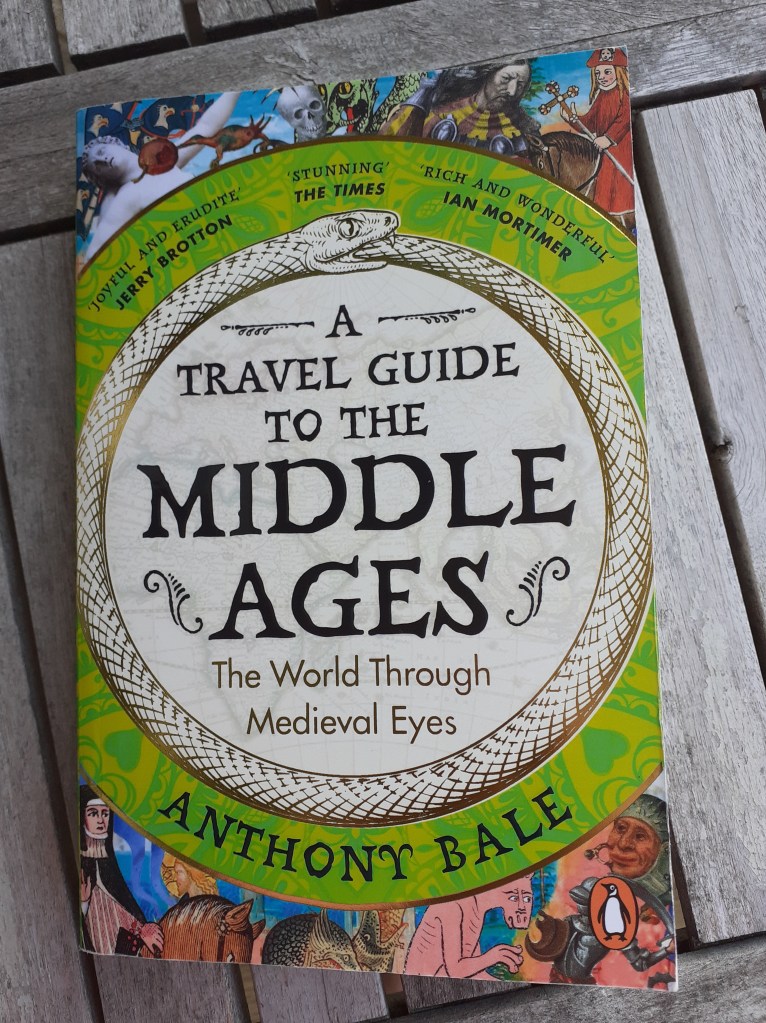
A Travel Guide to the Middle Ages : the World Through Medieval Eyes / Anothony Bale
I admit that before picking up this book, my knowledge of the Middle Ages was pretty limited: knights. Plagues. No Netflix.
Thankfully, this book contains a lot of information so I now know much more. It’s dry in the sense that it contains a lot of names, dates and places. But it isn’t written like a lecture; it isn’t boring. It’s written for any knit-wit that wants to learn more, and I was happy to sign up. And sheesh, did I learn stuff.
First of all: there’s not that much difference between preparing for travel back in the Middle Ages and the present day. Bags are packed, money and travel papers set aside, guidebooks purchased.
Of course, last-minute trips to a sunny destination were not what it was about back then, and travel was mostly pilgrimage related. However, travellers back then bought souvenirs, kept track of their adventures, and tried to make sense of new / other cultures, like we still do today. We have stickers or emblems with flags that get sewn onto backpacks, they had patches they wore on their lapels. They bought walking sticks and hats, we buy keychains and t-shirts.
They wrote their names on walls and doors of sites they visited, we…well, that one hasn’t changed a bit.
They kept diaries and wrote books on their findings (or made them up completely), we blog, tweet, and post (heavily edited or not) on Instagram.
And mass tourism is nothing new: back then, people travelled in caravans of up to thousands of pilgrims through the Holy Land.
The book is set up like a trip: it starts with a chapter on preparations, then there are the actual travel chapters, and it ends with a chapter on homecoming.
Great care has gone into making the reader understand the time and place. For example, referring to the Holy Land nowadays for Christians means Israel. But, back then, it meant any land mentioned in the bible, leading to a geographical area that included what are now Cyprus, Syria, and Egypt.
And while this book isn’t about pilgrimages but travel in general, pilgrimage was the biggest reason for regular people (non-soldiers, non-crusaders) to travel. Therefore, there are a lot of biblical references, especially in the first half of the book. But, the book also touches on the other travel patterns: south into northern Africa, and the Silk Roads east. Of course, this is because the second biggest reason to travel, was trade.
Almost everything in this book is based on western European perspectives, with one chapter offering a glimpse into the view from “the other side”. (Spoiler alert: aside from the travel direction there wasn’t much of a difference.)
The author cites from travel books, diaries and (auto)biographies of the time and I like to imagine that this means he got to visit libraries and archives and spent copious amounts of time in them, with these manuscripts in front of him. Which is as close as we can get to time travelling. I’m only slightly jealous.
Non-fiction reads different from fiction and even though the book in pocket only comes down to 360 or something pages, it was slower goings than “normal” with so much information to digest. But I liked this book a lot and I learned so much on this pretty random topic.
This book is for anyone who is open-minded and eager to learn something. If you’re into history, travel, and/or the Middle Ages, that’s an added bonus.

Blurred lines
It’s been a very productive year for this bookworm, averaging a book a week. I don’t think I ever managed to do that before. Whether it’s dedication, or a tendency to ignore the real world with its grown-up responsibilities, I’ve been reading so much that the letters on the page started to become blurry.
The optician I went to see for this problem assured me that the books weren’t the problem, but I was. “Don’t worry, it’s very common for people your age.”
…
Bad news: I can no longer ignore the fact that I’m aging.
Good news: turns out, I look great in glasses (maybe he lied to make me feel better after his earlier comment, but I choose to believe it anyway)
Best news: I can get back to reading!

Book review: The Glassmaker / Tracy Chevalier

I’ve loved previous books by this author, and made a happy squee sound when I spotted this latest title in the shop. I immediately forgot about the reading challenge again, rushed home, and read.
Orsola Rosso lives on Murano, the glassmaker island on the other side of the lagoon from Venice. Time runs differently there for glassmakers, completely absorbed as they are by their creations; the liquid glass, turning the rods this way or that to create the perfect shape.
The Rosso’s are a family of glassmakers and their story starts in 1486 when Orsola’s father dies after an accident in the workshop.
While the family needs to settle into a new order, Orsola learns to blow glass. She learns to create glass beads, which she can do on a table with only few tools. Her eldest brother eventually takes over the family business and looks down on her hobby, referring to the beads as rabbit droppings. For Orsola though, it’s much more than a hobby; it’s a purpose, a calling, and she’s so driven that she ends up with beads that are good enough to be sold. Which she does in secret from the rest of the family, knowing her brother will forbid her to sell her beads or claim the money she makes.
Then the plague arrives, and when the family has to quarantine and can no longer use their workshop and generate an income, it’s Orsola’s beads that keep them afloat because she doesn’t need a big furnice to create them and they can be traded for provisions. She saves the family this way, but still, her brother won’t acknowledge her success. This annoys Orsola but she stubbornly keeps at it, continuously developing new techniques, imagining new trends, adapting to keep up with the changing times.
The Rosso’s end up creating necklaces for the highest members of society, and their mirrors and wine glasses don’t just grace Venetian palaces but are sent all over Europe. There are ups and downs in their personal lives, and in their businesses. The story follows them through it all and I couldn’t get enough of it.
The teeniest complaint I can think of, is the glossery. There’s a lot of Italian/Venetian used and it wasn’t until I had finished the story and the acknowledgements, that I found a glossery at the very last pages. I hadn’t needed it, you can imagine the meanings largely from context, but had I known a glossery was provided, I would have used it as I was reading, instead of leafing back later.
But, this is a beautifully written story, with a fresh and original take. It’s on a subject and a place I knew almost nothing about, and came out thinking I’m now an expert on both. Love it when books do that.
Reading challenge 2024: no. 21
No. 21 – A book with a verb in the title
River Sing Me Home / Eleanor Shearer
This book starts in Barbados, 1843, where Rachel lives on the Providence plantation. Rachel is a woman, a slave, and above all a mother. When she is told that slavery has been abolished, the sudden thought of freedom and what to do with it, fills her determination: she’s going to find her children. Then, the joy is struck down immediately because the overseer informs them that they might be free, but they still have to serve a six-year contract of apprenticeship. It means still no money, no rights, no way to start their lives.
It breaks Rachel and she realizes she can’t be stuck on the plantation for another six years of misery. At night, she lies awake and thinks about the children she’d lost. The ones that died, the ones that weren’t alive when born, and the ones that were taken away and sold. Before she’s aware of what she’s doing she finds herself slipping away in the night, running as fast and as far away as she can, terrified the entire way because she doesn’t know where to go, or if the overseer has already picked up her trail. She only knows one thing: she needs to find her children and she would rather die trying, than not have tried at all.
An island offers only so far you can run, and after a night of running, Rachel reaches its natural border of the sea. Here, she meets Mama B, who runs an abandoned tabaco plantation and offers refuge for runaways. Mama B has helped other women finding their children, and she sets out on helping Rachel as well. Together they walk to Bridgetown, on the other side of the island, because one of the women on the tabaco plantation remembers seeing Mary Grace, one of Rachel’s daughters, there. With the help of Mama B’s network, they narrow down the search for Mary Grace until they locate her as the servant in a dress shop. The reunion fills Rachel’s heart with renewed love, and energy to continue the search for the other children. It’s painful as well, because Mary Grace no longer speaks, muted by the horrors she went through. Mother and daughter need to reacquaint, and learn that they don’t need words to communicate, and they quickly become inseparable.
When someone checks the slave registers for them, they learn that the other four children were sold to plantation owners in British Guyana and Trinidad. And so, they travel to British Guyana first, to continue their search for Micah and Thomas Augustus. On the ship they travel with they connect with Nobody, who has been on the run for a long time, and who decides to give up his life at sea to travel with them. He knows the area a little bit, having sailed there several times before, and the three of them quickly become a team.
They walk from one plantation to the next, before ending up going deep inland, with the help of a native boy, who teaches them to row a canoe, and read the landscape. Although they have been told that the stories of runaways living in the forest along with native tribes are just stories, Rachel knows first hand from her time with Mama B that these places do exist and they continue on their way. When do they find a village of runaways deep in the forest, they stay with them for a while, learning to live in and read the forest, a landscape they are not used to, and come to appreciate the knowledge that the villagers are willing to share with them.
Eventually they continue their way to Trinidad, where it’s more difficult to find their way than before. They don’t know this island, or anybody living there, and it’s more difficult to get their search going. But, Rachel is driven, and Mary Grace and Nobody support her and are ready to follow wherever she needs to go.
Everyone they meet has a story to tell. Everyone is a survivor.
Although not every story has a happy ending, Rachel concludes that it is still better knowing bad things, than not knowing at all.
The book is beautifully written and Rachel is an amazingly strong character. Her own tough life is only touched upon and you’re left to fill in the blanks. Her own story isn’t worth telling, all she can talk about are her children. Every child lost left a hole in her heart and until she knows what became of them, she can’t love anything else.
During the search Rachel learns that there are different kinds of freedom, and that people take different paths to get there.
The story is about intergenerational trauma, how deeply it settles in our dna. It’s about survival and the fight for freedom. Above all, it’s about love.
The story stayed with me for a long time after reading, especially because it is based on true events. The author’s note is an important part of the book so please don’t close the book too soon. But first, I encourage you to open it. If you’re into historical fiction you won’t regret this.