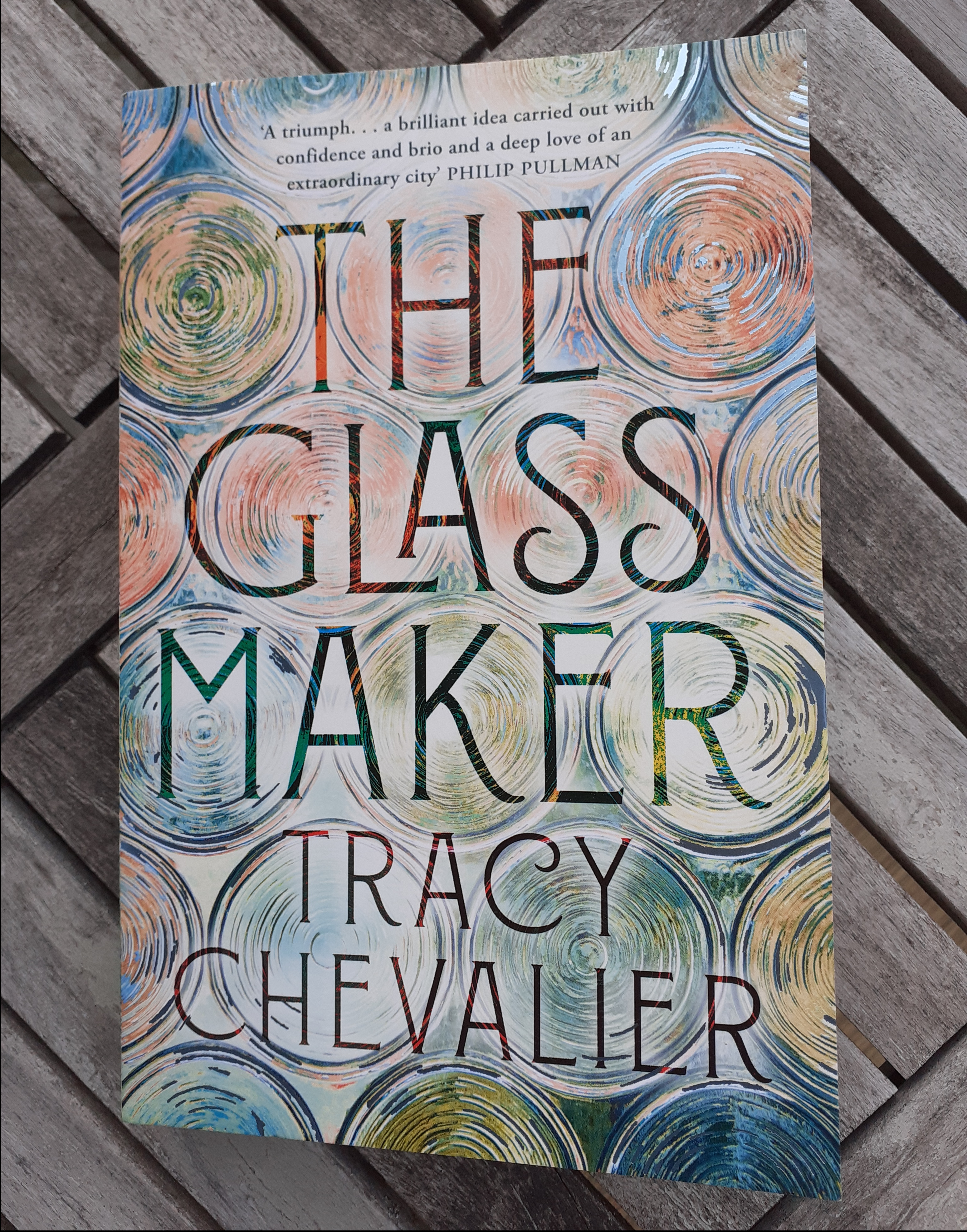
I’ve loved previous books by this author, and made a happy squee sound when I spotted this latest title in the shop. I immediately forgot about the reading challenge again, rushed home, and read.
Orsola Rosso lives on Murano, the glassmaker island on the other side of the lagoon from Venice. Time runs differently there for glassmakers, completely absorbed as they are by their creations; the liquid glass, turning the rods this way or that to create the perfect shape.
The Rosso’s are a family of glassmakers and their story starts in 1486 when Orsola’s father dies after an accident in the workshop.
While the family needs to settle into a new order, Orsola learns to blow glass. She learns to create glass beads, which she can do on a table with only few tools. Her eldest brother eventually takes over the family business and looks down on her hobby, referring to the beads as rabbit droppings. For Orsola though, it’s much more than a hobby; it’s a purpose, a calling, and she’s so driven that she ends up with beads that are good enough to be sold. Which she does in secret from the rest of the family, knowing her brother will forbid her to sell her beads or claim the money she makes.
Then the plague arrives, and when the family has to quarantine and can no longer use their workshop and generate an income, it’s Orsola’s beads that keep them afloat because she doesn’t need a big furnice to create them and they can be traded for provisions. She saves the family this way, but still, her brother won’t acknowledge her success. This annoys Orsola but she stubbornly keeps at it, continuously developing new techniques, imagining new trends, adapting to keep up with the changing times.
The Rosso’s end up creating necklaces for the highest members of society, and their mirrors and wine glasses don’t just grace Venetian palaces but are sent all over Europe. There are ups and downs in their personal lives, and in their businesses. The story follows them through it all and I couldn’t get enough of it.
The teeniest complaint I can think of, is the glossery. There’s a lot of Italian/Venetian used and it wasn’t until I had finished the story and the acknowledgements, that I found a glossery at the very last pages. I hadn’t needed it, you can imagine the meanings largely from context, but had I known a glossery was provided, I would have used it as I was reading, instead of leafing back later.
But, this is a beautifully written story, with a fresh and original take. It’s on a subject and a place I knew almost nothing about, and came out thinking I’m now an expert on both. Love it when books do that.
 Bookworm in the City