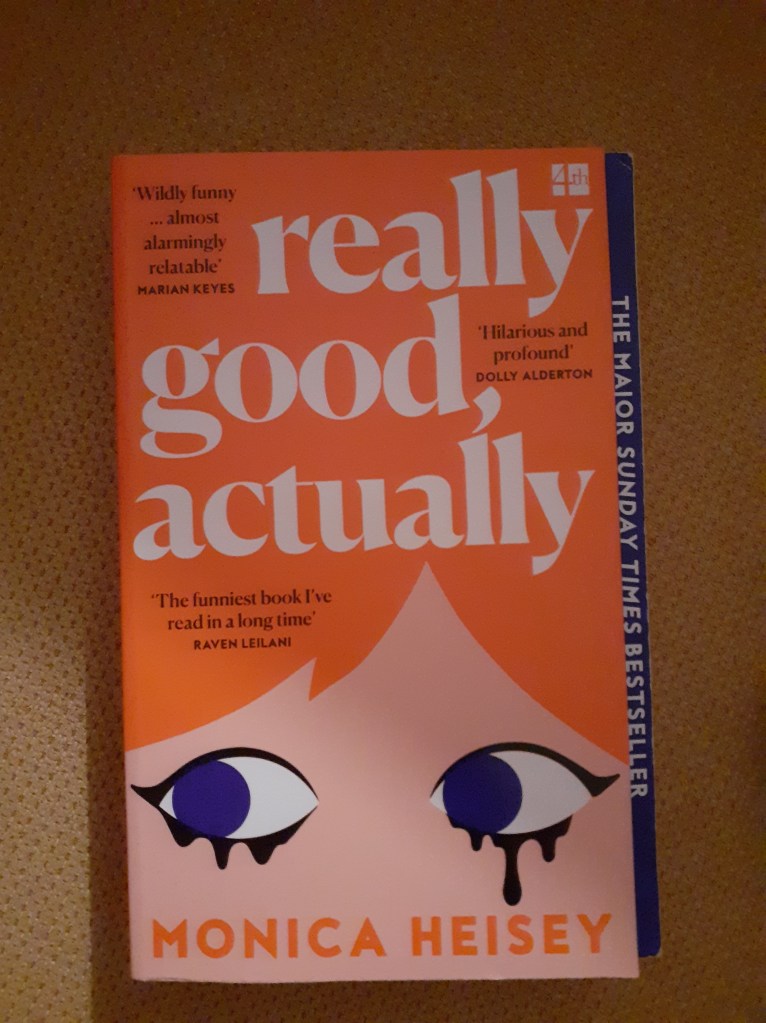
Barely two years after she got married, Maggie finds herself separated.
Her husband moved out, took the cat with him, and they promised each other to remain civil.
Of course, that’s easier said than done.
Maggie soon spirals out of control without realizing it. As she lists to her friends all the things she does to prove she’s not sad, one of the friends points out that the things she does are textbook behaviour for someone suffering from depression. To which Maggie replies that she’s been feeling really good, actually.
Careful suggestions about seeing a therapist (from her friends, family, co-workers, and random strangers) are cast aside, and instead she continues taking selfies to document her emotional journey, and posting on social media about Men.
Toronto is an expensive city, and Maggie can’t really afford life there on her own. Instead of facing this reality, she ignores it for months. She complains about it to her friends and co-workers, and goes on rants that involve conspiracy theories about the economy, generational injustice, therapy, and the concept of marriage. The only reason she doesn’t end up homeless, is that her mentor feels sorry for her and offers her a basement flat to rent.
Maggie wallows in her misery, and her behaviour starts to alienate her exasperated friends. She cannot be happy for anybody else, and her downer mood is annoying to all. Gentle hints about this, don’t land, or are purposely ignored. Being on social media all the time, does not help her in any way. On the contrary, of course: it only leaves her self-esteem down the drain. She uses their cat’s Instagram to stalk her ex online. She goes from shunning the idea of ever dating again, to having accounts on “all the apps” and going exclusively on first dates, because life’s too short to waste it on bad second or third dates.
Because she’s so deep in denial, Maggie almost becomes an unreliable narrator. Almost, because there are moments of painful truth, in the form of chapters on google searches, that literally just list her search terms, and thereby reveal much more about her than she cares to admit. The same applies to chapters on email exchanges with her ex, and her divorce attorney. The fantasy chapters are really funny as well, and the one that features Harry Styles made me laugh out loud.
Maggie spends a year grieving the end of her life as she knew it. Being a Millennial she does this in a way that involves a lot of social media, and at times I wanted to scream at her to just Put.The.Phone.Down.
All in all, this book does well in describing what we go through when we hit a brick wall at full speed: how difficult it can be to readjust your focus, and find a way to move on.
Maggie’s story is sad, frustrating, and funny. It was a fun and breezy read, but not something that will stay with me for a long time.
 Bookworm in the City